
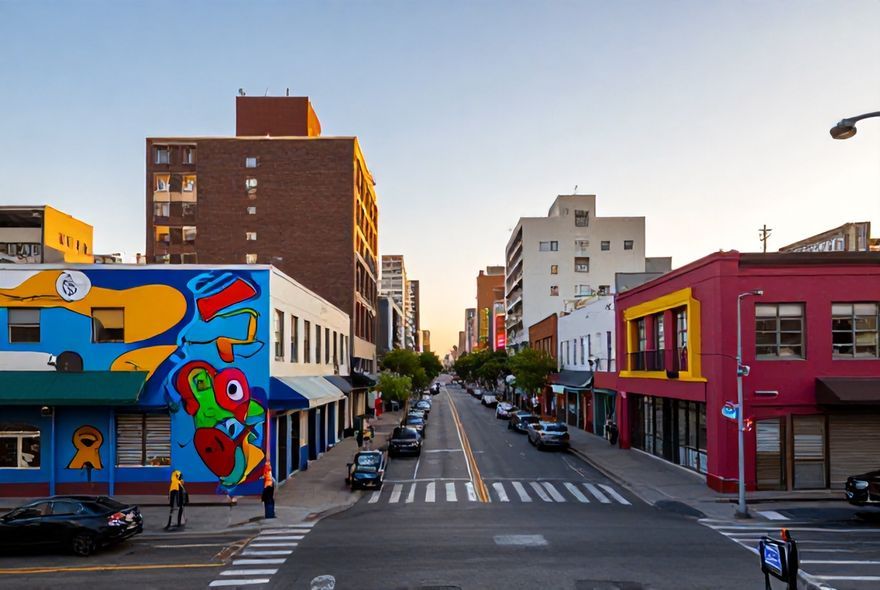
Ever wonder why time plays tricks on us when we’re exploring new spots? Welcome to Why Time Feels Different When You’re Traveling Somewhere New. We’ll dive into the quirky world of novelty and memory formation, exploring how perception turns unfamiliar places into time-stretching wonderlands. Whether you’re exploring a bustling Dutch market or a quiet Japanese temple, you might’ve noticed time feeling oddly expansive. It’s all in the psychology, folks! So, buckle up, because in this 4,000-word journey, we’re decoding those strange, wonderful timelines. Stay curious, and let’s embark on this mind-bending adventure!
Key Takeaways
- Time flies—or does it? New places seem to stretch those travel hours.
- Discover how novelty plays tricks with your time clock.
- Ever notice memories are vivid after a trip? Blame the brain’s perception magic.
- Does time slow down as your passport fills up? Let’s unravel that mystery! 🌍
- Ditching the familiar can feel like you’ve found a time machine—learn why.
- Boredom makes time drag, but excitement on a trip? That does something special.
The Science Behind Why New Places Make Time Feel Different
You know that feeling when you’re exploring a new city and it seems like you’ve been there for days, even though it’s only been a few hours? There’s actual science behind why time feels different when you’re traveling somewhere new. Our brains process unfamiliar environments in fascinating ways, creating what researchers call “time dilation” – and it’s not just your imagination playing tricks on you.
- Attention and Focus: When we’re in new places, our brains work overtime to process all the unfamiliar sights, sounds, and experiences, making us hyper-aware of each moment
- Memory Encoding: Novel experiences create richer, more detailed memories that make time periods feel longer when we look back on them
- Cognitive Load: Processing new information requires more mental energy, which naturally slows down our perception of time’s passage
- Reduced Automaticity: Unlike our daily routines where we operate on autopilot, new places demand conscious attention to every detail
- Emotional Intensity: The excitement and sometimes anxiety of being somewhere unfamiliar heightens our awareness and stretches our perception of time
How Novelty Rewires Your Brain’s Clock
Here’s where things get really interesting – novelty literally changes how your brain keeps time. When you’re walking through those winding streets of a foreign city or hiking a trail you’ve never seen before, your brain’s internal clock starts ticking differently. The psychology of novelty shows us that our minds are basically time-bending machines when faced with new experiences.
- Dopamine Release: New experiences trigger dopamine production, which affects our internal timing mechanisms and makes moments feel more significant
- Increased Neural Activity: Unfamiliar environments activate multiple brain regions simultaneously, creating a richer tapestry of sensory input that stretches perceived time
- Pattern Recognition Overload: Your brain works harder to identify and categorize new patterns, slowing down your subjective experience of time
- Heightened Alertness: The mild stress of navigating unfamiliar territory keeps your nervous system more engaged, making you acutely aware of each passing moment
- Reduced Time Estimation Accuracy: When everything is new, we lose our usual temporal reference points, making it harder to gauge how much time has actually passed
Memory Formation and the Perception of Extended Time
Think about your last vacation – doesn’t it feel like those five days were somehow longer than a typical work week? That’s because memory formation plays a huge role in how we perceive time, especially when we’re somewhere new. The way our brains encode and store novel experiences creates this beautiful illusion that we’ve lived more life in less time.
- Dense Memory Creation: New places create what psychologists call “dense memories” – packed with details, emotions, and sensory information that make time periods feel expansive
- Landmark Events: Unique experiences in unfamiliar places serve as mental timestamps, creating more reference points that make time feel stretched
- Episodic Memory Enhancement: Travel experiences are often stored as vivid episodic memories, complete with context and emotion, which feel “bigger” than routine daily memories
- Contrast Effect: The difference between our usual environment and new places creates stronger memory traces, making those moments feel more substantial
- Retrospective Time Distortion: When we look back on travel experiences, the richness of our memories makes those time periods seem longer than they actually were
Why Familiar Routines Make Time Fly By
Let’s flip the script for a moment – ever notice how your daily commute seems to disappear in a blink? Or how entire weeks can feel like they’ve vanished when you’re stuck in the same routine? Understanding why familiar places make time feel compressed helps us appreciate why new environments have the opposite effect. It’s all about how our brains handle predictable versus unpredictable information.
- Autopilot Mode: Familiar routes and activities require minimal conscious attention, causing our brains to essentially “skip” recording detailed temporal information
- Chunking Behavior: Our minds group familiar sequences into larger chunks, compressing what feels like individual moments into single, forgettable blocks
- Reduced Emotional Engagement: Routine environments rarely trigger strong emotional responses, leading to weaker memory formation and compressed time perception
- Predictive Processing: When our brains can predict what comes next, they spend less energy processing the present moment, making time seem to accelerate
- Minimal Novelty Detection: Without new stimuli to capture attention, our brains conserve energy by paying less attention to temporal details
The Role of Attention in Time Perception During Travel
You’ve probably experienced this – you’re wandering through a bustling market in Morocco or strolling along a beach in Thailand, and suddenly you realize you’ve been completely absorbed in the moment for what feels like hours. That’s your attention system working its magic on time perception. When we’re traveling somewhere new, our attention becomes this powerful lens that both magnifies and stretches our experience of time.
- Divided Attention: New places demand attention across multiple channels – visual, auditory, spatial – creating a richer temporal experience than our usual single-focus activities
- Mindful Presence: Travel naturally puts us in a more mindful state where we’re actively observing rather than mentally multitasking, which slows down subjective time
- Sensory Overload Management: Our brains work harder to filter and process increased sensory input, requiring more time and mental resources
- Active Exploration: Unlike passive experiences, actively exploring new places engages our executive attention, making us more aware of time’s passage
- Curiosity-Driven Focus: The natural curiosity sparked by unfamiliar environments keeps our attention engaged and present, stretching our perception of each moment
Cultural and Environmental Factors That Influence Time Perception
Here’s something fascinating – the actual culture and environment of where you’re traveling can physically change how you experience time. I remember spending time in a small Italian village where life moved at a completely different pace, and it wasn’t just the relaxed atmosphere affecting me. Different cultures literally structure time differently, and our brains pick up on these subtle cues.
- Cultural Time Orientation: Some cultures emphasize present-moment awareness while others focus on future planning, affecting how visitors experience temporal flow
- Environmental Rhythms: Natural light patterns, weather cycles, and seasonal changes in new locations can reset our internal circadian clocks and time perception
- Social Pace: The speed at which locals move, speak, and conduct daily activities influences our own temporal processing and perception
- Architectural Influence: Different architectural styles and urban layouts can affect how we navigate space and, consequently, how we experience time
- Language and Time: Exposure to different languages with varying temporal structures can subtly influence how we think about and perceive time
Practical Ways to Maximize This Time-Stretching Effect
Now that we understand why time feels different when you’re traveling somewhere new, let’s talk about how to actually harness this effect. You don’t need to book a flight to Bali to experience this time dilation – though that wouldn’t hurt! There are practical ways to recreate this temporal magic in your everyday life and make your travels even more time-bendingly memorable.
- Embrace Micro-Adventures: Take different routes to familiar places, explore new neighborhoods in your own city, or try activities you’ve never done before
- Practice Mindful Observation: Whether traveling or at home, consciously notice details you usually overlook – architecture, sounds, smells, and textures
- Document Experiences: Keep a travel journal or take photos of novel moments to strengthen memory formation and enhance the retrospective time-stretching effect
- Limit Digital Distractions: Put away phones and cameras periodically to fully immerse yourself in new experiences without the time-compressing effect of multitasking
- Seek Genuine Novelty: Instead of staying in familiar hotel chains or eating at recognizable restaurants, choose local, unique experiences that challenge your expectations
- Vary Your Pace: Alternate between busy sightseeing and slower, contemplative activities to create diverse temporal experiences within your travels
The Psychological Benefits of Time Expansion Through Travel
Beyond just the cool factor of feeling like you’ve gained extra hours in your day, this time-stretching effect of travel has some pretty amazing psychological benefits. When we feel like we have more time, we literally feel like we have more life – and that’s not just poetic language, it’s backed by research on well-being and life satisfaction.
- Enhanced Life Satisfaction: People who regularly experience time expansion through novel activities report feeling more fulfilled and satisfied with their lives overall
- Reduced Time Anxiety: Experiencing stretched time helps counteract the modern feeling of time scarcity and rushing through life
- Improved Memory Consolidation: The rich, detailed memories formed during novel experiences contribute to a stronger sense of personal history and identity
- Increased Present-Moment Awareness: Travel-induced mindfulness can carry over into daily life, helping maintain better temporal awareness
- Cognitive Flexibility: Adapting to new environments and time perceptions enhances mental adaptability and resilience
- Perspective Shifts: Experiencing different temporal rhythms can help us reevaluate our relationship with time and productivity in beneficial ways
As your journey through new experiences draws to a close, it’s fascinating to recognize how novelty, memory formation, and our perception of the unfamiliar blend to make time feel as though it’s stretching in delightful ways. When you’re in a new place, every sight and sound is a fresh piece for your brain to chew on, creating clusters of memories and expanding the day’s canvas. The psychology behind why time feels different when you’re traveling somewhere new lies in the raw excitement of discovery. This urge to explore not only enriches your well-being but also crafts a vivid mental scrapbook that lingers long after you’ve returned home. Such experiences remind us of the simple joy in slowing down and embracing the unknown.
Now, on a different note—if all this talk of discovery and wonder has you itching to reclaim a sense of newness and order at home, look no further. Wrapping up, if you’re ready to tackle your home cleaning without the hassle, hit us up at Joy of Cleaning. Book a Cleaning online or call (727) 687-2710—we’ve got your back! Follow us on Instagram and Facebook for more fun tips.





Leave a Reply