
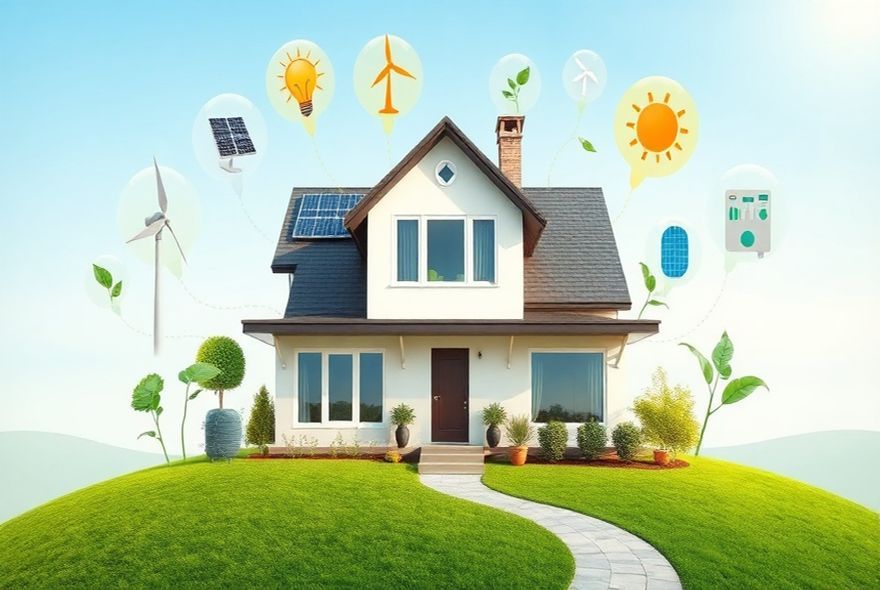
Every wondered how to choose the best green energy source for your home? With solar, wind, hydro, and geothermal options, the choices can be a tad overwhelming. But fear not—I’ve got you covered! We’ll dive into which energy source fits your budget, location, and lifestyle like a glove. Ready to go green? Let’s explore the best options!
Key Takeaways
- Confused by solar, wind, hydro, or geothermal energy? We break it down.
- Discover which green power fits your home like a glove—economically and environmentally.
- No more guessing games—learn which renewable energy suits your budget.
- Not every energy source fits every locale—find out what’s best for you.
- Want to shrink your carbon footprint while maintaining your lifestyle? Here’s how.
- Are you team solar or team wind? Maybe discover a new favorite with geothermal.
- Dive into the benefits and quirks of each renewable energy option for your home.
Understanding Your Green Energy Options
So, you’re thinking about making the switch to green energy for your home—awesome! But here’s the thing: not all renewable energy sources are created equal, and what works perfectly for your neighbor might be a total flop for you. The best green energy source depends on where you live, how much you’re willing to spend, and honestly, how much sun or wind your area actually gets. Let’s break down the renewable energy landscape so you can make an informed decision that actually fits your life.
- Location is everything: Your geographic region determines which green energy sources are viable. Solar thrives in sunny climates, while wind energy works best in consistently breezy areas.
- Budget matters: Initial installation costs vary dramatically between solar panels, wind turbines, and geothermal systems—but long-term savings often justify the upfront investment.
- Lifestyle alignment: Consider your energy consumption patterns. Heavy users benefit from multiple renewable energy options, while modest consumers might maximize one source.
- Hybrid approaches: Many homeowners combine two or three green energy sources for optimal reliability and efficiency.
Solar Power: The Most Popular Choice
You’ve probably seen solar panels on rooftops everywhere, right? That’s because solar power is genuinely transformative for most homeowners. It’s relatively straightforward to install, increasingly affordable, and works almost anywhere the sun shines. Whether you’re in the sunny Southwest or cloudier regions, modern solar technology captures enough energy to make a real difference in your electricity bills. The beauty of solar is that it’s become so mainstream that finding installers and financing options is actually pretty easy.
- Photovoltaic efficiency has improved dramatically—modern panels convert 15-22% of sunlight into electricity, compared to just 12% a decade ago.
- Installation flexibility: Rooftop systems, ground-mounted arrays, or even solar shingles let you choose what works for your home’s aesthetics and structure.
- Battery storage integration: Pairing solar with home battery systems (like Tesla Powerwall) ensures you’ve got power even when the sun sets.
- Tax incentives and rebates: Federal tax credits and state programs significantly reduce your initial investment in solar technology.
- Maintenance is minimal: Solar panels require occasional cleaning and virtually no moving parts means fewer repairs over their 25-30 year lifespan.
Wind Energy: Power From Nature’s Breath
Now, wind energy might seem like something only massive wind farms use, but residential wind turbines are actually a legitimate option if you’ve got the right conditions. If you live in a windy area—think coastal regions, hilltops, or the Great Plains—a small wind turbine could generate serious amounts of electricity. The catch? You need consistent winds, which means it’s not ideal for everyone. But if you’ve got the space and the breeze, wind can be incredibly effective.
- Wind speed requirements: Your location needs average wind speeds of at least 10 mph for residential turbines to be cost-effective.
- Space considerations: Unlike solar, wind turbines need significant clearance and ideally a few acres of property to operate optimally.
- Noise and zoning: Some people find turbine noise annoying, and many neighborhoods have height restrictions that limit wind energy installations.
- Reliability factor: Wind energy produces power 24/7 when conditions are right, unlike solar which stops at sunset.
- Cost-benefit analysis: Initial costs are higher than solar, but in ideal conditions, wind turbines generate more energy per square foot.
Geothermal Systems: Tapping Earth’s Heat
Here’s something most people don’t realize: the earth beneath your feet is incredibly warm, and that heat can power your entire home’s heating and cooling system. Geothermal energy is honestly one of the most underrated renewable energy solutions out there. It’s not as flashy as solar panels or as dramatic as wind turbines, but it’s consistently reliable and incredibly efficient. If you’re willing to do some underground installation, geothermal heat pumps could be your ticket to slashing energy costs year-round.
- Year-round efficiency: Geothermal systems work in any climate, heating your home in winter and cooling it in summer using stable underground temperatures.
- Space efficiency: Unlike solar panels or wind turbines, geothermal requires minimal visible infrastructure—just pipes buried underground.
- Installation investment: Upfront costs are significant (often $15,000-$30,000), but operating costs are remarkably low, typically 30-70% cheaper than traditional HVAC.
- Longevity advantage: Underground pipes last 50+ years, and the heat pump system itself lasts 25 years—exceptional durability compared to other renewable energy options.
- Not location-dependent on weather: Whether it’s blazing hot or freezing cold outside, geothermal taps consistent underground temperatures.
Hydroelectric Power: Water’s Potential
If you’re lucky enough to have a stream, creek, or small waterfall on your property, hydroelectric power might be your secret weapon. Okay, admittedly, this option only works for a small percentage of homeowners—you need flowing water with decent elevation change. But if you’ve got it? Micro-hydroelectric systems can generate impressive amounts of electricity continuously. It’s like having a power plant that never stops working, and you don’t need sunshine or wind to make it happen.
- Consistent generation: Water flow is predictable and consistent, making hydroelectric power incredibly reliable compared to solar or wind energy.
- Low environmental impact: Unlike large dams, small-scale hydroelectric systems barely affect ecosystems and water flow downstream.
- Minimal maintenance: Once installed, micro-hydro systems require very little upkeep—just occasional cleaning of intake screens.
- Location limitation: This renewable energy option only works for properties with moving water and elevation changes of at least 10-20 feet.
- Regulatory considerations: You’ll need permits and must comply with local water regulations before installing any hydroelectric system.
Comparing Costs: What Actually Fits Your Budget
Real talk: choosing green energy isn’t just about what’s best—it’s about what you can actually afford. The initial investment is the biggest hurdle for most homeowners, but here’s the encouraging part: most renewable energy systems pay for themselves within 5-10 years through energy savings. Plus, there are financing options, tax credits, and rebates that can dramatically reduce your out-of-pocket costs. Let’s look at actual numbers so you can compare apples to apples.
- Solar installation: Typically $2.50-$3.50 per watt after accounting for federal tax credits, making a 5kW system cost around $12,500-$17,500.
- Wind turbines: Residential systems run $40,000-$200,000 depending on size and site conditions—pricier upfront but potentially generating more energy.
- Geothermal heat pumps: Installation costs $15,000-$30,000, but remember this replaces your entire heating/cooling system, so compare it against replacement costs for traditional HVAC.
- Hydroelectric systems: Micro-hydro installations range from $4,000-$15,000 depending on complexity and water conditions.
- Long-term savings: Most homeowners see 70-80% reductions in electricity bills, with payback periods making the investment financially worthwhile.
Making Your Final Decision
Choosing the best green energy source ultimately comes down to combining practical factors with your personal goals. You’ll want to assess your location’s solar potential, wind resources, and water features. Then honestly evaluate your budget, your home’s structure, and how much energy you actually use. Many homeowners find that combining two renewable energy options—like solar plus battery storage, or geothermal plus solar—creates the most resilient and cost-effective system. Don’t hesitate to get professional assessments; most installers offer free consultations and can calculate your specific savings potential. For more comprehensive guidance on renewable energy solutions for homes, check out this detailed resource on green energy options.
- Professional assessment: Get quotes from multiple installers to understand what’s viable and cost-effective for your specific property.
- Calculate your ROI: Use online calculators to estimate payback periods based on your local energy rates and available incentives.
- Check available incentives: Federal tax credits, state rebates, and utility company programs can dramatically reduce your investment.
- Start small if needed: You don’t have to go all-in immediately—many homeowners start with solar and expand to other renewable energy sources later.
- Think long-term: Renewable energy is an investment in your home’s future and the planet’s health, with benefits extending far beyond your electric bill.
Alright, folks! So, we’ve taken a whirlwind tour through the world of renewable energy options for your humble abode. Whether you’re basking in the sun’s warm rays with solar panels, capturing the breeze with a sleek wind turbine, tapping into earth’s own sauna with geothermal, or letting water work its magic with a mini-hydro setup, your choice depends on your location, budget, and how much you love Mother Nature. Remember, each choice not only lightens your carbon footprint but can also brighten your wallet over time. The key is balancing what fits your lifestyle and what’s available in your backyard. Everyone and their grandma’s going green these days, and now you know just how to join the party.
So, let’s button this up. If you’re feeling inspired to switch gears and power up your home the green way, what are you waiting for? Keep the conversation going by following us on Facebook, check out some cool installations on our Instagram, and share your ideas, pitfalls, and successes. Earth’s counting on you, partner!





Leave a Reply