
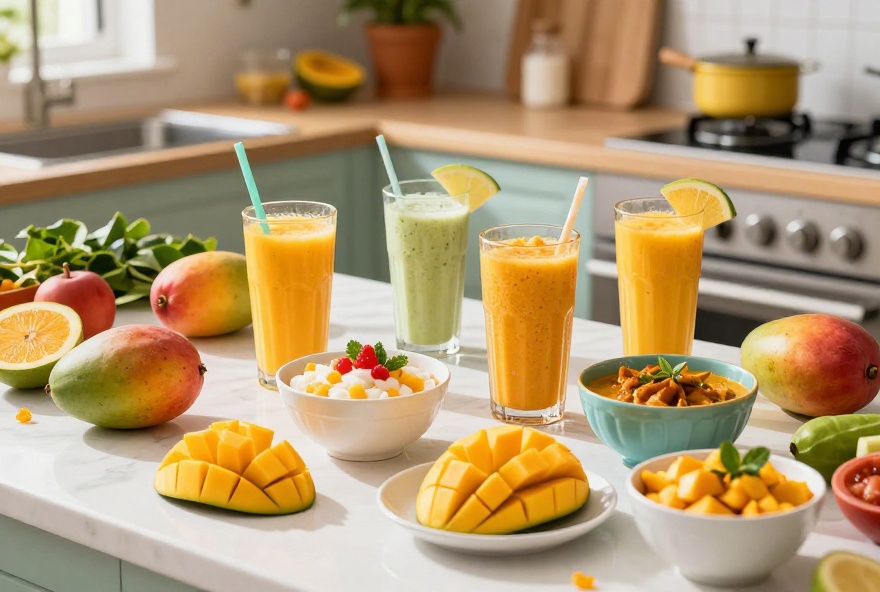
Who knew the humble mango could be a kitchen chameleon? In ‘Best Ways To Use Different Mango Types In Your Kitchen,’ you’ll journey from tart to sweet, discovering which mango steals the show in smoothies, dazzles in desserts, or adds zing to curries—making your culinary creations Instagram-famous. Ever tried this hack and failed hilariously? Let’s set that right, dishing out tips from the tastiest tricks ready to turn your kitchen into a mango masterpiece.
Key Takeaways
- Discover the mango species that make smoothies sing and desserts dazzle. 🍹🍨
- Uncover the secrets of pairing mangoes with curries for a flavor fiesta. 🎉
- Not all mangoes are created equal—learn which ones deserve the spotlight in your dishes. 🌟
- Mango hacks for turning ordinary dishes into Instagrammable delights!
- Ever thought of mango in a curry? We’ve got the down-low. 🍛
- Pro-tip: Different mangoes, different uses—let’s get juicy! 🥭
Understanding Mango Varieties and Their Unique Characteristics
You know that moment when you’re standing in the produce section, staring at a pile of mangoes and wondering what the heck you’re supposed to do with them? Yeah, we’ve all been there. Here’s the thing—not all mangoes are created equal. Different mango types have their own personalities, flavor profiles, and best-use scenarios. Some are sweet and creamy, others are fibrous and tangy, and some fall somewhere beautifully in between. Understanding these differences is the first step to becoming a mango maestro in your kitchen. Whether you’re planning smoothies, desserts, or curries, knowing which mango species works best for each application is absolutely game-changing.
- Alphonso mangoes bring that buttery, almost custard-like texture—perfect for when you want pure indulgence
- Ataulfo varieties are smaller, sweeter, and ideal for portion-controlled snacking or smoothies
- Tommy Atkins mangoes offer firm flesh and excellent shipping durability, making them the workhorses of commercial markets
- Haitian and Kent mangoes strike a balance between sweetness and acidity—versatile kitchen heroes
Mango Smoothies: Blending the Perfect Glass
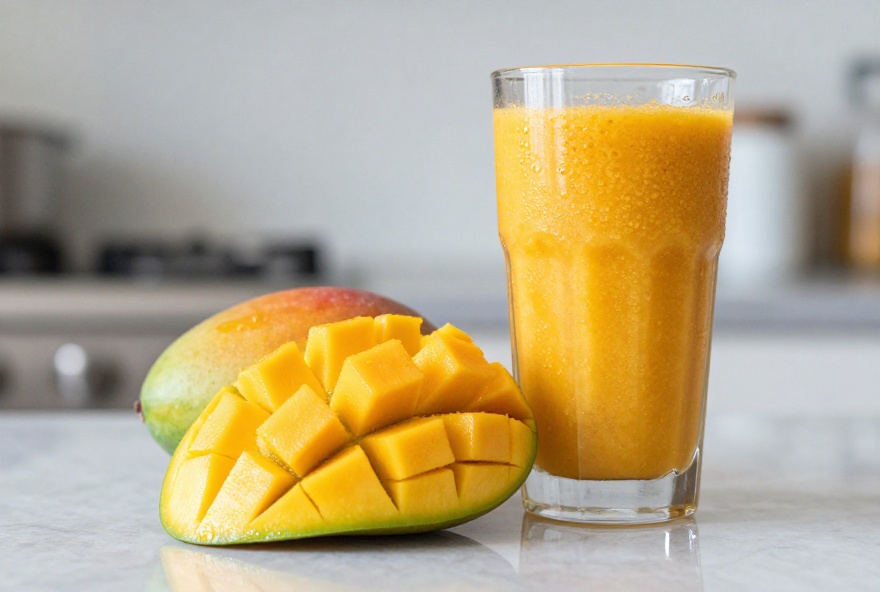
Let’s talk smoothies, because honestly, they’re one of the easiest ways to use mangoes and make yourself feel like a wellness influencer. The best mango types for smoothies are those with creamy texture and natural sweetness—basically, you want mangoes that blend into silk without requiring a culinary degree. Ataulfo and Champagne mangoes are absolute stars here. They’ve got that natural sugar content that means you won’t need to dump in extra sweeteners, and their fiber content adds body without any weird grittiness. The beauty of a mango smoothie is its simplicity, yet it delivers maximum nutrition and Instagram-worthiness.
- Ataulfo mangoes create the creamiest base—they’re smaller but packed with concentrated flavor and minimal fiber
- Blend with yogurt or coconut milk for tropical vibes that actually taste premium
- Mix Alphonso mangoes with cardamom and milk for a sophisticated lassi-inspired drink
- Frozen mango chunks work wonders—prep them when fruit is in season, freeze flat on trays, then blend year-round
Desserts That Celebrate Mango’s Natural Sweetness
When it comes to desserts, different mango species really show off their individual talents. You’re not just making food here—you’re crafting edible art. The ideal mango for desserts is one with natural sweetness, bright acidity for balance, and flesh that holds structure when chilled or baked. Alphonso mangoes are the darlings of fine pastry chefs worldwide, while Haitian mangoes bring that perfect sweet-tart balance that keeps people guessing what makes your creation so addictive. Whether you’re making mango cheesecake, sorbet, or a delicate tart, the mango species you choose sets the entire tone.
- Alphonso mangoes create luxurious mango cheesecake with that natural custard-like quality—no weird artificial flavor
- Champagne mangoes yield pale, elegant sorbet with subtle floral notes that elevate your dessert game
- Kent mangoes work beautifully in curd and preserves—their balanced acidity prevents overly sweet results
- Layer different varieties in a parfait to create complex flavor depth—think tasting menu but with fruit
Curries and Savory Dishes: The Unexpected Hero
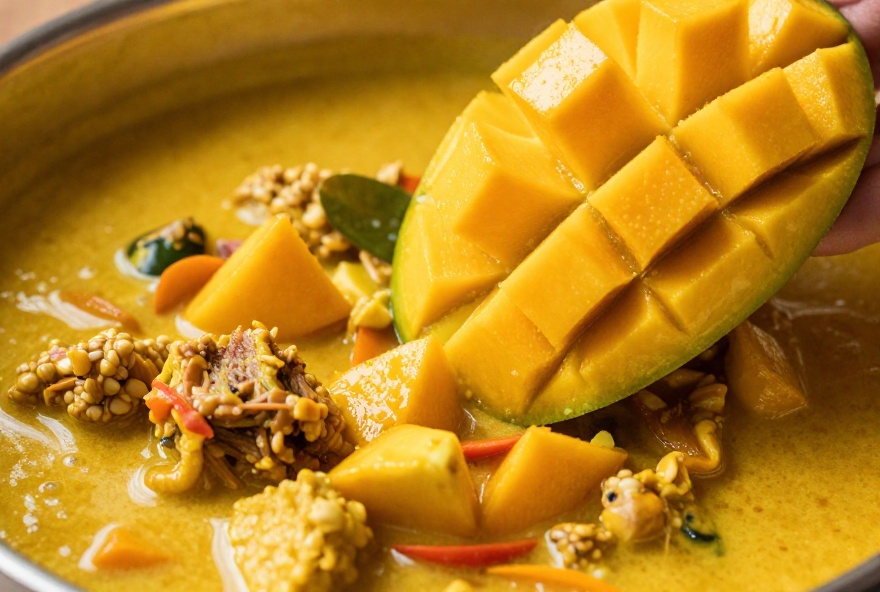
Here’s where mango gets serious in the kitchen. Savory applications demand a different approach entirely. You don’t want a mango that’s too sweet or too soft—you need something with backbone, fiber, and enough acidity to cut through rich spices and coconut cream. This is where slightly less-ripe mangoes shine, and why Tommy Atkins and Haitian varieties become absolute MVPs. Using different mango types in curries adds complexity that canned mango doesn’t even come close to matching. Your curry goes from “nice dinner” to “why does this taste like it came from a Michelin-star kitchen?”
- Tommy Atkins mangoes maintain firmness in heat—they won’t disintegrate into mush when simmered with spices
- Use slightly underripe mangoes in coconut curries for textural contrast and tangy brightness
- Add diced mango at the very end of cooking to preserve that fresh, fruity note—think of it as your finishing touch
- Kent mangoes pair exceptionally with Indian spices—their balanced profile doesn’t compete with cardamom, turmeric, and cinnamon
Selecting and Ripening Mangoes for Your Project
So you’ve decided which mango species you need, but now comes the real skill—actually getting them to the perfect ripeness at the right time. It’s not rocket science, but it does require a tiny bit of planning and a nose that knows what to look for. Different mango types ripen at different rates, so understanding these nuances means you’ll never bite into a mealy disappointment again. The trick is knowing whether you need a mango that’s perfect today or one you can stash away for next week’s dessert project.
- Squeeze gently near the stem—ripe mangoes yield slightly to pressure without feeling mushy
- The smell test is non-negotiable—a truly ripe mango smells fragrant and sweet, almost floral
- Ataulfo mangoes develop dark purple-black skin when ripe, while Alphonso turns golden-yellow with red blush
- Ripen at room temperature in a paper bag for faster results, or leave on the counter for a slower, more controlled approach
Storage Hacks That Keep Your Mangoes Fresh
We think proper storage is where a lot of people drop the ball with mangoes. You’ve bought these beautiful fruits with the best intentions, and then they either rot or stay stubbornly unripe for weeks. The storage strategy actually depends on which mango types you’re dealing with and what your timeline looks like. Alphonso and Ataulfo mangoes are slightly more delicate than Tommy Atkins, so they need a bit more TLC. Once you nail your storage game, you’ll have fresh mango ready whenever inspiration strikes.
- Store unripe mangoes at room temperature away from direct sunlight—they’ll reach peak ripeness in 3-5 days
- Refrigerate ripe mangoes to slow the softening process—they’ll keep for up to two weeks in the crisper drawer
- Cut and freeze mango cubes in single layers before transferring to freezer bags—perfect for smoothies and cooking projects
- Keep mangoes away from ethylene-producing fruits like apples if you’re not ready for them to ripen quickly
Making Your Mango Creations Instagram-Worthy
Let’s be real—presentation matters, especially when you’re turning your kitchen experiments into shareable moments. The good news? Mangoes are naturally photogenic. Their golden, sunset-like hues photograph beautifully, and a well-plated mango dish practically demands a picture. Different mango species also offer visual variety, so you can play with color gradients and textures. Whether it’s a vibrant smoothie bowl, an elegantly plated dessert, or a steaming curry that looks absolutely luxurious, knowing which mango type to use directly impacts how gorgeous your final creation looks.
- Layer different mango varieties by color intensity—pale Champagne varieties alongside deep golden Alphonso creates visual drama
- Fresh mango garnishes add the finishing touch—thin slices fanned on top of desserts or curled ribbons on smoothie bowls
- Natural lighting makes all the difference—shoot your mango creation near a window for that golden-hour glow
- Pair mango dishes with complementary plating colors—mint green plates make golden mango pop, while white dishes emphasize color
Your Mango Mastery Starts Now
The world of different mango types is honestly deeper than most people realize, and that’s exactly why your kitchen experiments are about to level up significantly. You’ve got the knowledge about which mango species works best for smoothies, desserts, and curries—now it’s just about getting in there and experimenting. For more comprehensive guidance on maximizing your mango usage, check out our detailed mango resource that dives even deeper into techniques and recipes. Start with one mango type, master it, then expand your repertoire. Before you know it, you’ll be the person everyone asks for mango advice, and honestly? That’s a pretty cool title to have.
When life gives you mangoes, make heavenly smoothies, delightful desserts, and scrumptious curries! We’ve explored the best ways to harness different mango types in your culinary adventures. Whether you’re blitzing a creamy Alphonso for that Instagram-perfect smoothie or weaving an aromatic Haden into your spicy curry, knowing which mango shines where can transform kitchen trials into resounding successes. So go ahead, unleash your inner chef, and see how effortlessly your kitchen experiments can turn into Instagram-worthy wins.
Feeling inspired to embark on your juicy journey but need a nudge? Come join our community of mango-enthusiasts and share your culinary creations on Instagram and Facebook. Whether it’s a mango masterpiece or a fresh flop, we want to see it all—because in the world of mangoes, it’s about flavor and fun, not just perfection!





Leave a Reply