
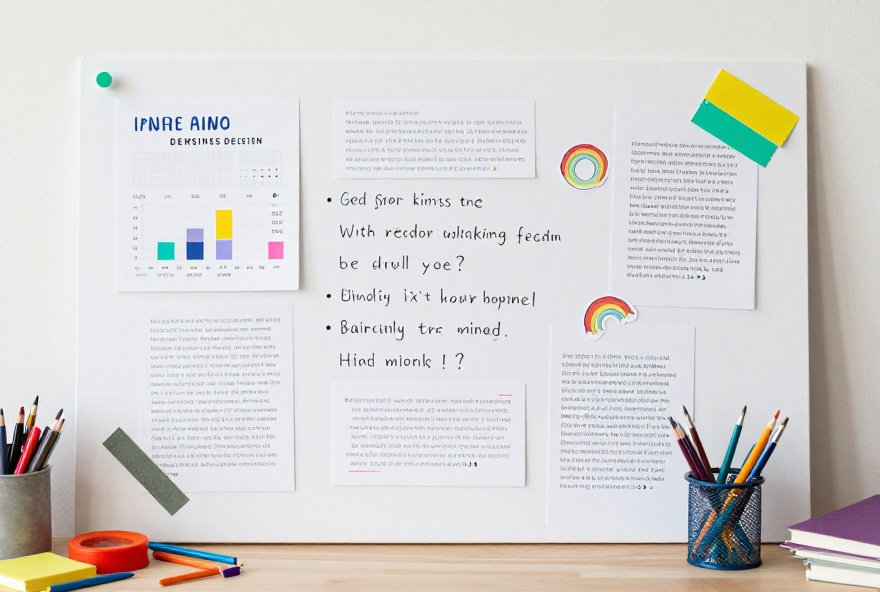
Ever tried to make your dummy text less ‘dummy’ and more ‘I belong here’? You’re in the right place! In our blog post on Best Ways To Make Dummy Text Look Natural In Designs, we dive into insider tricks ensuring your placeholder text blends seamlessly. So, clients marvel at your layout wizardry instead of giggling at obvious filler. Ready to elevate your mockup game?
Key Takeaways
- Transform ‘Lorem Ipsum’ into a master of disguise—no more obvious filler!
- Seamless design distraction: Make dummy text blend in so well it’s nearly invisible.
- Using placeholder text might seem easy, but can yours pass for the real thing?
- Find the right balance—filler content’s best kept subtly in the background.
- Focus clients’ attention on what matters, not on those ‘Lorem’ vs. ‘Ipsum’ distractions.
- Who knew dummy text had feelings too? Make it feel more at home in your designs.
- Discover easy hacks to make any placeholder content fit right into your layout.
Why Dummy Text Matters More Than You’d Think
Here’s the thing—when you’re designing a website, app, or marketing material, you need *something* to fill those spaces while you’re still working out the actual copy. That’s where dummy text comes in. But here’s where most designers slip up: they use obviously fake placeholder text, and suddenly clients are fixating on “Lorem Ipsum” instead of admiring your beautiful layout. The goal? Make your dummy text look so natural that nobody even questions it. According to insights on creating perfect placeholder text, the right approach can keep stakeholders focused on design instead of filler content.
- Dummy text serves as a visual placeholder that helps clients visualize the final design without distraction.
- Poor placeholder choices can derail client presentations and shift focus away from your layout work.
- Natural-looking dummy text keeps the design conversation on track and professional.
- Using a Lorem Ipsum generator strategically ensures consistency across your project.
- The psychology of text perception means clients react differently to realistic versus obviously fake placeholder content.
Choosing the Right Lorem Ipsum Generator for Your Projects
You know that moment when you need placeholder text *right now*, but you’re not sure which tool to grab? A solid Lorem Ipsum generator isn’t just about grabbing random Latin words—it’s about getting the right *kind* of dummy text for your specific design needs. Some generators give you paragraph-heavy content, others offer short snippets. The key is picking one that matches your design’s vibe and your client’s expectations. Think of it like seasoning—too much and it’s obvious, too little and it feels incomplete.
- Quality Lorem Ipsum generators offer customizable word counts, paragraph lengths, and formatting options to match your design requirements.
- Different projects need different dummy text styles—headlines require shorter placeholders, while body copy needs fuller paragraphs.
- The best tools let you generate consistent placeholder text across multiple pages without repetition that feels lazy.
- Look for generators that offer realistic sentence structure rather than pure random word dumps.
- Integration capabilities matter—some generators work seamlessly with design tools like Figma, Adobe XD, or web design platforms.
Making Dummy Text Blend Into Your Design Seamlessly
So you’ve got your placeholder text. Now comes the real magic—making it *disappear* into the design so completely that clients forget it’s not the real thing. This is where typography, sizing, and spacing become your best friends. You want the dummy text to feel like it belongs there, like it’s always been part of the vision. The trick? Treat it with the same care you’d give to final copy. Seriously. Your font choice, line height, and color all play a role in whether dummy text reads as “placeholder” or “finished product.”
- Typography consistency is crucial—use the same fonts, weights, and sizes you plan for the final copy to maintain visual harmony.
- Proper spacing and line height make dummy text feel intentional and polished, reducing the “obviously fake” vibe.
- Color choices matter; muted or neutral tones help placeholder text fade into the background visually.
- Realistic text hierarchy ensures dummy text supports your design’s visual flow rather than competing for attention.
- Subtle styling touches like kerning adjustments can elevate placeholder content to feel more refined and less temporary.
Matching Dummy Text Length to Your Design Layout
Here’s something designers often overlook: dummy text needs to *actually fit* your space. I’ve seen way too many presentations derailed because the placeholder text was too short or too long for the allocated area. When your dummy text doesn’t match the intended copy length, it throws off the entire visual balance. Clients start imagining what happens when *real* text lands there, and suddenly they’re worried about overflow or awkward gaps. Get the length right, and your design speaks for itself.
- Calculate expected word counts for your final copy and match your dummy text accordingly to test real-world scenarios.
- Use varied paragraph lengths in your placeholder content to simulate realistic copy patterns and text flow.
- Test how your dummy text behaves with different screen sizes and responsive breakpoints.
- Placeholder text length should account for headlines, subheadings, and body copy separately—they rarely follow the same proportion.
- Tools that let you customize word counts give you the flexibility to create realistic dummy text for any layout challenge.
The Art of Making Placeholder Text Look Intentional
Want to know a pro move? Make your dummy text look like it was *meant* to be there. This means paying attention to details that most people miss. Sentence variety, paragraph breaks at logical points, and even the occasional heading within your placeholder content can make all the difference. When dummy text reads naturally—with varied sentence lengths and thoughtful structure—clients perceive it as more polished. It’s psychology, really. Our brains recognize natural language patterns, and when placeholder text follows those patterns, it feels legitimate.
- Vary your sentence structures within dummy text—mix short, punchy sentences with longer, more complex ones.
- Include occasional subheadings or section breaks in placeholder content to mirror realistic content organization.
- Use different paragraph lengths rather than uniform blocks of text; this mimics how real writers naturally format content.
- Pay attention to paragraph openings—avoid starting every sentence the same way, which screams “this is fake text.”
- Strategic use of lists or bullet points within dummy text can add visual variety and feel more intentional.
Client Communication: Explaining Your Dummy Text Choices
Let’s be real—some clients will *still* notice your placeholder text and ask questions. That’s okay! How you handle that conversation matters. Instead of getting defensive, frame it as a strategic choice. Explain that you’re using realistic dummy text to help them visualize the final design without distraction. This positions you as thoughtful and professional. You’re not cutting corners; you’re being intentional about the design presentation. That distinction changes how clients perceive your work.
- Proactively mention that placeholder text is being used in your design presentation so there are no surprises.
- Explain your Lorem Ipsum generator choice and how it helps clients focus on layout and visual hierarchy.
- Use dummy text as a conversation starter about content strategy and how final copy will impact the design.
- Show clients mockups with both placeholder and final text to demonstrate the design’s versatility.
- Document your placeholder text approach in design handoff notes so developers understand your intentional choices.
Advanced Tips for Polishing Your Dummy Text Game
Ready to level up? There are some sneaky techniques that separate good dummy text implementation from *great* ones. We think most designers don’t push far enough in this area. You can use contextual dummy text that subtly hints at your design’s purpose—not so obviously that it breaks the illusion, but enough that clients feel the design’s direction. You can also layer different text weights and sizes to create visual interest while maintaining that natural feel. These touches show clients you’ve thought through every detail.
- Experiment with different dummy text densities—sometimes less placeholder content tells a stronger design story.
- Layer text hierarchy intentionally; use sizes and weights that guide the viewer’s eye through the design naturally.
- Consider using contextual placeholder text that hints at your design’s purpose without being obvious about it.
- Test your dummy text with real clients or focus groups to see if it achieves the goal of fading into the background.
- Keep a library of well-formatted dummy text snippets for different design scenarios to speed up future projects.

In the ever-evolving world of design, finding the best ways to make dummy text look natural is a game-changer. By leveraging Lorem Ipsum generators smartly, adjusting line length for readability, and matching text styles to your design’s overall aesthetics, you can seamlessly integrate placeholder text. These strategies can ensure clients focus more on your stunning layouts rather than getting distracted by unnatural filler content. Essentially, you’re mastering the art of invisibility in design—where your dummy text recedes into the background, letting your creative brilliance shine.
So, you’ve got the lowdown on creating harmonious designs with natural-looking placeholder text. Ready to take your designs to the next level? Dive into your next project armed with these tricks and see the difference for yourself! For more pro tips and design inspiration, follow us on Instagram and join the conversation on Facebook. Happy designing!





Leave a Reply