
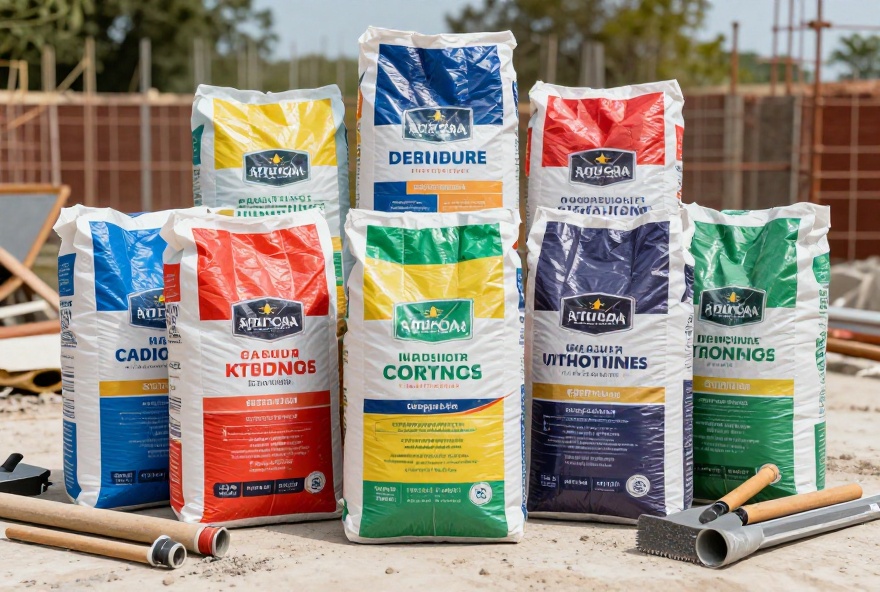
Ever tried building a pacca house and ended up with a questionable monument to your misjudgments? Fear not! Dive into ‘How To Choose The Right Cement For Pacca House Construction’ where we’ll master cement selection, exploring grades, top brands, and pro tips. Let’s avoid those costly whoopsies and ensure your home’s enduring grandeur. Ready to learn? Welcome to your cement enlightenment session!
Key Takeaways
- Don’t crack under pressure—choose the right cement grade for your pacca house.
- Avoid ‘brand regret’ by exploring top cement brands.
- Structural integrity isn’t just for superheroes; it’s for your house too!
- Learn pro tips to prevent costly mistakes in your cement selection.
- From strong foundations to shining ceilings, select the perfect blend for each use.
- Understanding cement grades can save bucks and preserve peace of mind.
Understanding Cement Grades and Their Role in Pacca House Construction
So, you’re about to build a pacca house—congrats on that! But here’s the thing: choosing the right cement is literally the foundation of your entire project (pun intended). Cement isn’t just cement; there are different grades, each with specific strength characteristics and applications. When you’re selecting cement for your pacca house construction, understanding these grades becomes absolutely crucial to avoid costly mistakes and ensure structural integrity that’ll last decades.
- Ordinary Portland Cement (OPC) 43 Grade — The go-to choice for most residential pacca houses, offering a good balance of strength and cost-effectiveness.
- OPC 53 Grade — Delivers higher early strength, perfect if you’re working on tight timelines or in colder climates where strength development matters.
- Portland Pozzolana Cement (PPC) — A sustainable option blending cement with pozzolanic materials, ideal for long-term durability in pacca house construction.
- Sulphate Resistant Cement (SRC) — Your best friend if your site has high sulphate content in soil or groundwater exposure.
Decoding Cement Brands: What Actually Makes a Difference
You know that overwhelming feeling when you walk into a hardware store and see fifteen different cement brands staring back at you? Yeah, we’ve all been there. But here’s what you need to know—not all brands are created equal, and for pacca house construction, picking a reputable manufacturer genuinely matters. Quality brands invest in rigorous testing, consistency, and adherence to Indian Standards (IS 269), which directly impacts your home’s durability and structural integrity.
- Check for IS 269 Certification — This ensures the cement meets national quality standards; it’s literally your quality assurance stamp.
- Research brand reputation within your local construction community — Ask contractors, masons, and neighbors which brands they trust for pacca house projects.
- Verify manufacturing dates — Cement loses potency over time; fresher stock (ideally within 3 months of manufacturing) performs significantly better.
- Look for consistent particle size — Premium brands maintain uniform fineness, leading to better hydration and stronger concrete bonds.
Strength Requirements: Matching Cement to Your Structural Needs
Different parts of your pacca house have different demands. The foundation needs different strength than the walls, and walls need something different than the roof structure. This is where understanding cement strength grades becomes your secret weapon. You can’t just grab any cement and hope it works—structural integrity depends on matching the right grade to each component of your construction.
- Foundation and Load-Bearing Walls — Opt for 53 Grade cement; these areas bear maximum stress and need that extra strength for long-term pacca house durability.
- Regular Walls and Non-Load-Bearing Structures — 43 Grade works beautifully here, saving you money without compromising quality.
- Exposed Areas (Balconies, Terraces) — Consider PPC or SRC to resist weathering, moisture, and environmental degradation over decades.
- Calculate your concrete mix design based on cement grade — Different grades require adjusted water-to-cement ratios for optimal performance.
Pro Tips for Storage and Handling to Prevent Quality Degradation
Here’s something most first-time builders overlook: cement storage is just as important as cement selection. You can buy the finest cement available, but if you store it carelessly, you’re basically throwing money down the drain. Cement is hygroscopic—it absorbs moisture from the air—and once it starts clumping or losing its fine texture, its strength-developing ability takes a nosedive, directly affecting your pacca house construction quality.
- Store in dry, well-ventilated spaces — Keep cement bags off the ground on wooden pallets, away from direct moisture and humidity.
- Use cement within 3 months of purchase — The longer it sits, the more its binding properties diminish; plan your procurement accordingly.
- Stack bags properly with airflow — Don’t compress bags under heavy weight; maintain ventilation between stacks to prevent moisture trapping.
- Inspect bags before use — Check for lumps, hardening, or discoloration; discard compromised cement immediately rather than risk structural failure.
Climate Considerations: Adapting Cement Choice to Your Region
Your geographic location plays a massive role in cement selection—seriously, don’t skip this part. A pacca house in Kerala faces completely different environmental stresses than one in Rajasthan. Humidity levels, temperature fluctuations, soil composition, and rainfall patterns all influence which cement performs best in your specific region. Getting this wrong means watching your investment slowly deteriorate over the years.
- High-Moisture Regions — Choose PPC or SRC variants; they resist moisture ingress and prevent efflorescence, keeping your pacca house looking fresh for decades.
- Coastal Areas — Sulphate and chloride resistance becomes critical; marine-grade or SRC cement prevents salt-induced corrosion of reinforcement.
- Cold Climates — 53 Grade cement develops strength faster in low temperatures, ensuring proper curing even during winters.
- Soil Testing — Get your soil tested for sulphate and chloride content; this directly determines whether standard cement suffices or specialized variants are necessary.
Cost vs. Quality: Making Smart Budget Decisions Without Compromising
Let’s be real—budget matters. But here’s where many builders make their biggest mistake: they penny-pinch on cement and end up spending five times more on repairs later. Think of cement as insurance for your pacca house construction. Spending an extra few hundred rupees per bag now saves you thousands in structural repairs, waterproofing fixes, and reinforcement issues down the road.
- Calculate total cement requirement accurately — Overestimate slightly to avoid mid-project quality compromises or rushed purchases at inflated prices.
- Bulk purchasing from reputable suppliers — Often offers better pricing while ensuring consistent batch quality across your entire pacca house project.
- Balance between premium and standard grades — Use 53 Grade where structurally critical, 43 Grade elsewhere; this pragmatic approach saves money without sacrificing integrity.
- Factor in long-term maintenance costs — Cheap cement might cost less upfront, but durability issues create exponential expenses over 10-20 years.
Testing and Verification: Ensuring You’re Getting What You Pay For
Here’s something that separates smart builders from the rest: they verify their cement before using it. Don’t just assume the bag contains what the label promises. Simple on-site tests cost nothing but reveal everything about cement quality. For a pacca house construction that’ll stand the test of time, this verification step is genuinely non-negotiable for ensuring structural integrity.
- Perform the float test — Sprinkle cement on water; quality cement sinks; poor cement floats due to air pockets and impurities.
- Check setting time — Mix cement with standard sand; quality cement sets within predictable timeframes (typically 30-600 minutes for OPC).
- Conduct strength tests on trial batches — Mix concrete with your selected cement and cure samples; test compressive strength before full-scale construction begins.
- Request mill certificates from suppliers — Reputable brands provide third-party test reports confirming compliance with IS 269 standards for your pacca house project.
Common Mistakes to Avoid When Selecting Cement for Your Project
You know what’s interesting? Most construction disasters don’t happen because builders were careless—they happen because builders didn’t know better. When it comes to cement selection for pacca house construction, avoiding these common pitfalls makes an enormous difference in your home’s longevity and structural integrity. Learn from others’ mistakes so you don’t repeat them.
- Mixing different cement grades in the same project — This creates inconsistent strength development; stick with one grade per structural element.
- Ignoring local supplier recommendations — Your regional contractors understand local soil conditions and climate challenges; their cement suggestions aren’t random.
- Using expired cement to save money — False economy; degraded cement compromises the entire structure’s safety and durability.
- Neglecting to account for seasonal construction challenges — Monsoons, extreme heat, or cold require cement adjustments; plan accordingly rather than using standard cement year-round.
Conclusion
Choosing the right cement for your pacca house construction is the cornerstone of a well-built home. Remember, it’s all about selecting the correct grade, recognizing trustworthy brands, and employing those nifty pro tips to dodge any costly mishaps. We’ve unpacked the essentials for achieving that rock-solid structural integrity you need. It’s simple: with the right cement, you’re laying down the foundation—not just for your house—but for peace of mind.
So, you’ve got the gist, but why stop there? Don’t let this wisdom go idle on your screen! If you’re ready to jump into your next home construction adventure with confidence, let’s get social. Follow us on Facebook, check us out on Instagram, and keep this conversation going. Your future abode awaits, as resilient as your choice in cement!





Leave a Reply