
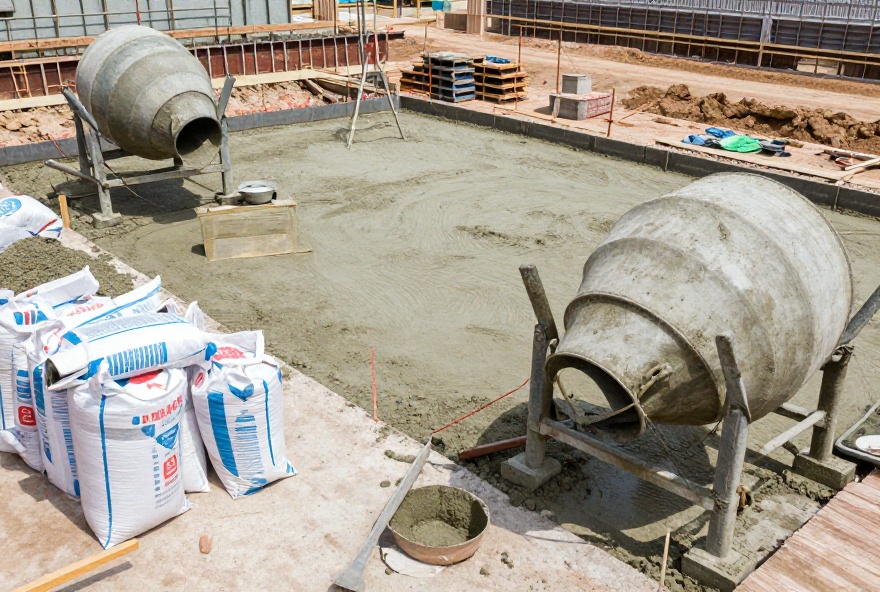
Planning on building a pacca house? Let’s make sure those walls are rock solid! In ‘How To Prepare And Mix Cement Correctly For Pacca House Foundations,’ we’ll dive into the art and science of cement mixing. Get the ratios wrong, and you might be left with a crumbly mess. But fear not, armed with expert insights, you’re about to conquer cement mixing like a pro!
Key Takeaways
- Get the right cement mix ratios for rock-solid foundations.
- Learn why eyeballing it just doesn’t cut it for pacca houses.
- Mixing cement ain’t cooking—precision matters here!
- Avoid weak walls by mastering the art of cement mixing.
- Discover the common pitfalls that waste cement and time.
- Find out the secret to bulletproof foundations that last.
Understanding Cement Ratios: The Foundation of Strong Walls
You know that feeling when you’re about to start a big project and realize you have no idea what you’re doing? Yeah, cement mixing can feel like that—but here’s the thing: getting your mixing ratios right is literally the difference between a house that stands for decades and one that cracks within years. Wrong ratios waste cement and weaken walls faster than you’d think, so let’s break down what actually matters when preparing and mixing cement correctly for pacca house foundations.
- The Golden Rule: A 1:3 ratio (one part cement to three parts sand) is your sweet spot for most pacca house foundation work—this balance gives you strength without excessive brittleness.
- Why Ratios Matter: Incorrect proportions compromise structural integrity; too much cement makes concrete brittle and prone to cracking, while too little weakens the overall bond.
- Testing Your Mix: A simple squeeze test tells you volumes—if your mixture holds together without crumbling, you’re likely in the right ballpark.
- Regional Variations: Some areas use 1:2 ratios for extra-heavy-duty applications, so check local building standards before committing to your mix.
Selecting Quality Materials: You Can’t Cheat This Part
Before you even think about mixing, grab your materials wisely. The quality of your cement, sand, and water directly impacts how bulletproof your pacca house foundations become. We think most people underestimate how much the source of these materials matters—spoiler alert, it matters a lot.
- Cement Selection: Use Portland cement (typically OPC or PPC) from reputable manufacturers; check the manufacturing date because older cement loses its binding strength over time.
- Sand Quality: River sand or pit sand works best—avoid beach sand (salt content weakens bonds) and ensure it’s clean, free from clay, and properly graded.
- Water Standards: Use clean, potable water; never use seawater or water containing organic matter, as these compromise cement hydration and long-term durability.
- Aggregate Check: For concrete mixes, choose aggregates (stones) that are well-graded, hard, and free from dust or weathered particles.
- Storage Conditions: Keep cement in dry, cool spaces away from moisture—even slight dampness before mixing can reduce its effectiveness by up to 20%.
Preparing Your Mixing Area: Set Yourself Up for Success
Alright, so you’ve got your materials sorted. Next comes the workspace setup, and honestly, this is where things get real. A proper mixing area prevents contamination and ensures consistent results every single time. Think of it as creating a clean kitchen before baking—small details lead to big differences.
- Clean Surface Essential: Use a hard, flat surface (concrete slab or metal platform) for hand mixing; remove any old cement residue or dirt that could contaminate your fresh batch.
- Organize Your Materials: Lay out cement, sand, and water within arm’s reach—this prevents cross-contamination and speeds up your mixing process significantly.
- Weather Considerations: Avoid mixing during heavy rain or extreme heat; moisture interferes with cement hydration, while intense sun can dry your mix too quickly, creating weak bonds.
- Tool Readiness: Have your shovel, bucket, and measuring containers ready—consistency in measuring is non-negotiable for maintaining proper mixing ratios.
Dry Mixing: The Often-Overlooked First Step
Here’s something that catches a lot of people off guard—before you add water, you need to dry mix your cement and sand thoroughly. This step ensures even distribution of binding material, which directly impacts how strong your pacca house foundations become. We’ve seen too many rushed jobs skip this, and it shows in the finished product.
- Mix Duration: Spend at least 3-5 minutes mixing dry ingredients; this ensures cement particles coat every grain of sand evenly—crucial for uniform strength.
- Visual Cues: Your mixture should look uniform in color; if you see streaks of white (cement) or yellow (sand), keep mixing until consistency is achieved.
- Pile Turning: Use your shovel to turn the pile multiple times, moving material from the center outward and back again to guarantee thorough blending.
- Checking Homogeneity: Grab a handful from different spots in your pile; they should feel and look identical—this confirms proper dry mixing.
Water Addition: Getting the Consistency Just Right
This is where preparation and mixing cement correctly really comes together. Adding water is an art form, not a science—you need to find that sweet spot where your mix is workable but not soupy. Too much water weakens your foundation; too little makes application nearly impossible.
- Gradual Addition: Add water slowly while mixing; we think the biggest mistake is dumping water all at once and then scrambling to fix a runny mess.
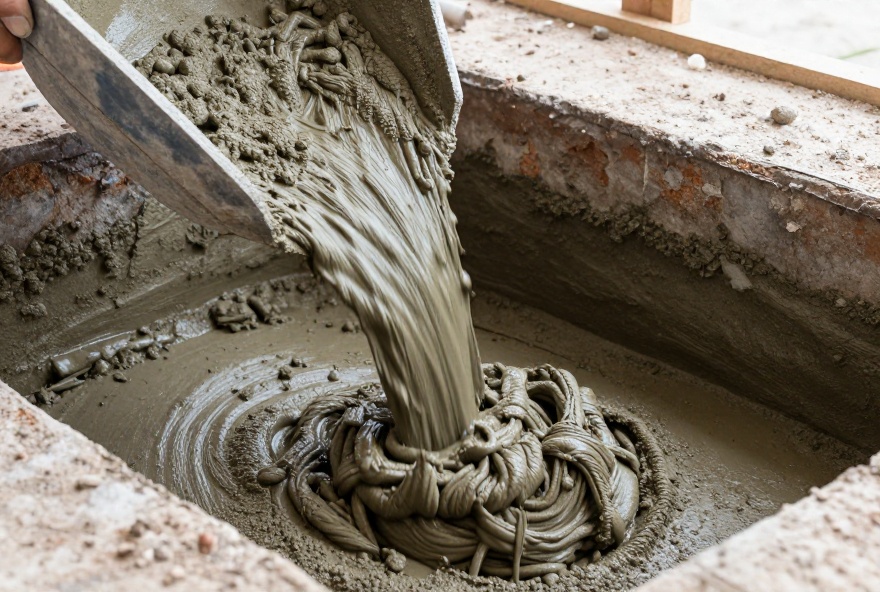
- The Workability Test: Your mix should resemble thick peanut butter—not batter, not crumbly paste—just something that sticks together and spreads smoothly.
- Measuring Water: For a standard 1:3 mix, roughly 0.5 parts water works, but adjust based on sand moisture content and ambient conditions.
- Mixing Time After Water: Continue mixing for another 5-7 minutes after adding water to ensure even hydration and eliminate dry pockets.
- Batch Timing: Use your prepared mix within 30-45 minutes in normal conditions—cement starts losing workability as hydration progresses.
Machine Mixing vs. Hand Mixing: Which Approach Wins
You’ve probably wondered whether you should go old-school with a shovel or rent a mixer. Both methods work, but they each have their quirks and advantages depending on your project scale. For pacca house foundations, the consistency of your final product matters more than which method you choose.
- Hand Mixing Benefits: Perfect for small batches, gives you direct control, and requires zero equipment costs—ideal for residential projects or repairs.
- Machine Mixing Advantages: Saves time and physical effort for larger foundations, ensures more uniform mixing, and produces batches you can repeat precisely.
- Consistency Challenge: Hand mixing sometimes leaves weak spots; machines eliminate this issue by forcing every particle into contact.
- Cost-Benefit Analysis: For foundations covering 500+ square feet, machine mixing becomes economical when you factor in labor time and fatigue.
Common Mistakes That Wreck Your Foundation
Let’s talk about the pitfalls we see constantly—the shortcuts and assumptions that turn solid plans into crumbling disasters. Wrong ratios waste cement and weaken walls, sure, but specific mistakes compound that damage. Knowing what to avoid is half the battle when preparing and mixing cement correctly.
- Skip the Testing Phase: Never assume your mix is right without testing; always perform small batches first to verify ratios work in your specific conditions.
- Ignoring Material Age: Using old cement or contaminated sand might seem like a cost-saver, but it’s actually investing in future repairs and structural failure.
- Rushing Hydration: Pouring cement before it’s properly mixed throughout leads to inconsistent strength—some areas bond well, others crumble under load.
- Weather Neglect: Mixing during rain or extreme heat without adjusting water content creates problems that appear months or years later—patience pays here.
- Inconsistent Batching: Changing your ratio between batches creates weak points in your foundation; measure religiously and stick to your proven formula.
Curing and Setting: The Work Doesn’t Stop at Mixing
Here’s what separates amateur work from professional-grade pacca house foundations—understanding that mixing is just the beginning. Your freshly mixed cement needs proper conditions to cure and develop full strength. This phase is where patience becomes your secret weapon.
- Initial Setting Time: Cement begins hardening within 30-45 minutes; don’t disturb or apply loads during this critical window—let chemistry work its magic.
- Moisture Management: Keep your foundation damp for at least 7 days after pouring; dry conditions cause surface cracking and reduce overall strength by 30-40%.
- Temperature Impact: Ideal curing happens between 50-86°F; cold slows hydration while heat accelerates it (sometimes creating weak bonds), so adjust expectations accordingly.
- Full Strength Achievement: Concrete reaches 90% strength around 28 days; waiting this period before heavy loading ensures bulletproof durability for decades.
For comprehensive guidance on building with pacca houses, check out this detailed resource on pacca house construction, which covers the broader context of foundation work and structural planning.
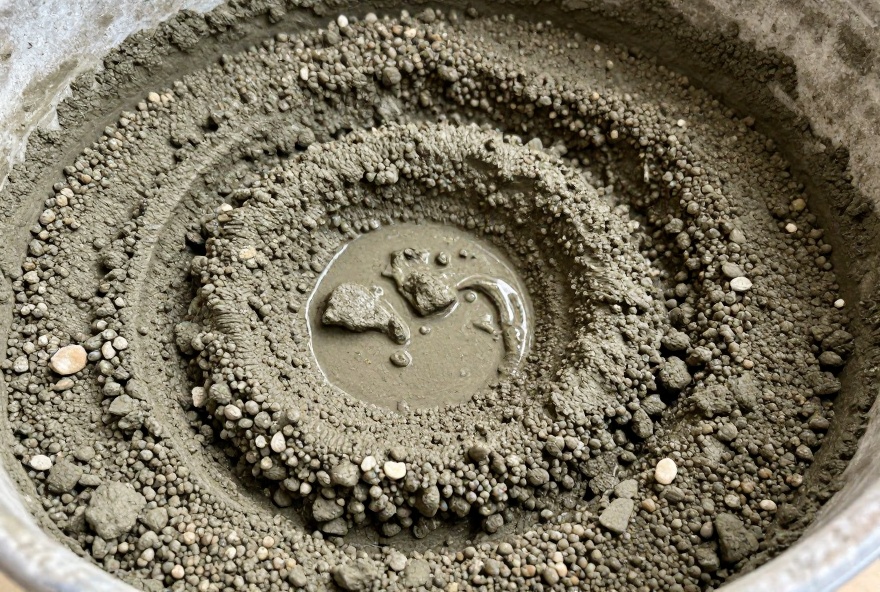
Mixing cement correctly isn’t as daunting as it might seem. It’s all about getting the right ratios to create rock-solid pacca house foundations. Remember, the devil’s in the details: too much sand or not enough cement can turn your walls into a house of cards. Cut down on waste, save your moolah, and fortify your dwelling by mastering those precise mixing ratios—your walls will thank you by standing tall and unyielding. So, whether you’re building a new home or patching up the old, wield the trowel confidently knowing you’re crafting a strong future.
Before you embark on that legendary DIY journey, why not brush up on these tips by sharing them with your fellow builders? Check us out on Facebook for more DIY advice, follow us on Instagram for daily inspiration, and browse our Pinterest boards for endless ideas. Let’s build those walls right, together!





Leave a Reply