
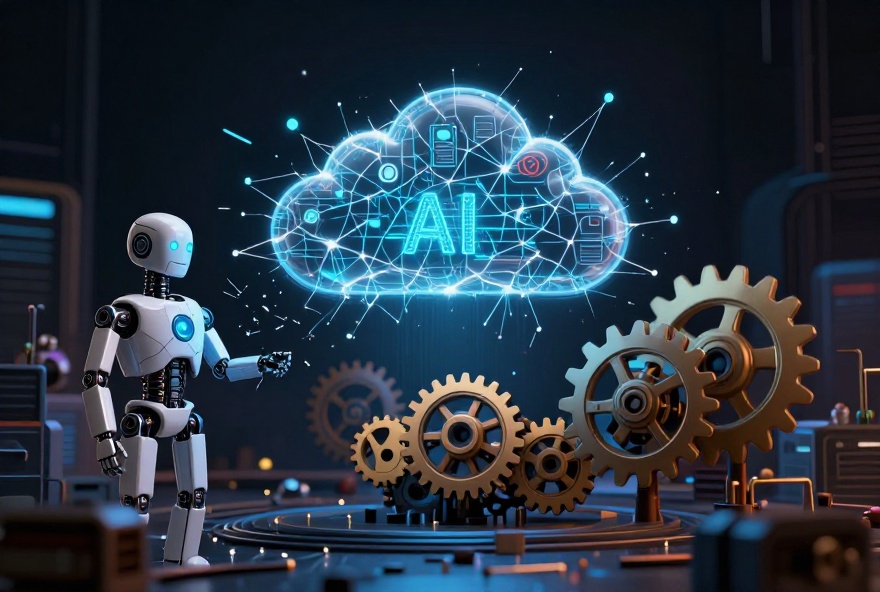
Buckle up, tech adventurers! In “Why AI’s Dark Side Matters More Than You Think,” we’re diving headfirst into the murky waters of AI’s less glamorous features—bias, privacy nightmares, job loss, and ethical landmines. Ever tried blindly trusting AI and hit a wall? Let’s shine a light on the shadows. Understanding AI’s risks is as crucial as riding the hype wave. Insight? It’s all here!
Key Takeaways
- Uncover AI’s darker side—it’s not all shiny robots and innovative solutions.
- Is AI making biased decisions and reinforcing stereotypes? Let’s dig in.
- Worried about your privacy with AI? Here’s why you might want to be.
- AI’s impact on jobs: Will robots take over, or is it just sci-fi?
- Ethical landmines in AI—navigating these tricky paths without a map.
- Why understanding AI risks is as important as the hype itself.
- Forget the tech glitz; let’s talk AI’s real-world pitfalls.
The Hype vs. Reality: Why AI’s Dark Side Matters More Than You Think
Look, we get it. AI is everywhere—in your phone, your email, your Netflix recommendations. It’s easy to get caught up in the excitement of what’s possible. But here’s the thing: while everyone’s talking about how AI will revolutionize everything, there’s a whole other conversation we need to have. Understanding AI’s dark side isn’t pessimism; it’s just being realistic. The real downsides of AI—bias, privacy concerns, job displacement, and ethical dilemmas—deserve just as much attention as the breakthrough headlines. Let’s dig into why these risks matter more than most people realize.
- The marketing machine sells us utopia, but AI systems are trained on real-world data—which means they inherit our biases.
- Privacy nightmares aren’t hypothetical anymore; they’re happening in your apps right now.
- Job loss from AI automation is accelerating faster than retraining programs can keep up.
- Ethical landmines lurk in every deployment decision, often without proper oversight.
Bias in AI: The Invisible Problem You Can’t Ignore
Here’s something most people don’t realize: AI systems don’t “think” fairly by default. They learn from data, and if that data reflects historical discrimination, the AI will too. It’s like training a parrot to repeat biased statements—the bird isn’t being mean; it’s just doing what it learned. Bias in AI affects hiring decisions, loan approvals, criminal sentencing, and healthcare recommendations. The scary part? It often goes undetected because algorithms seem objective. But they’re not.
- Hiring bias: Resume screening AI has shown preference for male candidates in tech roles, perpetuating gender gaps in the industry.
- Healthcare disparities emerge when AI trained predominantly on data from one demographic group makes recommendations for everyone.
- Criminal justice: Risk assessment algorithms have been flagged for racial bias in recidivism predictions, affecting sentencing outcomes.
- Lending discrimination—mortgage and credit approval systems can mask discrimination behind algorithmic decision-making.
Privacy Nightmares: Your Data’s Got Nowhere to Hide
Remember when privacy felt like something you could control? Yeah, those days are mostly gone. AI systems are hungry for data—the more you feed them, the “smarter” they get. But that appetite comes with serious privacy concerns. Every interaction you have online is potentially feeding some AI model somewhere. Your browsing habits, your location, your conversations—they’re all valuable training material. And once that data’s collected, controlling it becomes nearly impossible. Privacy nightmares aren’t distant threats; they’re happening in your apps right now.
- Large language models trained on internet data inadvertently memorize sensitive information—credit cards, addresses, personal secrets.
- Facial recognition: AI systems can identify you in crowds without consent, raising surveillance concerns most people haven’t considered.
- Deepfakes and synthetic media created by AI can impersonate you convincingly—your voice, your face, your likeness.
- Data brokers are leveraging AI to aggregate and weaponize personal information at scale.
Job Displacement: The Automation Reckoning We’re Not Ready For
You’ve probably heard the statistic that “AI will create more jobs than it destroys.” Maybe. But here’s the honest truth: the jobs being destroyed are happening now, while the new jobs are… well, theoretical. Job loss from AI automation isn’t some distant future scenario—it’s already here. Customer service reps, data entry clerks, radiologists, paralegals—these roles are being automated faster than anyone anticipated. And the retraining conversation? It’s moving way slower than the automation itself.
- Speed of displacement: Unlike previous technological shifts, AI automation is happening across industries simultaneously, creating bottlenecks in job markets.
- Wage pressure—even jobs that aren’t fully automated face downward pressure as AI handles parts of the work.
- Skills gap crisis: Retraining programs can’t keep pace with how fast AI is evolving and replacing roles.
- Unequal impact: Lower-income workers and developing nations face disproportionate job loss risks.
Ethical Landmines: Who’s Responsible When AI Fails?
Here’s a question that keeps researchers up at night: if an AI system makes a decision that harms someone, who’s accountable? The developer? The company deploying it? The algorithm itself? These ethical landmines exist in almost every AI deployment, often without clear answers. We’re building systems that make life-altering decisions—who gets hired, approved for a loan, recommended for medical treatment—but we haven’t figured out the responsibility question yet. That’s a problem.
- Accountability gaps exist because AI decision-making is often opaque (even to creators)—a phenomenon called the “black box” problem.
- No clear legal framework: Laws haven’t caught up with AI capabilities, leaving gray areas about liability and responsibility.
- Autonomous weapons and military AI raise ethical questions about delegating life-and-death decisions to machines.
- Transparency is rare—companies often keep their AI systems proprietary, making external ethical review nearly impossible.
The Surveillance State Problem: AI as a Control Tool
Let’s be real—AI is a surveillance tool in many cases. Governments and corporations are using AI to monitor, track, and predict human behavior on an unprecedented scale. You know that moment when you feel like you’re being watched? In some cases, you actually are. The dark side of AI includes using these technologies for mass surveillance, social credit systems, and behavioral manipulation. What started as “personalization” can easily become oppression when deployed by the wrong actors.
- Social credit systems in some countries use AI to monitor and score citizens’ behavior, with real consequences for social standing.
- Predictive policing: AI systems that forecast where crime will happen often reinforce over-policing in marginalized communities.
- Misinformation and manipulation—AI-generated content can spread faster than corrections, destabilizing public discourse.
- Chilling effects on freedom: When people know they’re being monitored by AI, they self-censor and change behavior.
The Environmental Cost Nobody Talks About
Training large AI models is computationally expensive—like, seriously expensive. We’re talking about massive data centers running 24/7, consuming enormous amounts of electricity. That energy consumption has real environmental consequences, and it’s rarely factored into the “benefits” conversation. The carbon footprint of AI development is significant, and as these systems get bigger, the environmental impact grows. It’s ironic when AI is being used to solve climate problems while simultaneously contributing to energy consumption.
- Training a single large language model can use as much electricity as 100 homes consume in a year.
- Water consumption: Data centers cool themselves with water—a precious resource becoming scarcer in many regions.
- E-waste from outdated AI hardware adds to the environmental burden of rapid tech advancement.
- Carbon emissions from AI infrastructure undermine the climate benefits AI is supposed to help achieve.
Moving Forward: What You Can Actually Do About It
So, understanding AI’s dark side matters—but what’s the point if you feel powerless? You’re not. There are concrete steps individuals and organizations can take to push back against AI’s worst tendencies. It starts with awareness (which you’re getting now), moves into advocacy, and extends to supporting regulation and ethical AI practices. The conversation about AI’s risks isn’t meant to scare you into inaction; it’s meant to mobilize you toward better outcomes.
- Demand transparency: Ask companies how their AI systems work and what data they’re using—vote with your choices.
- Support regulation and ethical frameworks that hold AI developers accountable for bias and privacy violations.
- Educate yourself and others—understanding these risks is the first step toward pushing for better practices.
- Advocate for workers affected by AI automation—support policies that protect jobs and fund retraining.
The Bottom Line: Balance the Conversation
AI isn’t inherently good or evil—it’s a tool, and like any powerful tool, it can be used well or poorly. The problem is we’ve spent so much time celebrating the potential that we’ve glossed over the serious risks. Understanding why AI’s dark side matters more than you think isn’t about being anti-technology; it’s about being pro-responsibility. The real downsides of AI—bias, privacy concerns, job displacement, and ethical dilemmas—deserve serious attention from developers, regulators, and everyday people like you. For a deeper dive into these issues, check out this comprehensive resource on AI’s impact. The hype will always be loud, but the risks demand to be heard too.
- Technology advancement doesn’t have to come at the cost of ethics, privacy, or fairness.
- Your voice matters: Consumer pressure and public awareness are driving change in how AI is developed and deployed.
- The conversation about AI’s dark side is just beginning—staying informed keeps you ahead of the curve.
Conclusion
As we peel back the layers of AI’s shiny veneer, it’s clear that its dark side commands our attention—and not just because it’s eerily fascinating. From bias that skews fairness to privacy invasions that make our skin crawl, AI’s spooky vibes go well beyond the sci-fi thrillers. The domino effect touches jobs and ethical conundrums, reminding us that in the big AI hype, we can’t overlook the potholes. Understanding these risks isn’t just a mood killer; it empowers us to navigate the AI landscape with a sharper, more informed mindset. So, let’s give these digital dilemmas the thought they deserve, realizing that awareness is a powerful step toward a balanced tech future.
Ready to swap the fear of AI’s dark side with informed confidence? Join our lively discussion over on Facebook or Instagram. Your thoughts could be the game-changer in this critical conversation about technology’s biggest dilemmas!





Leave a Reply