
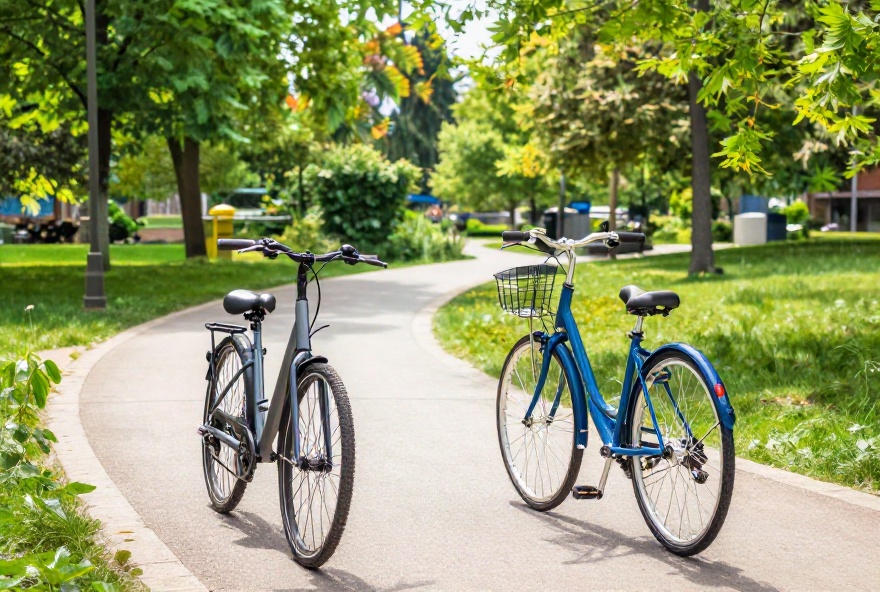
So, you’re staring at your old trusty bike and wondering, ‘What’s the real deal between these newfangled e-bikes and my reliable two-wheeler?’ Fear not, weary commuter! In our post, ‘How To Choose Between E-Bikes and Regular Bikes for Commuting,’ we’ll navigate the e-bike debate, tackling cost, maintenance, and performance. You’ll decide which best suits your lifestyle and budget, with insights inspired by the latest buzz around this topic.

Key Takeaways
- Confused about whether to go electric or pedal-powered for your commute? We’ve got the scoop.
- Discover the cost breakdown for e-bikes vs. regular bikes—because your wallet deserves to know!
- Maintenance matters! Find out which type of bike will have you spending more time with your tool kit.
- Performance is key—will an e-bike give you superhero speed, or will a regular bike keep you super fit?
- Match your commuter choice to your lifestyle and budget. No more buyer’s remorse!
- Are hills your nemesis? Maybe an e-bike is your new best friend.
The E-Bike vs Standard Bike Showdown: What You Actually Need to Know
You know that moment when you’re standing at the bike shop, staring at two wheels and wondering if you’re about to make a decision you’ll regret for the next five years? Yeah, we’ve all been there. Choosing between an e-bike and a regular bike for commuting isn’t just about picking the fancier option—it’s about understanding what actually fits your lifestyle, budget, and daily grind. Let’s break down the real differences so you can ditch the confusion and ride with confidence.
- E-bikes come with a motor and battery system, while standard bikes rely purely on human power.
- The initial investment for e-bikes ranges from $1,500 to $8,000+, whereas regular bikes typically cost $500 to $2,500.
- Performance varies drastically—e-bikes excel on hills and longer distances, but standard bikes win on simplicity and low maintenance.
- Battery life and charging logistics matter more than you’d think for daily commuting scenarios.
Breaking Down the Cost Factor: Your Wallet Wants Answers
Let’s be real—cost is often the dealbreaker in this e-bike vs standard bike debate. The upfront expense of an e-bike can make your eyes water, but there’s more to the story than that initial price tag. When you factor in maintenance, repairs, and fuel savings over time, the picture gets a lot clearer.
- Purchase Price: Standard bikes are wallet-friendly, starting around $300-$500 for decent commuter models, while e-bikes demand a steeper investment due to motor and battery components.
- Long-term savings with e-bikes include reduced car trips, lower gas expenses, and minimal brake wear thanks to regenerative systems on some models.
- Hidden Costs: Battery replacement (typically $300-$900 every 3-5 years) can surprise e-bike owners who didn’t budget accordingly.
- Regular bikes skip the battery drama entirely—your main costs are tires, chains, and occasional tune-ups.
Maintenance and Repair: The Ongoing Reality Check
Here’s where the ebike vs standard bike difference really shows its face. Maintenance isn’t just about keeping your ride pretty—it’s about reliability on those mornings when you absolutely cannot miss your commute. Standard bikes are straightforward; e-bikes? They’re a bit needier, but not in a bad way.
- Standard bikes require basic upkeep: tire pressure checks, chain lubrication, and occasional brake adjustments—all DIY-friendly tasks.
- E-bikes need professional servicing for electrical components, making maintenance pricier and less accessible if you live far from specialty shops.
- Battery Care Matters: Proper charging habits and storage conditions directly impact longevity and performance of your e-bike’s heart.
- Motor repairs aren’t something you can YouTube your way through—plan for professional help and budget accordingly.
Performance on Your Actual Commute: Where the Rubber Meets the Road
Performance isn’t one-size-fits-all, and that’s the thing nobody tells you straight up. Your commute’s terrain, distance, and your fitness level all play starring roles in this decision. An e-bike might be overkill for a flat, three-mile cruise, but it’s a game-changer if you’re tackling hills or covering longer distances daily.
- E-bikes handle inclines without breaking a sweat—literally, you won’t arrive drenched in perspiration like you might on a standard bike.
- Range anxiety is real with e-bikes; most offer 20-60 miles per charge, which works for most urban commutes but requires planning for longer trips.
- Speed and Efficiency: E-bikes typically cruise at 15-28 mph depending on local regulations, cutting commute times compared to standard bikes.
- Standard bikes demand fitness and endurance—they’re perfect if you want exercise built into your day or live in relatively flat terrain.
Weather, Storage, and Lifestyle Fit
This is the part where personal reality intersects with bike choice. Your living situation, climate, and daily habits matter way more than specs and stats. Trust us on this—we’ve seen people buy fancy e-bikes only to leave them gathering dust in cramped apartments.
- Storage space for e-bikes is crucial since they’re heavier (35-60 lbs) and need secure charging access—apartment dwellers should seriously consider this.
- Weather resistance differs: e-bike electronics need protection from extreme moisture, while standard bikes laugh at rain without worrying about circuit damage.
- Lifestyle Match: If you enjoy fitness benefits and want minimal tech dependence, a standard bike keeps things simple and rewarding.
- Social factors matter too—some folks love the e-bike community vibe, while others prefer the traditional cycling culture of standard bike riders.
The Environmental Angle: Feeling Good About Your Choice
Nobody buys a bike to feel worse about their carbon footprint, right? Whether you choose an e-bike or standard bike, you’re already making a solid environmental choice by ditching the car. But let’s compare how these options stack up on the sustainability front.
- E-bikes reduce car dependency significantly, cutting emissions even when accounting for battery production and charging electricity.
- Standard bikes produce zero emissions during their lifetime, though manufacturing still has environmental costs like any product.
- Battery Recycling: Modern e-bike batteries are increasingly recyclable, making the environmental impact less concerning than it was five years ago.
- Both options beat driving, but standard bikes edge ahead for the purist who wants absolutely zero electrical impact.
Making Your Final Decision: A Practical Checklist
Alright, time to stop overthinking and start deciding. We’ve covered cost, maintenance, performance, and lifestyle—now let’s tie it together with a simple framework. Ask yourself these questions, and your answer will practically jump out at you.
- Distance Question: Are you commuting under 5 miles on flat terrain, or dealing with hills and longer distances regularly?
- Budget Reality: Can you comfortably afford the e-bike upfront, plus potential battery replacement costs down the road?
- Maintenance Willingness: Do you enjoy working on bikes, or would you rather pay for professional help when needed?
- Fitness Goals: Is exercise a key benefit you want from commuting, or is speed and convenience your priority?
- Storage and Access: Do you have safe, weatherproof space for storage and convenient charging if you go the e-bike route?
Your Next Move: Test Before You Commit
Here’s our best advice: don’t buy blind. Most bike shops let you test ride models, and rental services exist in most cities for exactly this reason. Spend an afternoon on both options in conditions matching your actual commute. Feel how each one handles, notice what your body tells you, and pay attention to how you feel arriving at your destination.
- Test Rides Matter: Ten minutes of real riding teaches you more than hours of research—your gut reaction is valid data.
- Talk to commuters using both types; their honest experiences often reveal details marketing materials conveniently skip over.
- Consider renting before buying—a few weeks of rental costs beats the regret of a wrong purchase that sits unused.
For more comprehensive insights on navigating the commuting decision, check out this helpful resource that breaks down commuter bike options in detail.

Picking your commuter buddy, whether it’s an e-bike or a regular bike, boils down to weighing cost, maintenance, and performance. E-bikes shine for those tackling longer distances or hills, offering a nice performance boost that can shave minutes off your commute without leaving you drenched in sweat. However, regular bikes are champions of simplicity, often needing less maintenance—especially with their lack of electronic components—and boasting a significantly lower upfront cost. It’s all about balancing what your lifestyle and budget can handle while keeping an eye on the overall cost of ownership, because nobody needs extra surprises there! Remember, it’s not just about getting from A to B, but enjoying the ride.
Speaking of rides, if you’re ready to turn this bike debate into a commute revelation, why not take the conversation further? Follow us on Facebook or check us out on Instagram for tips, stories, and maybe even a chuckle or two. Secure that perfect ride that suits your life—perhaps match it with some snazzy bike gear while you’re at it!





Leave a Reply