
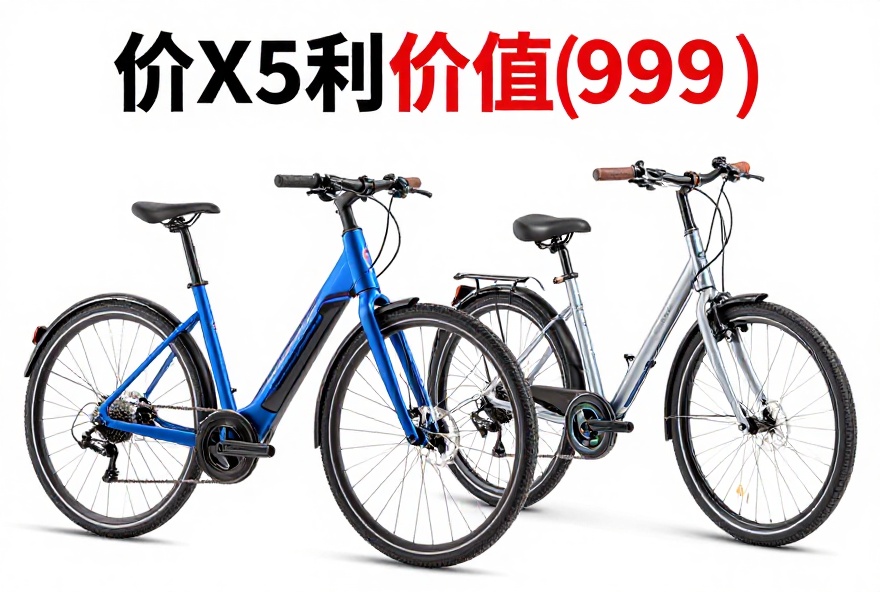
Ever stared at an e-bike’s price tag and felt your bank account wince? You’re not alone! In this deep dive, “Why E-Bikes Cost More Than Standard Bikes (And If Worth It),” we’ll unravel the mystery—from motors to those fancy batteries. If you’ve ever wondered if that premium could supercharge your cycling escapades, you’re in the right place! Let’s pedal into the details and uncover the truth behind the price tag.

Key Takeaways
- Why do e-bikes have a bigger price tag? Let’s talk motors and batteries.
- Comparing e-bikes to standard bikes—who’s worth your wallet?
- Are e-bikes the Ferrari of the two-wheel world or just a fancy scooter?
- Discover how an e-bike’s premium could actually be the thriftiest choice.
- E-bikes: paying up front to skip leg day or textbook efficiency?
The Motor Magic: What’s Really Driving Up E-Bike Prices?
Here’s the thing about e-bikes—that price tag isn’t just for show. When you’re comparing an e-bike vs standard bike, the biggest culprit behind the cost difference? The motor, hands down. We’re talking about a sophisticated piece of engineering that doesn’t come cheap. Most e-bikes pack motors ranging from 250W to 750W, and that technology alone can add $1,000 to $3,000 to your bike’s base price. It’s not like slapping an engine on a bicycle; it’s integrating a precision system that needs to be lightweight, efficient, and reliable.
- Hub Motors vs Mid-Drive Motors: Hub motors sit in the wheel and cost less ($300–$800), while mid-drive motors—positioned near the pedals for better weight distribution—run $800–$1,500. The e-bike vs standard bike difference gets real here.
- Power Output Matters: Higher wattage means faster acceleration and hill-climbing ability, but it also means higher prices. A 250W motor is budget-friendly; a 750W setup? That’s premium territory.
- Quality Control: Reputable motor brands invest heavily in durability testing, warranties, and customer support—all reflected in that final price.
- Integration Complexity: Motors need to work seamlessly with your drivetrain, brakes, and display system. That integration isn’t simple or cheap.
Battery Technology: The Hidden Battery Cost Behind E-Bikes
You know that moment when you realize the battery is basically the heart of your e-bike? Yeah, that’s when the cost reality hits. Batteries are expensive—like, really expensive. A quality lithium-ion battery (the standard for e-bikes) can run you $400 to $1,200 depending on capacity. The e-bike vs standard bike comparison really highlights this, since standard bikes don’t need batteries at all. These aren’t your typical rechargeable AA batteries; they’re sophisticated power packs engineered for hundreds of charge cycles.
- Capacity Determines Range: A 400Wh battery gets you 20–30 miles; a 700Wh battery pushes 40–60 miles. More capacity means higher cost, but also more riding freedom.
- Lifespan and Degradation: Premium batteries last 1,000+ charge cycles (3–5 years of regular use), while cheaper alternatives fade faster.
- Safety Standards: Quality batteries include built-in protection circuits, temperature monitoring, and fire-prevention tech—features that don’t come free.
- Replacement Reality: When your battery eventually ages out, replacing it can cost $400–$900. Factor that into your long-term e-bike ownership budget.
Frame and Structural Reinforcement: Building Stronger E-Bikes
E-bikes are heavier than standard bikes—we’re talking an extra 30–50 pounds from the motor and battery alone. That means the frame needs serious reinforcement to handle the extra weight and the torque from the motor. Manufacturers can’t just slap a motor on a regular bike frame and call it a day. The engineering behind e-bike frames is next-level, and that complexity adds to the cost.
- Material Selection: Premium aluminum or carbon fiber frames resist fatigue better than budget-friendly steel, preventing cracks from repeated motor torque.
- Reinforced Joints and Welds: Extra-strong connection points mean longer frame life and safer rides—especially when accelerating or climbing hills.
- Weight Distribution: Engineers carefully position the motor and battery to maintain balance and handling, requiring custom frame geometry.
- Durability Testing: Reputable brands stress-test frames with motor loads, adding R&D costs passed to consumers.
Electronics and Display Systems: The Brains of Your Ride
An e-bike isn’t just pedal power anymore—it’s basically a computer on two wheels. The display console, sensors, and controller systems that manage your motor are genuinely clever tech. You’ve got pedal-assist sensors, throttle controls, and LCD displays that monitor speed, battery life, and distance. These electronic components? They’re precision-engineered and definitely pricey compared to the mechanical simplicity of a standard bike.
- Smart Displays: Basic LED screens cost less; full-color touchscreen displays with Bluetooth connectivity run $200–$500 extra.
- Sensor Precision: Torque sensors and cadence sensors ensure smooth motor engagement but add $100–$300 to the bill.
- Connectivity Features: GPS tracking, smartphone integration, and fitness app compatibility bump up the price for modern e-bikes.
- Safety Systems: Anti-theft alarms, brake sensors that cut motor power, and regenerative braking systems all contribute to that e-bike vs standard bike cost gap.
Is the Premium Worth It? Breaking Down the Value Equation
So, is shelling out thousands extra for an e-bike actually worth it? Honestly, it depends on your riding habits and lifestyle. For commuters, the answer’s usually yes. For casual weekend riders, maybe not so much. Let’s break this down practically—because the value proposition changes depending on how you actually ride.
- Commuting Wins: If you’re biking 10+ miles daily to work, an e-bike eliminates car trips, saves gas money ($200–$400 monthly), and pays for itself in 2–3 years.
- Physical Limitations: Riders with joint issues, older cyclists, or those recovering from injury find e-bikes transformative—and worth every penny for mobility and independence.
- Hill Climbing and Terrain: Living in a hilly area? The motor handles elevation without killing your legs, making daily riding actually sustainable.
- Casual Riders Beware— if you’re just cruising around the park once a month, a standard bike does the job cheaper and simpler.
The Total Cost of Ownership: Beyond the Sticker Price
Here’s what folks often miss when comparing e-bike vs standard bike prices: you need to think long-term. Sure, an e-bike costs $2,000–$4,000 upfront versus $500–$1,500 for a decent standard bike. But factor in maintenance, repairs, and replacements over five years, and the picture gets clearer. E-bikes do require more specialized care, but they also handle wear differently.
- Maintenance Costs: E-bikes need annual motor servicing ($100–$200) and potential controller repairs. Standard bikes skip these, but have higher brake and drivetrain wear from manual effort.
- Tire and Brake Replacement: E-bike tires wear faster (more weight), costing $30–$80 per tire. Hydraulic brakes on e-bikes cost $150–$300 to replace versus $50–$100 for standard bikes.
- Insurance and Registration: Some areas require e-bike registration ($10–$50 annually); some insurers charge extra. Standard bikes avoid this entirely.
- Resale Value: Quality e-bikes hold 60–70% of their value after three years, while standard bikes typically retain 40–50%—so you’re not losing as much as it seems.
Real-World Scenarios: When E-Bikes Actually Pay Off
We think the best way to decide is imagining yourself in these scenarios. Does your life match any of these patterns? Because that’s where you’ll find real value in upgrading from a standard bike to an e-bike. The premium makes sense for specific situations—and honestly, it’s less about the bike and more about matching it to your actual needs.
- Urban Commuters: Replacing a 15-mile daily car commute with an e-bike saves $3,000+ yearly in gas and parking. That e-bike investment pays itself back fast.
- Hill City Dwellers: If you live where every ride involves climbing, e-assist transforms your life from “dreading the ride” to “actually enjoying it.”
- Aging Gracefully: Seniors staying active on e-bikes avoid expensive mobility aids and keep independence longer—genuinely priceless.
- Weather Warriors: Those who bike year-round benefit from e-bikes’ power on bad-weather days when motivation tanks.
Finding Your Sweet Spot: Budget vs. Performance in E-Bikes
Not every e-bike needs to cost $4,000. The market’s evolved—you can find solid entry-level e-bikes around $1,200–$1,800 that deliver real value without the premium price tag. The e-bike vs standard bike equation shifts dramatically once you understand what features matter most to you. Skip the flashy touchscreen if you don’t need it; prioritize battery capacity if range matters.
- Budget E-Bikes ($1,000–$1,800): Hub motors, basic displays, 400Wh batteries. Great for casual riders and short commutes.
- Mid-Range Sweet Spot ($1,800–$3,000): Mid-drive motors, better components, 500–600Wh batteries. Perfect for serious commuters and recreational riders.
- Premium Options ($3,000+): Top-tier motors, carbon frames, smart connectivity, long warranties. For enthusiasts who want the best.
- Pro Tip: Check return policies and warranty lengths—they’re better indicators of value than price alone.
Want to dive deeper into the e-bike world? Check out this comprehensive resource for more insights on making the right choice for your riding lifestyle.

Conclusion
As we’ve unraveled the mystery behind why e-bikes cost more than standard bikes, it’s clear that the extra cash primarily covers that crucial motor and battery under the hood—or should I say, under the frame. The high-tech components not only elevate your riding experience but also make sure your morning commute or countryside adventure is a breeze. While the upfront cost is nothing to scoff at, if your riding habits lean towards longer commutes, diverse terrains, or simply the joy of a pedal-free ride uphill, then an e-bike could indeed be worth every penny.
So, ready to let an e-bike rev up your ride? If you’re pondering a purchase, or maybe you just want to geek out over gears and watts, head over to our Facebook and Instagram. Share your e-bike story or drop your questions and let’s fuel this two-wheeled conversation!





Leave a Reply