
Ever feel like your AI videos are like hidden gems buried under digital noise? Let’s fix that! In this blog, we’ll dive into ‘How To Optimize AI-Generated Videos For Platform Algorithms’. Learn the tweaks that turn generic AI videos into algorithm magnets with insights on aspect ratios, pacing, captions, and that secret sauce platforms crave. Time to make your videos the next big hit!
Key Takeaways
- Ever wondered if aspect ratios could unlock algorithms? Spoiler: they can!
- Pacing isn’t just for runners—find out why it matters in videos.
- Captions aren’t just subtitles; they’re your secret algorithm ally.
- Discover the secret sauce that turns videos into platform favorites.
- Unleash your AI video’s potential with trending 2026 tools.
- Learn to make AI videos go viral with a few simple tweaks.
- Stop scrolling! This is what platforms actually reward.
Why AI-Generated Videos Need Algorithm Optimization
You know that moment when you upload an AI-generated video and it just… sits there? Yeah, we’ve all been there. The truth is, creating AI videos is only half the battle—the real magic happens when you understand how platform algorithms actually work. Most creators assume that if the content’s good, the algorithm will reward it. Spoiler alert: it won’t. Platforms like TikTok, Instagram, YouTube, and LinkedIn have incredibly specific preferences, and they’re constantly rewiring how they decide what goes viral. This section digs into why optimization isn’t optional—it’s essential.
- Algorithms prioritize engagement signals: watch time, retention, shares, and comments trump raw video quality every single time.
- AI-generated videos often lack the nuanced pacing and human touches that keep viewers glued—but they’re fixable with the right tweaks.
- Platform-specific formatting matters more than you’d think—what works on YouTube Shorts won’t necessarily crush it on TikTok, and vice versa.
- The “secret sauce” isn’t magic; it’s data-driven optimization that accounts for aspect ratios, captions, pacing, and hook strength within the first 3 seconds.
Mastering Aspect Ratios Across Platforms
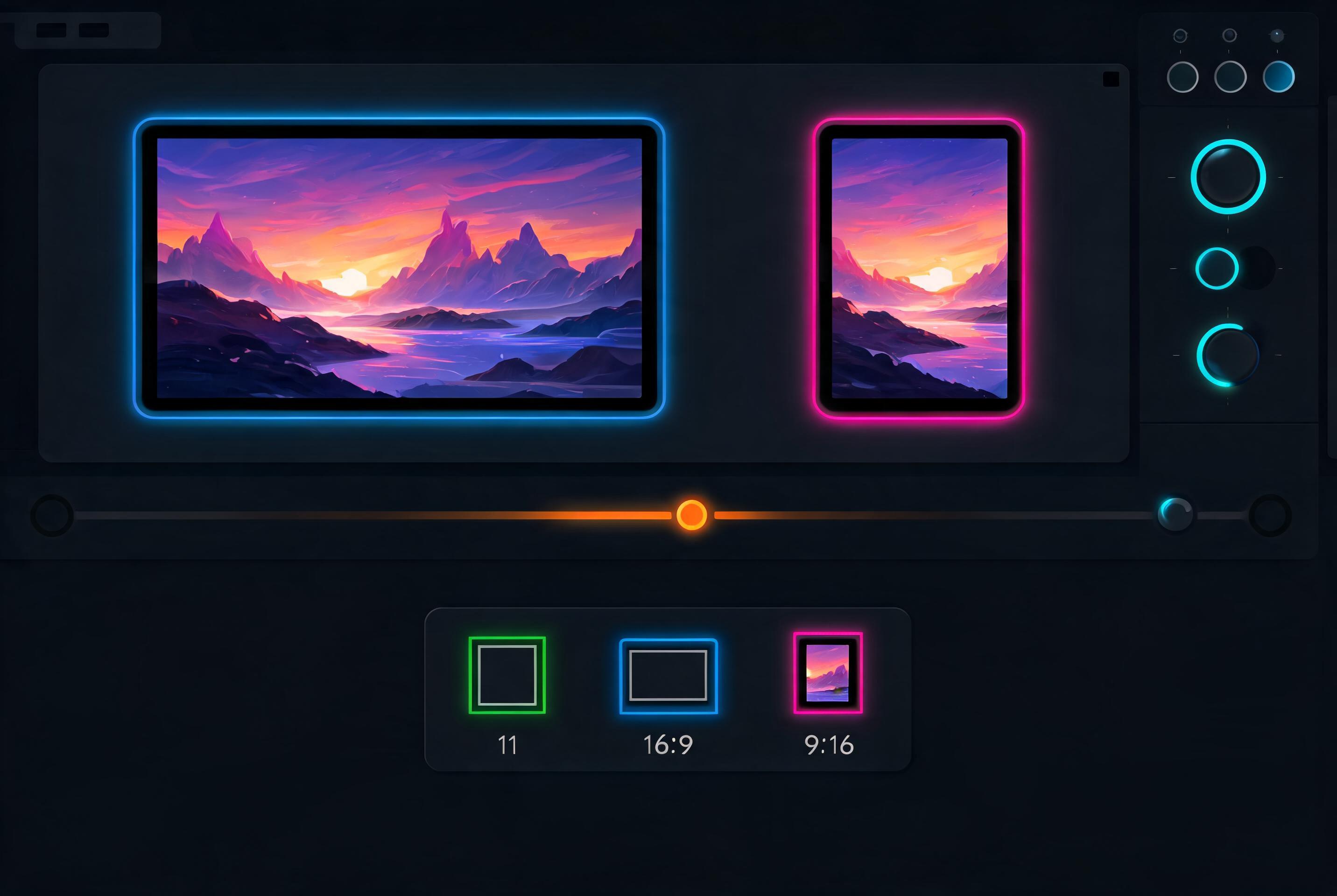
Here’s something that trips up most AI video creators: they generate content in one size and expect it to perform equally everywhere. Nope. Each platform’s algorithm has been trained on millions of videos in specific dimensions, and it subtly rewards content that fits those dimensions. Think of aspect ratio as the digital equivalent of dressing for the occasion—wear the wrong outfit, and people notice (even if they don’t consciously realize why). Let’s break down what each major platform actually wants from your AI-generated videos.
- TikTok & Instagram Reels demand 9:16 vertical format—this fills the entire mobile screen, reducing scroll friction and boosting watch time, which the algorithm absolutely loves.
- YouTube Shorts need 9:16 as well, but YouTube also rewards 16:9 horizontal videos for regular uploads—if you’re splitting your AI video content across platforms, think vertically first.
- LinkedIn prefers 16:9 or 1:1 square formats—professional audiences consume content differently, and the algorithm accounts for this behavior.
- Facebook’s algorithm is flexible but leans toward 1:1 square—it’s optimized for feed scrolling rather than full-screen immersion, so your AI video pacing should reflect quicker cuts and tighter hooks.
- Generate multiple versions of the same AI video in different aspect ratios—most trending video tools 2026 now support batch exports, so leverage that to max out your reach without extra rendering time.
The Art of Pacing: Why AI Videos Feel “Off”
AI-generated videos often have a rhythm problem. You’ve probably noticed it—there’s this subtle, robotic cadence that doesn’t feel quite human. It’s not the visuals; it’s the pacing. The algorithm notices this too, and while it doesn’t explicitly penalize “AI-ness,” it does reward videos that maintain strong retention curves. When viewers feel that disconnect in pacing, they bounce—and bounce rates kill your algorithmic performance. Let’s talk about fixing this without reshooting everything.
- Add visual cuts every 2-3 seconds in the opening 10 seconds—this combats the “slow AI video” stereotype and matches the rapid-fire editing style that platforms’ algorithms associate with high engagement.
- Match your audio pacing to visual transitions—if your voiceover has natural pauses, your AI video should cut, zoom, or transition during those moments to keep energy consistent.
- Use dynamic elements strategically—text overlays, animations, and subtle effects can mask AI generation and create the illusion of professional pacing, which algorithms reward with better placement.
- Front-load your hook aggressively—the first 0.5 seconds determine whether someone keeps watching or scrolls past, so make sure your AI video’s opening is punchy and intentional.
Captions: The Underrated Algorithm Weapon
Here’s a stat that’ll blow your mind: videos with captions get watched by 80% of viewers when sound is off, and platforms’ algorithms track this engagement metric obsessively. Most creators treat captions as accessibility afterthoughts, but savvy creators know they’re actually a core ranking factor. For AI-generated videos specifically, captions serve double duty—they boost retention and they help the algorithm understand your content better. It’s like giving the algorithm a cheat sheet to your video’s purpose.
- Embed captions directly into your AI video file rather than relying on platform auto-generation—this shows intentionality, and algorithms subtly favor human-edited captions over automated ones.
- Keep captions concise but impactful—break sentences into bite-sized chunks that match your pacing; viewers shouldn’t need to read a novel while watching a 15-second clip.
- Use text styling strategically to highlight key moments—color changes, size variations, and emphasis create visual hierarchy that keeps retention high and signals importance to the algorithm.
- Include relevant keywords naturally within your captions—this helps with SEO and gives the algorithm better context about your AI video’s topic, boosting discoverability.
- Sync captions with audio cues—when captions appear exactly when the voiceover hits a key point, engagement metrics spike because viewers feel the content’s intentionality.
Hook Strength: The First Three Seconds That Matter Most
The algorithm’s decision about your AI-generated video happens in milliseconds. Platforms measure something called “initial playback retention,” which is just a fancy way of saying “how many people watched past the first 3 seconds?” If you bomb this metric, even the best content won’t get pushed to wider audiences. The hook isn’t about clickbait—it’s about delivering immediate value or intrigue that makes someone’s brain say, “Yeah, I want to see more of this.” Let’s look at hook strategies that actually work for AI videos.
- Lead with the biggest benefit or most striking visual—don’t bury your lede; if your AI video teaches people how to save money, say it in the first sentence, not the fifth.
- Use pattern interrupts like text overlays, quick zooms, or color flashes—these are especially effective for AI videos because they compensate for the slightly-too-smooth aesthetic that AI generation naturally produces.
- Ask a compelling question or present a surprising statement—curiosity gaps keep people watching, and algorithms reward videos that hold attention through these micro-moments of intrigue.
- Show movement or action immediately—static AI video opens kill retention; dynamic visuals signal that something interesting is happening, so viewers stick around.
Hashtag Strategy and Metadata Optimization
Hashtags feel like an old-school tactic, but they’re actually still critical for algorithm performance—especially on TikTok and Instagram. Here’s the thing though: hashtag strategy for AI-generated videos is different than for traditional content. You’re not just tagging your way to visibility; you’re signaling to the algorithm which communities to show your video to. The metadata game is all about precision—you want to reach the right audience, not everyone. Let’s talk about doing this smartly.
- Mix trending and niche hashtags strategically—use 3-5 trending tags with millions of views to get initial exposure, then layer in 5-10 niche tags that target your specific audience with higher conversion potential.
- Research hashtags that correlate with high engagement rates, not just raw follower counts—some hashtags are dead zones where content goes to get buried; use trending video tools 2026 to identify which tags actually move the needle.
- Place hashtags strategically in your caption and comments—TikTok’s algorithm weighs caption hashtags more heavily than comment hashtags, so prioritize placement accordingly for your AI video strategy.
- Create a branded hashtag for consistent AI video series—this builds community and gives the algorithm a way to bundle related content, boosting visibility for your entire video library.
- Avoid hashtag stuffing at all costs—algorithms penalize videos that feel spammy; 8-15 relevant hashtags outperform 50 random ones every single time, especially for AI-generated content where quality signals matter more.
Thumbnail Optimization and Click-Through Rates
Thumbnails matter less on short-form platforms like TikTok, but on YouTube and in feed previews, they’re absolutely critical. Here’s the challenge with AI-generated videos: the software often produces visually generic frames that don’t pop. A weak thumbnail means lower click-through rates, and lower CTR signals to the algorithm that your content isn’t compelling enough to deserve wider distribution. You don’t need fancy Photoshop skills—you just need to understand what catches eyes and what the algorithm rewards.
- Use high-contrast colors and bold text overlays—your AI video’s thumbnail should be readable at thumbnail size (around 120×90 pixels), which means simplicity wins over detail.
- Include facial expressions or emotional reactions when possible—even AI-generated human faces perform better than landscapes or abstract imagery, because humans are naturally drawn to other humans.
- A/B test multiple thumbnail styles and track which ones drive higher CTR—platforms reward videos with strong click-through performance, so this optimization directly impacts algorithmic distribution.
- Make sure your thumbnail aligns with your title and content—misleading thumbnails tank retention metrics, and algorithms absolutely penalize videos where viewers click and immediately bounce.
Timing and Posting Strategy for Maximum Reach
When you post your AI-generated video matters more than most creators realize. Platforms’ algorithms have learned that content posted during peak engagement hours gets more immediate interaction, which signals to the algorithm that it’s worth pushing further. This isn’t rocket science—it’s just understanding when your specific audience is actually online and paying attention. Let’s break down the strategy.
- Post when your audience is most active—for most platforms, this is evenings (6-9 PM) on weekdays and late mornings on weekends, but use your analytics to find your specific peak hours.
- Maintain consistent posting schedules for AI video series—algorithms reward creators who post predictably because it trains their recommendation systems to prioritize your content to your followers.
- Leverage time zones if you have a global audience—spread your posts across different times to catch peak hours in multiple regions, maximizing initial engagement momentum.
- Avoid posting multiple AI videos in rapid succession—platforms throttle visibility when they detect spam-like behavior, so space your content out strategically to maintain algorithmic favor.
- Monitor early engagement and amplify winners quickly—if your AI video gets strong traction in the first hour, engage with comments and shares to signal momentum to the algorithm.
Engagement Signals and Building Momentum
Here’s what most creators miss: the algorithm doesn’t just look at your content; it looks at how people interact with it in real-time. The first few hours after posting are absolutely crucial for AI-generated videos. If your video gets decent engagement early, the algorithm notices and starts pushing it to wider audiences. If it flatlines, the algorithm assumes it’s not resonating and shelves it. This section covers how to kickstart that momentum and keep it rolling.
- Respond to comments within the first hour of posting—engagement with your audience signals to the algorithm that your video is sparking conversation, which boosts distribution significantly.
- Encourage shares and saves, not just likes—these actions carry more weight in algorithmic calculations because they indicate deeper value perception; design your AI video CTAs around these metrics.
- Create content series or follow-ups to previous videos—if one AI video performs well, the algorithm gives your next upload a visibility boost because it expects your audience to engage again.
- Collaborate with other creators or leverage user-generated content angles—duets, stitches, and remixes (where applicable) signal community engagement, which algorithms heavily reward for reach expansion.
Platform-Specific Algorithm Secrets You Need to Know
Each platform’s algorithm has its own personality, and what crushes it on TikTok might tank on YouTube. Understanding these nuances is the real secret sauce for optimizing AI-generated videos. We’re talking about the hidden preferences that platforms don’t advertise but that their algorithms absolutely prioritize. Let’s get specific about what each major platform actually rewards.
- TikTok prioritizes watch time and completion rate above all else—your AI video should aim for 75%+ completion rate to get algorithmic favor; this means pacing and hook strength are absolutely non-negotiable.
- Instagram Reels algorithm values saves and shares over likes—design your AI video to be shareable and valuable enough that people want to send it to friends or bookmark it for later.
- YouTube’s algorithm weighs click-through rate and average view duration heavily—your thumbnail and hook need to convert clicks, and your content needs to hold attention throughout to beat the algorithm’s quality threshold.
- LinkedIn’s algorithm favors authentic, professional conversation-starters—AI-generated videos that feel too polished can underperform here; inject personality and genuine insights into your content strategy.
- Facebook rewards videos that generate comments and discussion—the algorithm sees comments as deeper engagement than views, so craft your AI video with talking points that spark conversation in the comments section.
Tools and Software for AI Video Optimization
You don’t need to manually tweak every aspect of your AI-generated video. Trending video tools 2026 have gotten incredibly sophisticated at handling optimization automatically. That said, the best results come from combining AI automation with human judgment—let the software handle the heavy lifting, but you make the final calls on creative direction. Here’s what to look for in your toolkit.
- Use AI video generation platforms that offer built-in aspect ratio exports—this saves hours compared to manually resizing everything; most modern tools support simultaneous exports to multiple platform specifications.
- Leverage caption generation and styling tools with platform-specific presets—these tools now understand algorithm preferences and can auto-format captions for maximum impact on each platform.
- Employ analytics dashboards that track performance across multiple platforms simultaneously—this gives you real-time insights into what’s working and what needs adjustment for your AI video strategy.
- Consider using trending video tools 2026 that include A/B testing features—automated testing of different hooks, captions, and thumbnail styles lets you optimize without guesswork; algorithms reward the best-performing variations with better distribution.
Common Mistakes That Kill AI Video Performance
Before we wrap up, let’s talk about the pitfalls that derail most creators’ efforts to optimize AI-generated videos. These are the mistakes that even experienced creators make, usually because they haven’t spent time thinking about algorithm optimization. Knowing what not to do is just as important as knowing what to do, especially when platform algorithms are constantly evolving.
- Neglecting the first 3 seconds—this is the kiss of death for algorithmic performance; even perfect content buried under a weak hook won’t get the initial engagement boost needed to climb the algorithm.
- Using the same AI video across all platforms without adaptation—platforms are different, audiences are different, and algorithms are different; one-size-fits-all content underperforms universally.
- Skipping captions or using platform auto-generation without review—AI-generated captions are often inaccurate, and inaccuracy tanks retention and engagement metrics that algorithms track.
- Overloading hashtags or using irrelevant tags—this screams spam to algorithms, and it tanks your visibility; quality over quantity always wins.
- Posting inconsistently and then expecting viral success—algorithms reward consistent creators; sporadic posting signals low commitment and gets deprioritized in recommendation systems.
- Ignoring analytics and iterating based on gut feel instead of data—every platform provides detailed engagement metrics; using these to refine your strategy is non-negotiable for sustained algorithmic success with AI video content.
The Future of AI Video Optimization and What’s Coming
The landscape of AI-generated video optimization is evolving faster than most creators can keep up with. Platforms are getting smarter about detecting AI content, algorithms are incorporating new ranking factors, and creator tools are becoming more sophisticated. The good news? This isn’t a race you lose by standing still—it’s an opportunity to stay ahead of the curve by understanding what’s coming and adapting your strategy accordingly.
- Platforms are increasingly prioritizing “authenticity signals” that favor human-created or heavily customized content—pure, unmodified AI video output will likely see algorithmic disadvantage in the near future, making optimization and personalization even more critical.
- Video SEO is becoming more important as search algorithms incorporate video content more deeply—optimizing your AI video’s metadata, captions, and keyword strategy will matter for both platform algorithms and search visibility.
- Interactive elements like polls, questions, and branching narratives are getting algorithmic boosts—AI video tools that support these features will likely outperform static video going forward.
- Creator communities and engagement metrics are gaining weight in algorithmic calculations—building genuine audience connection around your AI video content isn’t optional; it’s essential for long-term algorithmic success.
- Explore resources like the main article about AI video optimization to stay updated on platform changes and trending strategies—continuous learning is the only way to maintain algorithmic advantage as platforms evolve their ranking systems.
Optimizing AI-generated videos for platform algorithms is an art form that can turn bland visuals into must-see content. By tweaking aspect ratios to fit the screen like a glove and mastering the best pacing, your videos can capture both audience attention and algorithmic favor. Captions add not just clarity but an engaging layer for those scrolling in silence, and of course, knowing the secret sauce that platforms actually reward is your golden ticket. The key takeaway here is that with the right adjustments, your AI videos aren’t just another face in the crowd—they’re trending video tools of choice that pull in viewers like a magnet.
If you’re ready to dazzle algorithms with your AI video prowess, let’s continue the conversation! You can catch our updates and share your insights on Facebook, flex some creative muscles on Instagram, or even jump into a thoughtful thread on Threads. For professional exchanges, join us on LinkedIn. Let’s make those platform algorithms work for you!
Leave a Reply