
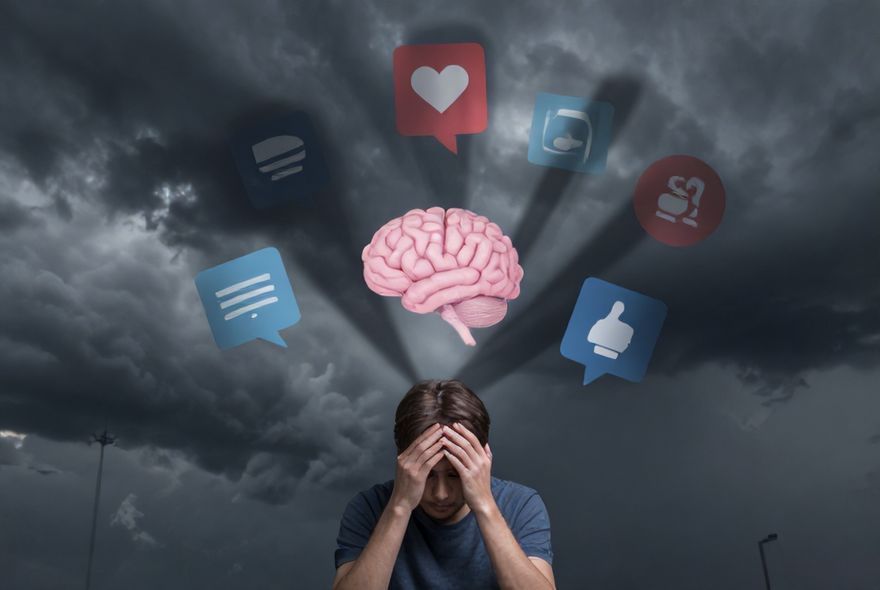
Ever wonder why scrolling through your feed feels like a mental rollercoaster? Dive into Why Social Media Destroys Young Adult Mental Health Today as we unlock the science-backed mysteries behind declining youth mental wellness. From hidden psychological traps to daily online challenges, today’s social platforms are like a double-edged sword for teens. Inspired by insights similar to those from recent conferences, this post will decode the impact and tendencies affecting our younger generations. Grab a coffee, get comfy, and let’s unravel these truths together and how they might even impact trends in 2026.
Key Takeaways
- Think social media’s just harmless fun? It might be wrecking young minds!
- Discover how scrolling affects mental health—backed by science, of course.
- Analyze those sneaky online threats teens face daily.
- Did someone say psychological traps? Let’s reveal them!
- Social media’s not-so-guilty pleasures hurting youth mental wellness in 2026.
The Silent Crisis: How Social Media Is Rewiring Young Brains
You know that feeling when you scroll through social media for what you think is five minutes, and suddenly it’s been an hour? Yeah, there’s actual science behind why that happens—and it’s not pretty. The connection between social platforms and declining youth mental wellness has become impossible to ignore. We’re living in a time when young adults are experiencing unprecedented levels of anxiety, depression, and low self-esteem, and social media isn’t just sitting on the sidelines. It’s actively playing a starring role in this mental health crisis. Understanding how these platforms work their psychological magic on our brains is the first step toward recognizing the hidden traps we’re falling into every single day.
- Dopamine Addiction by Design: Social media platforms are engineered to trigger dopamine releases—the same neurochemical involved in gambling and drug addiction. Every like, comment, and share sends a little hit to your brain’s reward system, creating a cycle that’s hard to break.
- The Algorithm’s Dark Side: These platforms don’t just show you what you want to see; they show you what keeps you scrolling longest. For young adults struggling with mental health, this often means more content about anxiety, perfectionism, and comparison—basically, emotional quicksand.
- Neuroplasticity and Youth Vulnerability: Teen and young adult brains are still developing (until around age 25), making them especially susceptible to the addictive mechanisms built into social platforms. The prefrontal cortex—responsible for impulse control and decision-making—isn’t fully formed yet.
- Constant Connectivity Anxiety: The expectation to always be “on” and responsive creates chronic stress. FOMO (fear of missing out) isn’t just a cute acronym; it’s a documented psychological phenomenon that fuels anxiety and depression in young people.
- Real-Time Mental Health Impact: Recent youth mental health trends show a stark correlation between increased social media use and rising rates of depression, self-harm, and suicidal ideation among teenagers and young adults worldwide.
The Comparison Trap: Why Everyone Else’s Life Looks Better Online
Let’s be honest—social media is basically a highlight reel masquerading as reality. Everyone’s posting their best moments, filtered selfies, and carefully curated life updates. Meanwhile, you’re sitting there comparing your behind-the-scenes blooper reel to everyone else’s theatrical premiere. This constant comparison is absolutely devastating for youth mental wellness, and the psychological impact is backed by serious research. It’s one of the most insidious hidden psychological traps because it feels so innocent. You’re just scrolling, right? But your brain is working overtime, measuring your worth against impossible standards.
- The Instagram Effect Is Real: Studies show that social media users who frequently compare themselves to others report significantly higher rates of depression and anxiety. Platforms designed around visual content—where appearance is currency—hit young people particularly hard since body image issues are already a major concern during adolescence and early adulthood.
- Social Currency and Self-Worth: Likes, followers, and shares have become a form of social currency that young adults use to measure their value. When posts don’t perform well, it triggers genuine distress and feelings of rejection. Your brain doesn’t distinguish between digital rejection and real-world rejection—both hurt.
- The Perfectionism Spiral: Social media encourages a perfectionist mindset. Young people spend hours crafting the “perfect” post, editing photos endlessly, and worrying about how they’re perceived online. This obsession with perfection translates directly into increased anxiety and stress in daily life.
- Curated Lives, Real Consequences: When young adults internalize the idea that everyone else has it figured out (based on their social media), it creates a false reality where they feel uniquely broken or inadequate. This gap between perception and reality is a major driver of mental health issues in young people today.
- Peer Validation Dependency: The algorithm rewards content that gets engagement, teaching young people to seek external validation constantly. This dependency on others’ approval for self-worth is a recipe for anxiety, depression, and diminished resilience.
Cyberbullying and the Permanence of Digital Cruelty
Remember when bullying happened at school and you could go home and escape it? Those days are gone. Now, cruelty follows young adults everywhere—into their bedrooms, their bathrooms, their most private moments. Cyberbullying represents a uniquely modern form of psychological torment that’s reshaping youth mental health in devastating ways. The permanence of digital content means that harsh comments, mean memes, and humiliating posts can haunt a person for years. Unlike traditional bullying, there’s no safe haven, and the audience is potentially unlimited. This constant exposure to peer cruelty is one of the most damaging hidden psychological traps of our social media age.
- 24/7 Harassment Without Escape: Cyberbullying doesn’t have business hours. A cruel comment posted at 2 AM can ruin someone’s entire next day—and week, and month. Young adults dealing with cyberbullying report higher rates of anxiety, depression, and in severe cases, self-harm and suicidal thoughts.
- Audience Amplification Effect: When bullying happens online, it’s not just between two people—it’s often public and can be shared, screenshot, and reshared indefinitely. This amplification multiplies the psychological damage. One mean comment can become viral humiliation in minutes.
- Permanence and Searchability: Digital cruelty is archived. Future employers, romantic partners, and college admissions officers might stumble upon old posts or comments. This permanent record creates ongoing anxiety and shame that never fully disappears, even after the immediate bullying stops.
- Disinhibition Effect: Social media creates psychological distance between bullies and their victims. People say things online they’d never say face-to-face, leading to more frequent and more vicious attacks. Young people are both more likely to bully online and more devastated by it.
- Mental Health Crisis Connection: Youth mental health trends show alarming correlations between cyberbullying experiences and clinical depression, anxiety disorders, and eating disorders. For vulnerable young adults, cyberbullying can be literally life-threatening.
Sleep Disruption and the Blue Light Blues
You’re lying in bed at midnight, telling yourself you’re going to put your phone down “in just five more minutes.” Then it’s 1 AM, 2 AM, and you’re still scrolling. Sound familiar? The relationship between social media use and sleep disruption is one of the most underestimated factors in declining youth mental wellness. Your phone’s blue light suppresses melatonin production, and the psychological stimulation of social media keeps your brain in an activated state. Combined with the FOMO-fueled compulsion to keep checking, you’ve got a recipe for sleep deprivation that’s silently destroying young adults’ mental health.
- Melatonin Suppression and Circadian Rhythm Chaos: Blue light from screens tricks your brain into thinking it’s daytime, disrupting your natural sleep-wake cycle. Young adults who use social media before bed report significantly worse sleep quality, and chronic sleep deprivation is directly linked to depression, anxiety, and impaired emotional regulation.
- The Midnight Doom-Scroll Phenomenon: Late-night social media use often involves consuming negative content—news, drama, comparison content. Your brain is processing emotional stimuli right when it should be winding down, leaving you wired and anxious instead of sleepy.
- Sleep Deprivation Amplifies Mental Health Issues: When you’re sleep-deprived, your brain’s emotional processing center (the amygdala) becomes hyperactive while your prefrontal cortex—responsible for emotional regulation—becomes less effective. Translation: you’re more reactive, more anxious, and more depressed when you’re not sleeping.
- The Vicious Cycle: Poor sleep increases anxiety and depression, which makes you more likely to use social media as a coping mechanism, which disrupts sleep further. It’s a hidden psychological trap that’s easy to fall into but hard to escape without conscious intervention.
- Youth Mental Health Trends Show the Impact: Recent studies on youth mental health trends show that young adults who use social media in the hour before bed have 30% worse sleep quality and 40% higher rates of reported anxiety compared to those who don’t.
FOMO, Anxiety, and the Illusion of Missing Out
Here’s the thing about FOMO—it’s not really about missing out. It’s about the fear of missing out, which is way more insidious. Social media creates this constant stream of events, experiences, and announcements, and your brain interprets every post about someone else’s fun as evidence that you’re being left behind. We think this is one of the most psychologically damaging aspects of social platforms because it taps into fundamental human needs for belonging and acceptance. Young adults are especially vulnerable because they’re at a life stage where social connection feels like survival, and social media exploits that ruthlessly.
- The Infinite Stream of Comparison Content: Social media ensures you’re always seeing what everyone else is doing. Someone’s at a concert, someone’s on vacation, someone’s at a party—and you’re home alone. Your brain registers this as social exclusion, triggering anxiety and feelings of inadequacy, even if you didn’t actually want to go to that party.
- Anxiety Becomes a Feature, Not a Bug: Platforms actually benefit when users feel anxious because anxious people engage more—they check their feeds constantly, looking for reassurance or connection. So FOMO isn’t a side effect of social media; it’s baked into the business model. The anxiety is the point.
- Real-Time Notification Torture: Notifications alert you the moment something’s happening. Your friends are posting from that event right now, and you’re getting live updates of what you’re missing. This real-time aspect of FOMO is uniquely modern and uniquely torturous for young people trying to manage anxiety.
- Social Exclusion Triggers Primal Fear: Our brains evolved to fear social exclusion because, historically, being kicked out of the group meant death. FOMO triggers that ancient fear response. You’re not just annoyed you missed a party; your nervous system is literally reacting as if you’re in danger.
- Documented Mental Health Impact: Research on youth mental health trends consistently shows that FOMO is correlated with increased anxiety, depression, and lower self-esteem. Young adults who experience high FOMO report using social media more compulsively, creating a feedback loop that’s nearly impossible to break.
The Dopamine Dependency: Understanding Addiction Without Substances
Social media platforms aren’t accidents of design—they’re carefully engineered by teams of psychologists and engineers whose job is to make them as addictive as possible. You know how slot machines work? They give you unpredictable rewards at unpredictable intervals, which is actually the most addictive reward schedule. Social media works the same way. You don’t know which post will get likes, which comment will spark conversation, which moment will go viral. This unpredictability keeps you coming back, chasing that dopamine hit. For young adults still developing their impulse control, this is absolutely devastating to mental wellness.
- Variable Reward Schedules Are Maximally Addictive: Scientists have known for decades that variable rewards (you get a reward sometimes, but not always, and you don’t know when) create the strongest addiction. Social media uses this principle deliberately. Your post might get 50 likes or 5 likes—you never know, so you keep checking obsessively.
- The Brain on Social Media Looks Like the Brain on Cocaine: Okay, that’s a bit hyperbolic, but studies show similar dopamine activation patterns. When young adults get likes or positive feedback on social media, their brains light up in reward centers the same way they do with substance use. This isn’t metaphorical addiction; it’s neurological.
- Tolerance and Escalation: Like any addiction, you develop tolerance. The dopamine hit from 50 likes eventually feels normal, so you need 100 likes to feel the same rush. This escalation drives increasingly compulsive behavior and risky posting to get engagement, which can lead to humiliation or regret.
- Withdrawal Symptoms Are Real: Young adults who try to take breaks from social media report genuine withdrawal symptoms—anxiety, irritability, restlessness. This isn’t weakness; it’s their brains literally missing the dopamine they’ve become dependent on.
- Developmental Vulnerability: Adolescent and young adult brains are more susceptible to addiction because their reward-processing centers are highly active while their impulse-control centers are still developing. This creates a perfect storm where young people are maximally vulnerable to the addictive design of social platforms, directly impacting youth mental health trends.
Body Image Distortion and the Filtered Reality Problem
Filters are a lie, but not the kind you can ignore. They’re a lie you internalize and then measure yourself against. Young adults—especially young women, though increasingly young men too—are growing up in a world where the “normal” human face they see online is literally filtered, edited, and digitally enhanced. This creates an impossible standard that nobody in real life can actually meet. It’s one of the most damaging hidden psychological traps because it operates on a visual, subconscious level. You don’t consciously think, “I need to look like a filtered version of myself,” but your brain absorbs the message anyway, and your mental health suffers.
- Filter-Induced Dysmorphia: Young adults are increasingly reporting body dysmorphic disorder and distorted self-image directly linked to filter use. They look in mirrors and feel shocked or disappointed that they don’t look like their filtered photos. Some are even getting cosmetic surgery to match their filtered appearance—let that sink in for a moment.
- Unattainable Beauty Standards: When influencers and peers post filtered, edited, and often surgically-enhanced versions of themselves, it becomes the baseline for “normal.” Real skin, real bodies, real faces start looking wrong by comparison. This distortion of reality is creating an entire generation of young people with deeply distorted body image and crippling insecurity.
- The Snowball Effect: A young person posts a filtered photo, gets likes and positive feedback, starts preferring their filtered self to their real self. They use filters more, rely on them for confidence, and eventually feel unable to be seen without them. This dependency on digital enhancement is a form of mental health crisis that’s still being underestimated.
- Gender-Specific Impacts: While body image issues affect all genders, young women report higher rates of eating disorders, exercise obsession, and cosmetic procedure consideration correlated with social media use. Young men are increasingly affected too, with rising rates of muscle dysmorphia and gym obsession linked to fitness influencer content.
- Long-Term Psychological Damage: Youth mental health trends show rising rates of eating disorders, body dysmorphia, and low self-esteem directly correlated with social media use and filter dependency. The psychological damage from distorted body image can persist long into adulthood, affecting relationships, career choices, and overall life satisfaction.
The Algorithm’s Echo Chamber: When Your Feed Becomes Your Reality
You’ve probably noticed that your social media feed seems weirdly tailored to you. That’s not coincidence—that’s the algorithm working exactly as designed. It learns what you engage with and shows you more of the same. This sounds convenient, right? But here’s where it gets psychologically dangerous: if you engage with anxious content, depressing content, or content that triggers your insecurities, the algorithm will give you more of it. For young adults struggling with mental health, this creates an echo chamber where their negative thoughts and anxieties get amplified and reinforced constantly. It’s a hidden psychological trap that most people don’t even realize is happening.
- Algorithmic Amplification of Negativity: The algorithm doesn’t care about your mental health; it cares about engagement. Content that triggers strong emotions—including negative ones like anger, anxiety, and despair—gets more engagement. So if you’re struggling with depression, the algorithm might actually push you toward more depressing content because that’s what keeps you scrolling.
- Radicalization and Polarization: Algorithms create filter bubbles where you only see content that aligns with your existing beliefs and interests. For young adults, this can lead to extreme polarization, conspiracy theory rabbit holes, and echo chambers that reinforce unhealthy thought patterns and anxiety.
- Personalized Psychological Manipulation: The algorithm knows what triggers you—your insecurities, your fears, your vulnerabilities. And it uses that information to show you content designed to keep you engaged. If you’re insecure about your appearance, it shows you fitness content. If you’re anxious about missing out, it shows you event invitations. It’s psychological manipulation at scale.
- Mental Health Content Rabbit Holes: A young person might start following mental health awareness accounts, which is good. But the algorithm sees engagement and starts showing them increasingly extreme mental health content—detailed descriptions of self-harm, suicide methods, eating disorder tips. What started as seeking support becomes a descent into harmful content.
- Documented Youth Mental Health Trends: Research on youth mental health trends shows that algorithmic feeds are contributing to increased polarization, conspiracy theory belief, anxiety about current events, and even radicalization in young adults. The algorithm’s ability to personalize psychological manipulation is a major driver of declining mental wellness in this demographic.
Seeking Professional Help: Breaking the Cycle and Rebuilding Mental Wellness
Okay, so we’ve spent a lot of time talking about how social media is messing with young adults’ minds. The good news? Understanding the problem is the first step toward fixing it. Young people who struggle with social media’s impact on their mental health don’t need shame; they need support, strategies, and sometimes professional intervention. Breaking free from the psychological traps social media creates isn’t about willpower alone—it’s about understanding the mechanisms at work and getting help from people trained to address them. Youth mental health trends show that therapy, digital literacy education, and intentional social media boundaries are actually effective.
- Therapy and Cognitive Behavioral Approaches: Mental health professionals are increasingly trained to address social media-related anxiety, depression, and addiction. Cognitive behavioral therapy (CBT) is particularly effective for challenging the distorted thinking patterns that social media reinforces—like catastrophizing, all-or-nothing thinking, and comparison-based self-worth.
- Digital Detox and Mindful Usage: It’s not necessarily about quitting social media entirely (which is unrealistic in today’s world). It’s about intentional, bounded usage. Setting specific times to check social media, turning off notifications, and being conscious about what you’re consuming can dramatically improve mental health without requiring total abstinence.
- Building Real-World Connection: The antidote to social media-driven isolation and comparison is genuine human connection. Young adults who invest in face-to-face friendships, participate in activities where they’re valued for who they are (not their appearance or online persona), and build communities around shared interests report significantly better mental health.
- Media Literacy and Critical Thinking: Teaching young people to recognize filters, edited content, algorithmic manipulation, and the business models behind social platforms is crucial. When you understand that you’re being psychologically manipulated, you can start to resist it. Media literacy is basically immunity to the psychological traps social media sets.
- Parental and Institutional Support: Youth mental health trends show that young people need support from parents, educators, and institutions to develop healthy relationships with social media. This isn’t about banning phones; it’s about creating cultures where digital wellness is valued, where taking breaks from social media is normalized, and where mental health support is accessible and destigmatized.
Moving Forward: Reclaiming Mental Wellness in a Hyperconnected World
We’re not going to pretend that social media is going away, or that young adults can simply opt out of it. Social platforms are woven into the fabric of modern life—they’re how people stay connected, build communities, and navigate social relationships. But recognizing how these platforms are engineered to exploit psychological vulnerabilities is crucial. Young adults can’t protect themselves from what they don’t understand, and right now, most people don’t fully understand the mechanisms at work. The good news is that awareness is growing, research is accumulating, and young people are increasingly pushing back against the narrative that constant social media use is normal or healthy. For more comprehensive information about youth mental health trends affecting young adults everywhere, exploring how social platforms impact mental wellness is essential reading.
- Collective Action and Platform Accountability: Change doesn’t happen at the individual level alone. We need regulation, transparency in algorithmic design, and platforms held accountable for the mental health impact of their products. Some young adults are joining movements demanding that social platforms prioritize user well-being over engagement metrics, and these efforts are starting to gain traction.
- Normalization of Boundaries: Taking breaks from social media shouldn’t be seen as antisocial or FOMO-inducing. Increasingly, young people are normalizing “off” time, sharing that they’re not on their phones, and celebrating their real-world experiences instead of performing them for online audiences. This cultural shift is slowly changing what’s considered normal.
- Redefining Connection and Community: Real connection isn’t about likes and followers. Young adults who shift their focus to meaningful relationships, genuine communities, and shared experiences report dramatically better mental health. The challenge is resisting the constant pull of social media’s promise of easy, low-effort connection.
- Self-Compassion Over Self-Criticism: If you’re a young adult who’s struggled with social media’s impact on your mental health, be gentle with yourself. You’re not weak for being addicted to a platform designed by armies of engineers to be addictive. You’re not vain for struggling with body image in a world of filtered perfection. Understanding the hidden psychological traps is the first step toward freedom from them.
- Hope in the Research: The silver lining? Awareness is increasing, research is mounting, and solutions are emerging. Young people who understand how social media affects their mental health and take intentional steps to address it often experience significant improvements in anxiety, depression, and self-esteem. Youth mental health trends may be alarming, but they’re also sparking important conversations and changes that could reshape how we relate to technology.
Alright, folks, let’s bring this home! We’ve taken a deep dive into the intricate web of social media and how it’s not doing any favors for young adult mental health today. First up, we’ve seen how social media platforms, while being modern marvels of connectivity, staunchly attract teens into a vortex of unending comparisons and FOMO—Fear of Missing Out, for those not in the youth loop. Then, there’s the kicker: the science-backed impacts, where incessant scrolling and instant validation disrupt mental wellness, fostering everything from anxiety to severe depression. Hidden traps lurk within these digital interactions, like virtual popularity contests and the deceitful perfection portrayed online—a stark contrast to the messy reality of everyday life. So, whether you’re a concerned parent or a forward-thinking teen, recognizing these pitfalls is the first step in navigating the social labyrinth. Oh, and don’t just take my word for it, the experts are weighing in too, just cruise by the latest from a psychology conference here.
And now, a little pep talk. If you’re ready to bang the gavel on your social media woes, start with a manageable tech detox. But, hey—don’t ghost us now! Jump on the bandwagon of digital detox tips by hitting up our Facebook, Instagram, and Twitter pages—because a better scroll is around the corner. Let’s rewrite the narrative and make ‘socializing’ offline a trendy thing again. Your mental health deserves it!





Leave a Reply