
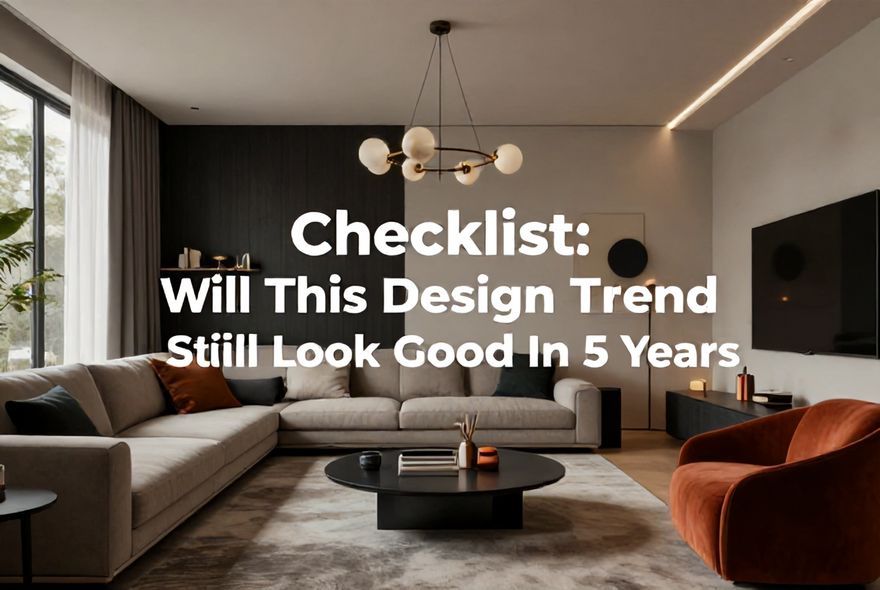
Ever gazed upon a fresh design trend and thought, “Trendy or tragically temporary?” Welcome to our ultimate guide, Checklist: Will This Design Trend Still Look Good In 5 Years. It’s like a crystal ball but without the ominous fog—promising clarity whether you’re crafting a Pinterest-worthy pad or avoiding a potential fiasco that screams 2020. Dive in for a practical tool designed to distinguish between an investment and a pricey regret waiting to happen. After all, nobody wants to star in their own home decor horror story, right?
Key Takeaways
- Wondering if your design choices are timeless or a ticking trend bomb?
- Say goodbye to expensive mistakes with our trusty assessment tool.
- Discover how to pick design trends that won’t age like milk.
- Avoid following trends that scream “what was I thinking?” in five years.
- Not all trends are equal – some are investments, others… not so much.
- Equip yourself with the skills to spot trends that’ll stand the test of time.
- Invest wisely: determine if that design trend is a keeper or a ditcher.
- Stay ahead of outdated design pitfalls with our easy checklist!
Understanding Design Trends vs. Timeless Design
You know that moment when you absolutely love a design trend, slap it everywhere, and then cringe five years later? Yeah, we’ve all been there. The difference between a design choice that becomes an investment and one that becomes an expensive mistake often comes down to understanding what separates fleeting trends from timeless design principles. Design trends are everywhere—they’re on social media, in magazines, and influencing every creative decision we make. But here’s the thing: not all trends are created equal. Some have real staying power, while others are basically the design equivalent of a fashion faux pas. This section digs into how you can distinguish between the two before you commit your budget and your reputation to a choice you’ll regret.
- Trends Are Time-Limited by Nature: Design trends are born from cultural moments, technological advances, and collective aesthetic preferences. They’re meant to be temporary, which is exactly why they fade. The key is recognizing which trends have deeper roots in design principles versus those that are purely superficial.
- Timeless Design Relies on Fundamentals: Colors, typography, spacing, and composition rules that have worked for decades tend to keep working. When a trend aligns with these fundamentals, it has a better chance of aging gracefully. Think Swiss-style minimalism—it’s been around since the 1950s and still looks fresh today.
- Context Matters More Than You Think: A trendy design choice in a startup pitch deck hits different than one on your brand’s website. The permanence of the medium directly impacts how risky a trend is. Permanent installations demand more conservative choices than seasonal campaigns.
- Your Audience’s Expectations Shift Over Time: What feels cutting-edge to your target demographic today might feel dated when that demographic’s tastes evolve. Understanding your audience’s design maturity and how their preferences historically shift is crucial for predicting longevity.
- Documentation Reveals Pattern Recognition: Looking back at design trends from 10, 20, or 30 years ago shows clear patterns in what lasted and what didn’t. Trends that relied on novelty alone disappeared fast, while those that enhanced functionality or emotional connection had staying power.
The Five-Year Rule: Your Personal Assessment Framework
So here’s where we get practical. We developed a straightforward five-year rule that helps you evaluate whether a design trend is worth the investment. Instead of just hoping your choice doesn’t look dated, you can actually assess it against concrete criteria. This framework isn’t about stifling creativity—it’s about making intentional choices. You can absolutely use trendy elements; you just need to know you’re doing it strategically. Think of it as the difference between wearing a statement piece that complements your personal style versus wearing something just because it’s on the runway this season. One feels authentic; the other feels like you’re chasing approval.
- The “Grandma Test”: Would this design still make sense to someone outside your industry in five years? If your 65-year-old relative would find it confusing or actively dislike it, that’s a red flag. Designs that communicate clearly across age groups and design literacy levels tend to age better because they’re not relying on insider knowledge or fleeting cultural references.
- The Functionality Flip: Does this trend actually improve how your design functions, or is it purely decorative? Trends that enhance user experience, readability, or accessibility have better longevity than those that exist purely for visual impact. Ask yourself: does this make things easier or just prettier?
- The Saturation Meter: How many other brands or designers are using this exact trend right now? If you’re seeing it everywhere, it’s likely peaking. Trends that haven’t saturated yet have more runway ahead, but trends at peak saturation are about to plummet. This is basic supply and demand applied to aesthetics.
- The Original Source Check: Where did this trend originate, and how long has it been around? Trends that emerged from grassroots creative communities and have been building momentum for 2-3 years have more staying power than trends that appeared overnight thanks to one viral post. Organic growth usually indicates deeper appeal.
- The “Opposite Day” Exercise: Imagine the complete opposite of this trend. Does that opposite already feel dated? If so, the trend you’re considering might be overcorrecting and could swing back. Trends that represent a genuine evolution rather than a pendulum swing tend to stick around longer.
Trends That Won’t Age Well: The Warning Signs
Let’s talk about the design choices that are practically guaranteed to make you wince later. Understanding what makes a trend vulnerable to aging poorly is honestly one of the most valuable skills you can develop as a designer, marketer, or decision-maker. We’re not here to judge anyone’s current aesthetic choices, but we are here to help you avoid expensive mistakes. Certain characteristics consistently show up in designs that become eyesores within a few years, and if you can spot these warning signs early, you can make smarter decisions about where to invest your resources.
- Over-Reliance on Specific Technology or Software Limitations: Remember when beveled edges and drop shadows were everywhere because Photoshop made them easy? Or when parallax scrolling was the height of sophistication? When a trend exists primarily because a tool makes it simple, that trend evaporates the moment the tool becomes obsolete or better alternatives emerge. Trends that are born from technical limitations rather than intentional design choices rarely survive the technology shift.
- Extremely Narrow Color Palettes: Millennial pink dominated for years, and now seeing it everywhere feels a bit… much. Same with the ultra-minimalist black-and-white palette that saturated tech design in the 2010s. While color trends absolutely exist, the ones that age worst are those so specific and narrow that they become synonymous with a particular era. Flexible color systems that use a trendy accent color but maintain broader flexibility tend to age better than designs that live and die by one shade.
- Novelty Over Clarity: Designs that prioritize being “different” or “surprising” over being clear and functional are basically on borrowed time. Your visitors should be able to understand what’s happening in your design within seconds, not minutes. If a trend makes your design harder to understand, navigate, or use, it’s not an investment—it’s a liability.
- Cultural References with Expiration Dates: Using design elements that directly reference current events, memes, or cultural moments is fun until that moment passes. Six months later, people wonder why your design looks so confused. Subtle nods are different from explicit references; one can age gracefully while the other becomes instantly dated.
- Trends Driven Purely by Novelty: If the only reason to use a trend is that it’s new or that nobody else in your industry is doing it yet, pump the brakes. Real design trends solve problems or fulfill genuine aesthetic needs. Trends born from the desire to be different for difference’s sake are fragile and disappear as soon as the next novelty arrives.
Investment-Grade Design Choices: What Actually Stands the Test
Okay, so we’ve covered what to avoid, but what should you actually lean into? Investment-grade design choices are those that combine current appeal with timeless principles. These are the picks that make you feel smart and confident, not anxious. We’re talking about design moves that feel fresh and contemporary right now but are grounded in principles that have proven staying power. When you make these kinds of choices, you’re not just following a trend—you’re making a calculated decision that your design will still look good, function well, and serve your goals five years from now. Let’s break down what these choices look like in practice.
- Functional Minimalism: There’s a difference between “minimalism because it’s trendy” and “minimalism because every element serves a purpose.” Investment-grade minimalism strips away the unnecessary while keeping everything that matters. This approach has roots in design thinking dating back decades, so it has proven longevity. When you can justify why each element exists, you’re playing the long game.
- Flexible Typography Systems: Instead of committing to one specific trendy font or size, invest in a flexible typographic system. Use a modern, readable primary font paired with a complementary secondary font, and establish clear hierarchy rules. This approach stays current while remaining functional. Typography trends change, but good hierarchy never goes out of style.
- Accessible Design as Standard: Here’s a trend that’s actually getting better with time: accessible design. High contrast, readable fonts, logical information hierarchy, keyboard navigation—these aren’t trendy, they’re essential. And as accessibility standards tighten, designs built with accessibility in mind from the start will age better than those retrofitted later. This is a trend that improves with age because it’s rooted in genuine need and legal compliance.
- Authentic Imagery Over Stylized Assets: Hyper-stylized illustrations and icons trend hard, but real photography or authentic illustration that reflects your actual brand tends to age better. Why? Because it’s harder to fake authenticity, and authenticity doesn’t go out of style. Generic stock photography is timeless in the worst way, but thoughtful visual choices that reflect your brand’s personality hold up.
- Responsive, Mobile-First Architecture: This isn’t a visual trend—it’s a structural one. Designs built with mobile-first, responsive thinking will continue to work well as technology evolves. This is an investment that pays dividends because it’s not about aesthetics; it’s about fundamental functionality.
The Color Trend Test: Will That Shade Still Work?
Color trends are some of the most visible design trends, and they’re also some of the trickiest to predict. You’ve probably noticed color palettes shift every few years—what felt fresh and modern in 2018 might feel dated by 2024. The challenge is that color is so emotionally driven and culturally influenced that predicting its longevity requires a different assessment approach than other design elements. But here’s the good news: you can actually evaluate color trends pretty systematically. By understanding what makes certain color choices timeless versus trendy, you can make strategic decisions about where to use color safely and where to be more adventurous.
- Neutral Bases with Trendy Accents: The safest approach to color trends is to use neutral, timeless colors (white, gray, black, natural tones) as your base and reserve trendy colors for accents. This way, if a color trend fades, your core design still functions. Brands that did this with millennial pink—using it as an accent rather than the foundation—aged better than those that made it their entire identity.
- Cultural Color Associations Matter: Some colors have deep cultural and historical significance. Blues and greens, for example, have been considered trustworthy and calming across many cultures for centuries. Colors without strong historical grounding (like neon colors or hyper-saturated hues) can trend harder and fall faster because they’re not anchored in anything deeper than novelty.
- Saturation Levels Reveal Trend Strength: Ultra-saturated, neon-bright colors trend harder and faster than muted, tonal variations. If you’re using a color at maximum saturation, you’re making a bold trendy statement. If you’re using it at 60-70% saturation or with added gray to create a more muted tone, you’re playing it safer. Muted versions of trendy colors age better because they feel more refined and less dependent on the trend.
- Color Psychology Endures: While specific shades trend, the underlying psychology of color—red for energy, blue for trust, green for growth—remains consistent. Designs that leverage color psychology have better longevity than designs that use color purely for novelty. Ask yourself: is this color serving a functional purpose in terms of how people perceive and interact with the design?
- Test Your Colors Against Time: Look at designs from five, ten, and fifteen years ago and notice which color choices still feel okay and which feel actively dated. You’ll see patterns emerge. Generally, true colors (pure hues) age better than muddy mixed tones. Primary colors age better than artificial-feeling combinations. Colors with historical precedent age better than those that feel invented for a specific trend.
Typography Trends: Fonts That Might Not Age Gracefully
Typography is one of those design elements where trends are super visible but also super risky. A font choice is permanent in a way that other design elements might not be. If you’re redesigning a website, you can update colors and layouts relatively easily. But changing your brand font? That’s a bigger commitment. This is why typography trends deserve special attention in your five-year assessment. Some fonts feel fresh and contemporary, while others are practically date-stamped. The good news is that font trends follow pretty predictable patterns, and understanding those patterns helps you make smarter choices about what’s a genuine investment and what’s just passing through.
- Extreme Stylization = Higher Risk: Fonts with very distinctive characteristics—extreme thickness, unusual proportions, or heavy decorative elements—tend to trend harder and age faster. They’re memorable, which is great for short-term impact but risky for long-term use. Conservative, geometric fonts have longer staying power because their simplicity doesn’t go out of style. If you love a trendy, stylized font, consider using it sparingly rather than as your primary font.
- Sans-Serif Dominance Is Likely to Continue: Sans-serif fonts have been trending for over a decade now, and there’s no sign of that stopping. Why? Because they’re clean, readable, and work well across digital and print media. If you’re choosing between a sans-serif and a serif for contemporary work, sans-serif is the safer long-term bet right now. That said, classic serif fonts with historical precedent (like Garamond or Georgia) age well because they have decades of credibility behind them.
- Variable Fonts Offer Flexibility: Modern variable fonts allow you to adjust weight, width, and other characteristics within a single font family. This flexibility means you can trend-proof your typography by using a font that can adapt as design standards shift. Instead of being locked into one specific weight or style, you can evolve within the same font family.
- Font Pairing Matters More Than Individual Fonts: A trendy font paired with a classic font often ages better than a trendy font used alone. The classic font grounds the design, while the trendy font adds contemporary flair. This approach gives you the best of both worlds: current appeal with timeless structure.
- Readability Is Non-Negotiable: This should be obvious, but fonts that prioritize readability—clear letterforms, sufficient contrast, appropriate sizing—age better than fonts that sacrifice functionality for style. A font that’s hard to read today will be harder to read in five years. Invest in typography that works first, looks trendy second.
Layout and Spacing Trends: Structural Decisions That Stick Around
Layout and spacing might seem less “trendy” than colors or fonts, but they absolutely follow trends. The way we organize information, the amount of white space we use, the grid systems we employ—these all shift over time. What’s interesting is that layout trends are often rooted in practical considerations: new screen sizes, new technologies, new ways of consuming content. Because of this, layout trends tend to age better than purely aesthetic trends. A layout that works well for mobile devices, accommodates modern screen sizes, and follows accessibility principles is likely to keep working well. Let’s look at what makes certain layout choices timeless versus what makes them feel dated.
- Generous White Space Indicates Quality: The trend toward more white space, longer line lengths (for readability), and less visual clutter has been building for years and shows no signs of stopping. This trend is actually rooted in cognitive science and readability research, so it has staying power. Designs that felt cramped and busy in 2015 look even worse today. If a layout trend involves giving your content more breathing room, that’s usually a safe bet.
- Flexible Grid Systems Beat Fixed Layouts: Responsive design isn’t a trend anymore—it’s a requirement. But within responsive design, flexible grid systems that adapt to different screen sizes and content volumes age better than designs with rigid structures. A 12-column grid that can contract to 6 columns on tablets and 1 column on mobile has more longevity than a layout locked to desktop dimensions.
- Vertical Scrolling Is Here to Stay: The shift from horizontal scrolling and multi-column layouts to primarily vertical scrolling has been in place for years now. This trend is likely to stick because it aligns with how people naturally consume content on mobile devices, which is becoming the primary device for most people. Designs that embrace vertical scrolling will age better than those fighting against it.
- Card-Based Layouts Have Proven Staying Power: While card-based designs were trendy a few years ago, they’ve become foundational because they’re modular, flexible, and work well on different screen sizes. The trend toward card-based layouts is actually stabilizing into standard practice, which means it has longevity. This is a trend that’s transitioning from “trendy” to “standard,” which is a good sign for designs using it.
- Asymmetry as Intentional Strategy Beats Random Asymmetry: Asymmetrical layouts have been trending, especially in creative fields. The ones that age well are those where the asymmetry serves a purpose—it guides attention, creates visual interest strategically, or accommodates different content types. Asymmetry for the sake of being different without functional purpose feels dated faster.
Animation and Interaction Trends: Micro-Interactions That Matter
Animation and micro-interactions are one of the trickiest areas for trend prediction because technology is constantly changing what’s possible. What felt cutting-edge five years ago might look clunky today because we’ve gotten better at animation. But here’s the thing: animation trends that prioritize purpose and performance tend to age better than those that exist purely for visual flourish. An animation that guides a user’s eye to important information or provides feedback on their action serves a function. An animation that exists just to show off what’s possible is basically guaranteed to feel dated. When you’re evaluating animation trends, the key question is always: does this animation serve the user, or does it just serve the ego of the designer?
- Purposeful Motion Beats Decorative Animation: Animations that communicate information—transitions that show relationships between elements, loading indicators that feel responsive—have staying power. Animations that are purely decorative (like unnecessary hover effects or auto-playing background videos) tend to feel dated and annoying pretty quickly. The trend toward purposeful, performance-conscious animation is actually aligned with user experience best practices, so it’s a safe investment.
- Performance Matters More Every Year: Animation trends that don’t compromise page load speed or mobile performance age better than those that do. A light, subtle animation that loads instantly will age better than a heavy animation that slows things down. As connection speeds improve and people expect faster interactions, animations that respect performance requirements become increasingly timeless.
- Smooth, Natural Movement Beats Quirky Effects: The trend toward smooth, easing-based animations (rather than rigid, linear movement) has been building for years and will likely continue. Why? Because smooth motion feels more natural and less jarring to our brains. Quirky, exaggerated animations trend harder and age faster because they’re novelty-based. If you want an animation that will look good in five years, make it smooth and subtle.
- Consistent Animation Language Across Platforms: Designs that maintain consistent animation principles across web, mobile, and other platforms age better because they feel cohesive and intentional. Animations that are wildly different on mobile versus desktop or that contradict each other feel disjointed and dated. Consistency in motion design is an investment in longevity.
- Reduced Motion Preferences Are Here to Stay: The OS-level trend toward respecting “prefers-reduced-motion” settings is not going away. If your animations ignore this preference, they’ll feel outdated pretty quickly as accessibility standards tighten. Animations that gracefully degrade for users who prefer reduced motion will age better because they’re built with respect for user preferences baked in.
Putting It All Together: Your Personal Design Trend Checklist
Alright, so we’ve covered a lot of ground. Let’s synthesize all of this into an actual tool you can use when you’re facing a design decision. Think of this as your personal filter for evaluating whether a design trend is worth the investment. We’re not saying you should never use trendy design choices—we’re saying you should use them strategically and with full knowledge of what you’re committing to. This checklist helps you assess any design trend against multiple criteria, giving you confidence in your decisions. Whether you’re a designer, a marketer, a business owner, or anyone responsible for visual decisions, this framework will help you evaluate design trends that won’t age well and spot investment-grade choices.
- The Fundamentals Test: Does this trend align with core design principles (hierarchy, contrast, balance, white space)? If it violates these principles, it’s purely trendy. If it enhances them, it has staying power. Run through each design choice and ask: is this serving a fundamental design purpose, or is it just being different?
- The Saturation Check: How many competitors or similar brands are using this trend right now? If you’re seeing it everywhere, it’s probably peaking. If it’s relatively rare in your industry, it might have runway. Track this over a few weeks—trends that continue spreading are still climbing; trends that plateau are peaking.
- The Audience Test: How well does this trend align with your specific audience’s expectations and preferences? A trend that feels risky for a law firm might feel perfectly appropriate for a creative agency. Your audience’s design literacy and industry standards matter significantly in whether a trend will land well long-term.
- The Flexibility Check: If this trend goes out of style, how hard would it be to update? Can you change just an accent color, or are you locked into a complete redesign? Trends that are easy to update or that occupy just one element of your design are lower-risk than trends that are baked into your entire visual system.
- The Function Question: Does this trend improve how your design works, or is it purely aesthetic? Trends rooted in improved functionality—better readability, clearer navigation, more intuitive interaction—have way better longevity than purely aesthetic trends. Always ask: what problem does this solve?
- The Timeline Reality Check: When did this trend emerge, and how long has it been building momentum? Trends that have been developing organically for 2-3 years are usually safer than trends that exploded overnight. Grassroots trends tend to have deeper roots and more staying power.
- The Competitor Projection: Imagine your three main competitors also adopting this trend in the next year. Would you still feel differentiated, or would you all blur together? If a trend threatens to make you look like everyone else, it’s not a long-term investment in your brand identity.
- The Five-Year Gut Check: Close your eyes and imagine seeing your design in 2030. Does it still feel intentional and well-crafted, or does it feel dated and confused? Trust your gut on this one. If something feels like it won’t age well, it probably won’t.
Making Peace with Evolving Design: Knowing When to Refresh
Here’s the real talk: even investment-grade design choices need occasional updates. Timeless doesn’t mean frozen in time. The goal of this whole framework isn’t to create designs that never change—it’s to create designs that change intentionally rather than accidentally. There’s a big difference between a design that evolves gracefully and one that suddenly looks dated. Understanding when to refresh your design and how to do it strategically is actually the final piece of the puzzle. A design trend doesn’t have to be permanent to be a good investment; it just needs to be thoughtful. For more detailed insights on identifying which trends actually stand the test of time, check out this comprehensive guide on hacks for identifying trends that actually stand the test.
- Layered Design Allows Strategic Updates: If you build your design with layers—a timeless core, a contemporary middle layer, and trendy accents on top—you can update the trendy elements without touching the foundation. This approach means you get the best of both worlds: stability and freshness. Your color palette might evolve, but your core typography and layout stay consistent.
- Regular Audits Beat Crisis Redesigns: Instead of waiting until your design feels actively dated and embarrassing, schedule regular design audits (every 2-3 years) where you intentionally evaluate what’s working and what needs refreshing. This approach lets you make small, strategic updates rather than major overhauls. Small changes feel intentional; big sudden changes feel like you lost track of your brand.
- Trends Aren’t Failures—Ignoring Them Is: The other extreme is refusing to acknowledge that design evolves. If you’re still using design choices from 2015 without any updates, you risk looking outdated even if those choices were originally timeless. The goal is balance: respect timeless principles while acknowledging that implementation details evolve.
- Document Your Design Decisions: Keep records of why you made specific choices. When you revisit your design later, you can distinguish between “this was trendy and is now dated” and “this serves a function and is still relevant.” Documentation helps you make smarter refresh decisions because you understand the original intent.
- Build Community Feedback Into Refresh Cycles: Your audience’s perception of whether your design feels current matters more than design theory. Regular feedback from users, customers, or stakeholders helps you catch when something’s starting to feel dated before it becomes a crisis. This external perspective is invaluable for timing refreshes appropriately.
As we wrap up this explorative journey through the land of design trends, we’ve armed you with a checklist that empowers you to distinguish between fleeting fads and timeless treasures. Diving deep into the nitty-gritty of decor decisions, this tool helps assess whether your design choice is a future classic or a faux-pas-in-the-making. The core message remains crystal clear: investing in a trend should be more of a confident gamble rather than a risk of falling into obsolescence. Our nifty assessment tool isn’t just a guide—it’s your trusty roadmap to ensuring that your living room doesn’t look like a relic from the past come 2028, unless that’s your thing.
Wrapping this up, if you’re ready to tackle your home’s aesthetics with newfound wisdom, why not share the love? Head over to our Facebook page and tell us how you’re making these insights work for you. Follow us on Instagram for a daily dose of trendy tips, or if you’re hungry for more, dive into the conversation on our blog! Remember, your home should be as fiercely individualistic as you are, and we’re here to make sure it stays that way—today, tomorrow, and five years from now.





Leave a Reply