
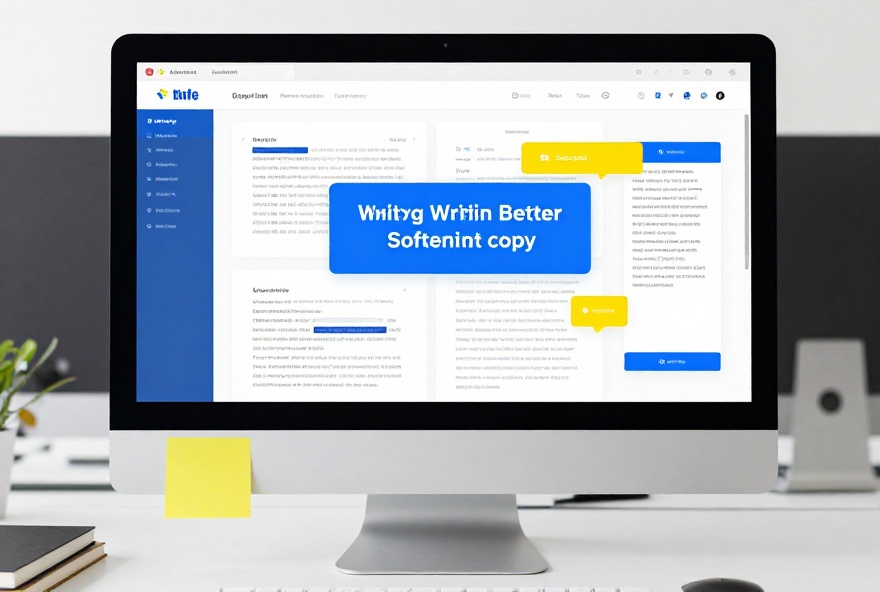
Ever stared at a block of ‘Lorem Ipsum’ and thought, “Seriously, what’s the meaning of this ancient incantation?” You’re not alone. Welcome to “How To Stop Using Lorem Ipsum and Write Better Placeholder Copy,” your guide to smarter blanks. We’ll uncover alternatives where text transforms from lifeless to lively—making design choices a breeze. Tired of endless scrolls of ‘dolor sit amet’? Time to fill in the blanks with purpose!
Key Takeaways
- Skip the Latin: Use smarter placeholder text.
- Help clients visualize real content, not gibberish.
- Design decisions improve with meaningful text samples.
- Avoid Lorem Ipsum: it doesn’t speak to anyone.
- Realistic placeholders speed up design processes.
- Why settle for filler when you can inspire?
Why Lorem Ipsum Doesn’t Cut It Anymore
You know that moment when you’re designing a website or app, and you just throw in some random Latin text because you haven’t finalized the actual copy yet? Yeah, we’ve all been there. Lorem ipsum has been the go-to placeholder for decades, but here’s the thing—it’s actually working against you, not for you. When clients see meaningless gibberish filling their layouts, they can’t visualize how real content will actually look and feel. That’s where better placeholder copy comes in. Understanding what is lorem ipsum and why it’s become outdated is the first step toward smarter design decisions.
- Lorem ipsum masks design flaws because clients focus on the fake text instead of the actual layout and hierarchy
- Real placeholder copy helps stakeholders understand content flow, tone, and messaging before development even begins
- Better alternatives reduce revision cycles by setting clearer expectations upfront
- Meaningful placeholders catch UX issues early—like text overflow or awkward line breaks—that generic Latin text would hide
The Problem With Generic Filler Text
Generic filler text like Lorem ipsum was invented back in the 1500s, and honestly, it’s showing its age. When you’re working on a design project, placeholder copy should actually serve a purpose beyond just filling space. Think about it: if your client can’t picture real words in those boxes, how can they give you meaningful feedback? That’s where the disconnect happens. The whole point of design is communication, and generic filler actively prevents that.
- Clients struggle to imagine how actual product descriptions, headlines, or calls-to-action will look in the final design
- Typography decisions get made without considering readability of real English sentences and word lengths
- Marketing teams can’t assess messaging tone or brand voice from nonsense text
- Design iterations take longer because stakeholders are essentially flying blind without proper context
- Team members from non-design backgrounds get confused and disengage from the feedback process
Smarter Placeholder Alternatives That Actually Work
So what’s the solution? Instead of defaulting to Lorem ipsum, try using placeholder copy that mirrors your actual content. We’re talking realistic headlines, product descriptions, user interface labels, and marketing copy that gives everyone a true preview of what the finished product will feel like. These smarter alternatives help clients visualize real content and make better design decisions faster than generic filler ever could. You don’t need to write the final version—just something close enough to represent the actual length, tone, and complexity.
- Industry-specific placeholder text: Use real examples from your niche (e.g., “Add to cart” for e-commerce, “Book appointment” for services)
- Realistic sentence structures: Create placeholder copy that matches your typical content length and complexity, not random Latin words
- Contextual descriptions: Write brief, meaningful placeholders that hint at what the final copy will say
- Client-approved templates: Collaborate with your team to build a library of placeholder copy you can reuse across projects
- Tools like Blakify or Cupcake Ipsum that generate relevant, readable placeholder text instead of meaningless gibberish
How Better Placeholder Copy Improves Client Communication
Here’s something we’ve noticed: when clients see actual, meaningful placeholder copy instead of Lorem ipsum, the entire conversation changes. Suddenly, they’re not just looking at a pretty layout—they’re experiencing the product. They start asking smarter questions about messaging, noticing where copy might be too long or too short, and actually engaging with the design. This shift transforms placeholder copy from a throwaway element into a communication tool that bridges the gap between design and strategy.
- Stakeholders provide more specific, actionable feedback because they understand the context and purpose of each element
- Fewer revision rounds happen because expectations are set clearly from day one
- Marketing and design teams collaborate better when they’re working with realistic copy instead of abstract placeholders
- Clients feel more confident moving forward because they can actually envision the finished product
- Developers get clearer requirements, reducing miscommunication during implementation
Practical Tips for Writing Effective Placeholder Copy
Writing better placeholder copy doesn’t have to be complicated. You’re not crafting final marketing copy—you’re just creating realistic stand-ins that help everyone visualize the design. Think of it as a sketch version of your actual content. Keep it simple, keep it relevant, and make sure it actually fits the space without feeling forced. The goal is to create placeholders that feel natural so the design can speak for itself while still giving everyone the context they need.
- Match length expectations: If a headline typically runs 40-60 characters, write your placeholder to that range, not random word dumps
- Use active voice: Write placeholder copy the way you’d actually speak to your audience, not in robotic corporate-speak
- Consider your brand tone: A playful startup placeholder should feel different from a corporate bank’s placeholder
- Test readability: Make sure your placeholder text actually works with the typography and spacing you’ve chosen
- Update as needed: As your project evolves, update your placeholder copy to reflect new directions or decisions
The Business Case for Ditching Lorem Ipsum
Let’s talk ROI for a second. When you use better placeholder copy instead of meaningless Lorem ipsum, you’re actually saving time and money. Projects move faster because clients understand what they’re approving. Revisions decrease because everyone’s on the same page. And honestly? The design itself looks better because you’ve made intentional choices about copy length and messaging from the start. That’s not a coincidence—that’s what happens when you treat placeholder copy as a real design element instead of an afterthought.
- Shorter project timelines: Fewer revision rounds mean faster delivery and happier clients
- Better design quality: Real placeholder copy reveals layout issues that Lorem ipsum would hide
- Reduced development surprises: Developers see realistic content and can flag potential issues early
- Improved client satisfaction: Stakeholders feel heard and understood when they’re working with meaningful copy
- Professional positioning: Using thoughtful placeholders signals that you care about every detail, not just the pretty pictures
Common Mistakes to Avoid When Creating Placeholder Copy
Not all placeholder copy is created equal. We’ve seen plenty of designers swing too far in the opposite direction—writing overly detailed final copy when placeholders should stay lean, or using placeholders that are completely unrealistic for the actual content. The sweet spot is somewhere in the middle: meaningful enough to provide context, but flexible enough to adapt as the real content gets finalized. Avoid these pitfalls and you’ll be golden.
- Don’t write final copy: Placeholder text should be a sketch, not the masterpiece. Keep revisions simple until content is locked
- Avoid overly long placeholders: If you’re filling a button with a paragraph, something’s wrong with your design or your expectations
- Don’t ignore formatting: Capitalization, punctuation, and line breaks matter—make your placeholders realistic
- Skip the inside jokes: Placeholder copy should make sense to everyone on the team, not just designers
- Don’t leave Lorem ipsum in production: It happens more often than you’d think, and it looks unprofessional
Building Your Placeholder Copy Toolkit
Once you start using better placeholder copy, you’ll want to build a system that works for your workflow. Create templates for recurring elements—hero headlines, product descriptions, navigation labels, form fields. Keep a swipe file of placeholder copy that’s worked well in past projects. Share these resources with your team so everyone’s speaking the same language. When placeholder copy becomes part of your process instead of an afterthought, design becomes faster, clearer, and way more collaborative.
- Create a shared document or tool with approved placeholder copy templates your team can reference
- Organize by content type: headlines, body copy, CTAs, navigation, form labels, etc.
- Include character count ranges to help designers understand spacing requirements
- Update regularly as your brand voice and content strategy evolve
- Train new team members on the importance of placeholder copy during onboarding
In essence, it’s time to bid farewell to the chaotic Latin mumbo jumbo of Lorem Ipsum. We delved into innovative placeholder copy methods that do more than just fill space—they ignite imagination and set the groundwork for more meaningful design discussions. By choosing content that mirrors the client’s true ethos, we allow for a realistic glimpse into the final product, making the design process intuitive and aligned with real-world applications. Essentially, moving away from generic fillers like Lorem Ipsum and adopting rich, content-focused placeholder text can profoundly impact your project’s direction and clarity.
Ready to turn placeholders into keystone content that guides and inspires? Stop using Lorem Ipsum and embrace the future of smarter, content-inspired design decisions. Join our growing community on Facebook, Instagram, and LinkedIn to share your vision and exchange ideas. Lorem is out, clarity is in—let’s create something meaningful together!





Leave a Reply