
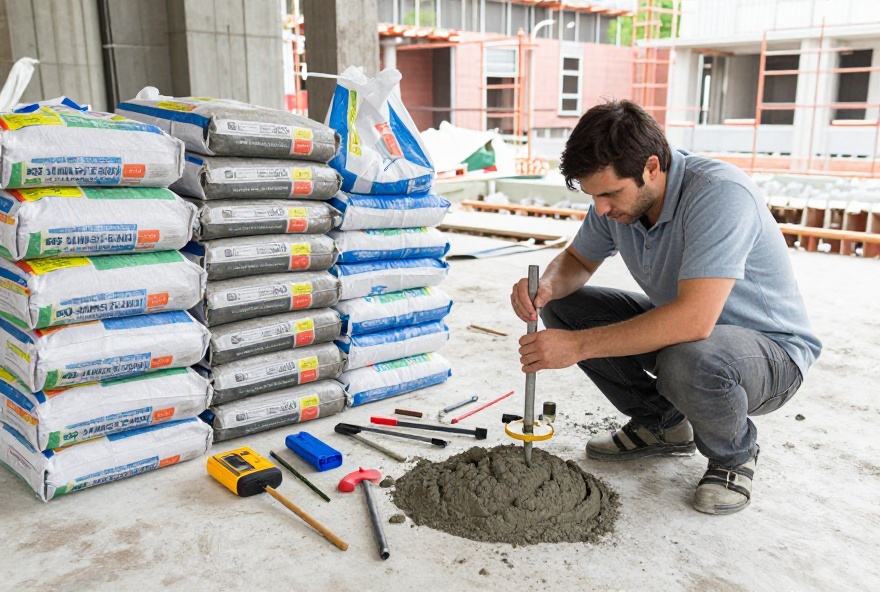
Thinking of building your dream pacca house? Your cement’s got a pivotal role. In our blog titled ‘Best Ways To Test Cement Quality Before Pacca House Construction’, we’re diving into simple field tests that’ll help you verify cement strength, fineness, and authenticity right before you pour. Ever felt a twinge of doubt about your materials? Let’s unravel these pro techniques together and ensure your structure stands the test of time.
Key Takeaways
- Get savvy with simple field tests to ensure your cement’s got game.
- Verify the strength of your cement before it meets the mixer—without fancy equipment.
- Master the pro techniques to check fineness and authenticity before you start pouring.
- Spot a bogus bag of cement on the fly—your wallet will thank you.
- Looking to build a house that lasts? It all starts with knowing your cement quality.
- Crack the code on cement quality with quick, reliable tests.
- Say goodbye to construction woes; learn to judge cement like a pro.
Why Testing Cement Quality Matters for Your Pacca House
Look, we’ve all heard horror stories about construction projects gone wrong, right? One of the biggest culprits? Dodgy cement. Before you pour a single bag into your pacca house construction, you need to know exactly what you’re working with. Testing cement quality isn’t some fancy lab procedure—it’s something you can do right on-site with basic tools and a little know-how. The difference between quality cement and subpar stuff can literally make or break your home’s foundation, and honestly, it’s worth the 30 minutes it takes to verify.
- Bad cement = structural problems down the road, from cracks to complete failure
- Field tests catch issues before they become expensive disasters
- You don’t need fancy equipment—just attention to detail and common sense
- Verifying strength and authenticity protects your investment from day one
The Visual Inspection Test—Your First Line of Defense
Before diving into anything complex, let’s start with what your eyes can tell you. Cement should look uniform, fine, and free of lumps—think of it like flour, not gravel. When you examine the bag, you’re already gathering crucial information about cement quality. If it’s clumpy, discolored, or smells weird, that’s your signal to stop right there and find a different supplier.
- Check the color: Quality cement has a uniform gray tone with no dark streaks or patches
- Feel the texture between your fingers—it should be powder-fine, never gritty or sandy
- Inspect the bag itself: Torn bags mean moisture infiltration, which ruins cement’s strength instantly
- Look for manufacturing dates—cement older than 3 months loses effectiveness, so freshness matters
The Water Immersion Test—Checking for Authenticity
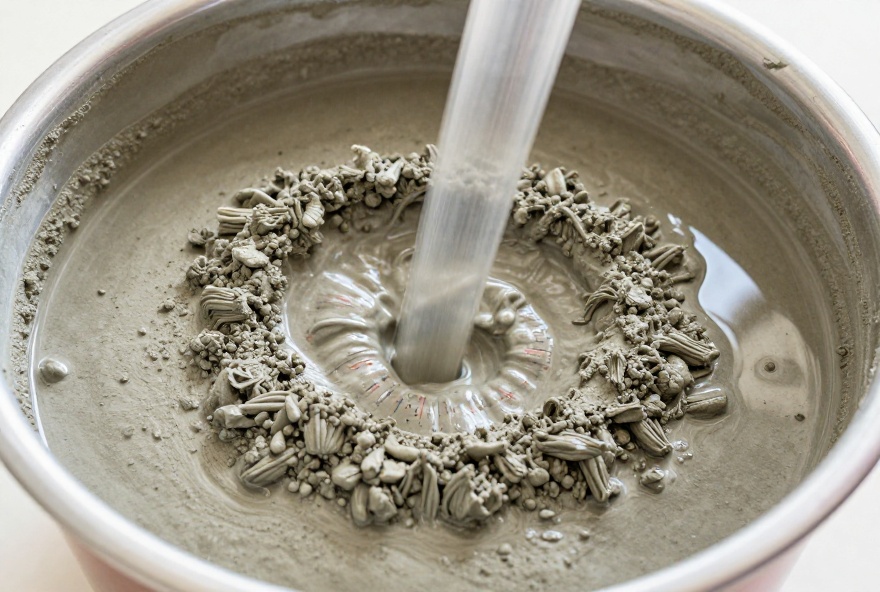
Here’s a quick trick that separates genuine cement from fakes: the water test. You know that moment when you’re not quite sure if something’s the real deal? This simple technique gives you instant clarity. Drop a pinch of cement into water and watch what happens. Real cement gets hot—literally warm to the touch—because of a chemical reaction called hydration. Fake or low-quality cement? It’ll just sit there like, well, like dust in water.
- Take a small sample of cement (about a teaspoon) and drop it into a glass of water
- Genuine cement heats up within seconds due to hydration—you should feel warmth when you touch the glass
- The cement should start to harden gradually, not dissolve or stay loose and powdery
- Discoloration or a foul smell during this test signals contamination or poor storage conditions
The Fineness Test—Understanding Particle Size
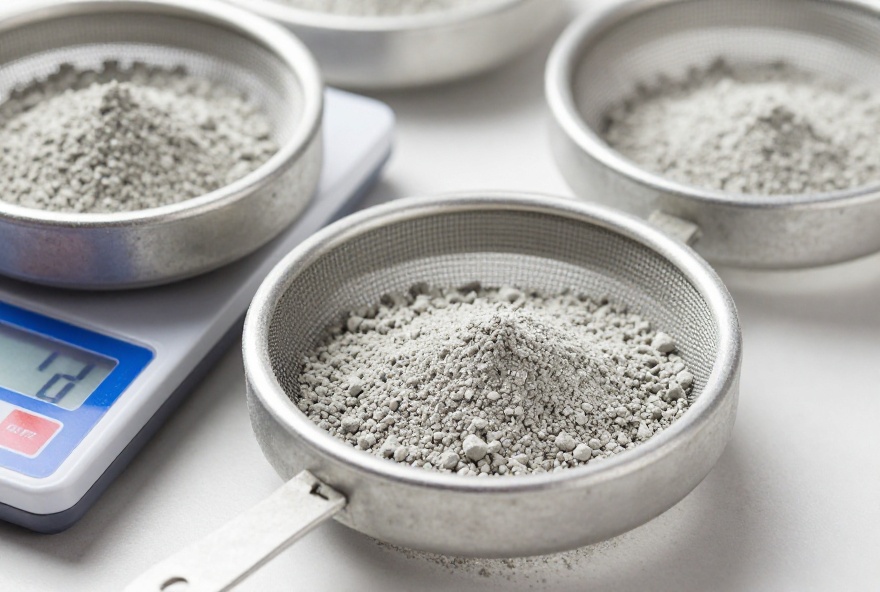
Not all cement particles are created equal, and fineness directly impacts how your pacca house construction will hold up. Finer cement means better strength and durability because smaller particles pack tighter and bond more effectively. You can actually test this yourself using a simple sieve—no need for expensive lab equipment. Think of it like this: would you rather build with sand or powder? Finer is always better.
- Use a 100-micron sieve (or 150-micron if that’s what you have) to test cement fineness
- Pass the cement through the sieve; quality cement should pass through almost entirely, leaving minimal residue
- Residue over 10% suggests poor quality or contamination that’ll compromise strength
- Finer cement hydrates faster and develops strength quicker—crucial for timely construction schedules
The Strength Test—Mortar Cube Method
Okay, this one’s a bit more involved, but it’s honestly the gold standard for verifying cement quality before your pacca house construction starts. You’re basically creating mini test cubes that tell you whether your cement will actually provide the strength you need. It’s like a stress test for your materials—you’re pushing them to see if they’ll hold up under real-world conditions.
- Mix cement with sand in a 1:3 ratio and add water to create a workable paste
- Pour the mixture into 50mm cube molds and let them cure for 7 days in controlled conditions
- After curing, test compression strength using a hydraulic press—quality cement should achieve specified strength ratings
- Poor results indicate cement that won’t deliver the durability your structure demands
- Standard cement should reach at least 17.5 MPa at 7 days for basic construction applications
The Density and Bulk Density Test—What It Reveals
You know how some things just feel heavier than others, even when they’re the same size? That’s density, and it tells you a lot about cement quality. Testing bulk density helps you spot adulteration or poor manufacturing. If your cement feels unusually light, it might be mixed with fillers—and that’s a red flag that’ll compromise your entire pacca house construction project.
- Fill a 1-liter container with cement and weigh it—standard cement should weigh around 1,400-1,500 grams
- Significantly lower weight suggests the cement’s been diluted with lighter materials or poorly manufactured
- Weigh loose (bulk) cement versus packed cement to identify density inconsistencies
- Proper density ensures you’re getting what you paid for—no hidden fillers or shortcuts
The Soundness Test—Detecting Expansion Problems
Ever heard of cement that expands after it’s already hardened? Yeah, that’s a nightmare scenario, and it happens when there’s excess free lime or magnesium in your cement. The soundness test catches this before it ruins your foundation. This one’s straightforward and prevents a category of problems that most people never think about until it’s too late.
- Create a cement paste and mold it into a small cake, then expose it to steam at 100°C for a few hours
- Quality cement stays stable with minimal expansion—more than 10mm of expansion indicates serious problems
- Visible cracks or distortion after the test means the cement contains reactive compounds that’ll cause long-term damage
- This test specifically reveals manufacturing defects that other tests might miss
The Setting Time Test—Ensuring Proper Workability
Timing is everything in construction, and cement’s setting time directly affects your workflow. If your cement sets too fast, you’ll struggle to work with it. Too slow, and you’re wasting time on-site. Testing setting time ensures you can actually use your cement within the window you need for pacca house construction without racing against the clock or twiddling your thumbs.
- Mix cement paste according to standard specifications and monitor when it starts to harden
- Initial set should occur between 30-600 minutes depending on cement type—faster is often better for construction efficiency
- Final set typically happens within 24 hours; delays suggest poor quality or improper storage
- Consistent setting times across batches mean predictable, reliable construction schedules
Putting It All Together—Your Testing Action Plan
So here’s the thing: you don’t need to run every single test on every single batch. Start with the visual inspection and water immersion test—those catch about 80% of problems right there. If everything looks good, do the fineness test and bulk density check. Save the strength tests for critical structural elements where you really need that extra assurance. The key is being systematic and catching issues before they become catastrophic failures that threaten your pacca house construction investment. For more comprehensive guidance on building your pacca house, check out the complete guide to pacca houses to understand how cement quality fits into the bigger picture.
- Start simple: visual inspection catches obvious red flags without any equipment
- Water immersion test takes two minutes and reveals authenticity instantly
- Fineness and density tests require minimal tools but provide crucial quality assurance
- Save lab-style tests for critical applications or when you’ve identified concerns
- Keep detailed records of your test results for documentation and future reference
Conclusion
Building your dream home? Getting the cement quality right is mission-critical. We’ve explored easy field tests that give you the lowdown on cement strength, fineness, and authenticity before it’s too late. Remember that a neat hand inspection can reveal a world of detail about cement fineness; plus, verifying its color can offer insights into its freshness. These simple checks can mean the difference between a house that stands tall and a pacca house that falls flat. So, you see, mastering these pro techniques can save you a heap of trouble down the line.
Speaking of mastering stuff, if you’re ready to tackle your home building project like a pro, then it’s time to dive deeper. Hit up our social media pages for more tips, tricks, and a fair bit of construction humor to keep you entertained and informed. Follow us on Facebook and Instagram to keep the knowledge flowing!





Leave a Reply