
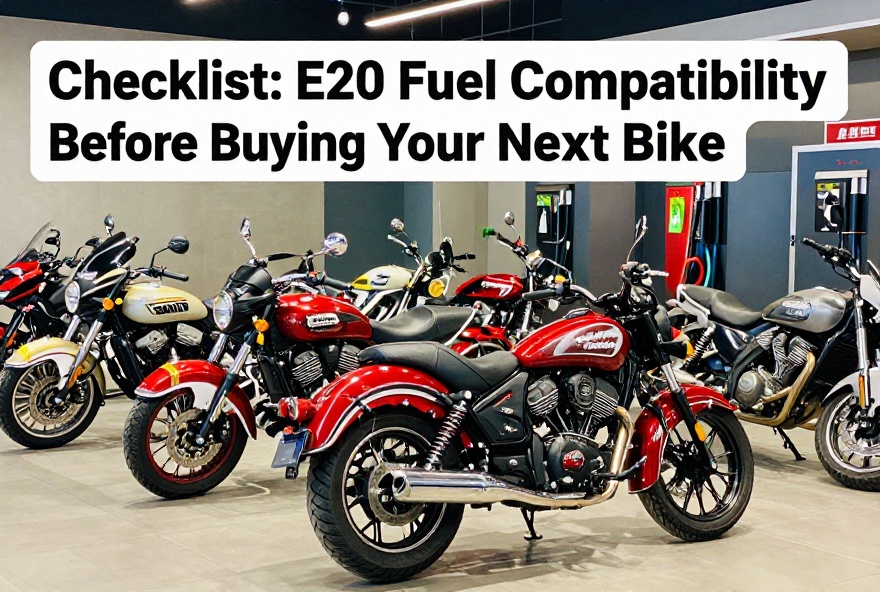
Ever feel lost in the maze of E20 compliant bikes in India? You’re not alone! With our handy checklist, “Checklist: E20 Fuel Compatibility Before Buying Your Next Indian Bike,” you’ll skip guessing games. We’ll dive into official brand support, uncover sneaky risks, and even decode real-world engine wizardry and warranty talk. Buckle up for a smooth ride with a side of insights!
Key Takeaways
- Figure out which Indian motorcycle brands give you the green light for E20 fuel—no more second-guessing!
- Uncover hidden risks of E20 compatibility that could make or break your bike’s performance.
- See how your favorite bike models stack up with real-world engine performance using E20.
- Know if opting for E20 affects your bike warranty—line-by-line, we’ve got it covered.
- Get the scoop, skip the tech jargon, and make an informed decision without losing your cool.
- Put the fuel debate to rest and find out which bikes are ready to rule Indian roads with E20.
- Learn about the manufacturer-backed E20 support—bikes you can trust for your daily commute or weekend joyride.
Understanding E20 Fuel and Why It Matters for Your Next Bike
You know that moment when you’re standing at the fuel pump, staring at those different nozzles, and wondering which one’s actually right for your bike? Yeah, E20 fuel compatibility is becoming that conversation everyone’s having in India right now. E20 fuel—a blend of 20% ethanol and 80% petrol—is already here, and it’s not going anywhere. Before you plunk down your hard-earned cash on your next Indian motorcycle, understanding E20 fuel compatibility isn’t just smart; it’s essential. This checklist breaks down which Indian motorcycle brands officially support E20, reveals hidden compatibility risks, and helps you dodge costly mistakes down the road.
- What’s E20? It’s a government-mandated fuel blend designed to reduce emissions and boost domestic ethanol production—and most new bikes need to handle it.
- Why the fuss? Not all motorcycles are created equal when it comes to ethanol blends; some engines simply weren’t designed for it.
- Performance impact—ethanol burns differently than pure petrol, which can affect fuel economy, throttle response, and long-term engine health if your bike isn’t compatible.
- The timeline: India’s been rolling out E20 pumps nationwide, making it increasingly harder to avoid—so ignorance isn’t bliss anymore.
Which Indian Motorcycle Brands Actually Support E20?
Here’s where it gets real. Not every brand that sells bikes in India has officially certified their entire lineup for E20 compatibility. Some manufacturers jumped on the bandwagon early, while others are dragging their feet—and that matters when you’re deciding what to buy. The official certification from manufacturers is your golden ticket, because without it, you’re flying blind on warranty coverage and engine durability.
- Hero MotoCorp, Bajaj, and TVS have announced E20-compliant models—but check the specific model year, because older variants from these brands might not be certified.
- Maruti Suzuki motorcycles and Royal Enfield have started rolling out E20-ready options, though their entire catalog hasn’t made the switch yet.
- Mid-range commuters are your safest bet—most new 100cc to 125cc bikes from major manufacturers now come E20-ready, according to recent industry reports.
- Premium and adventure bikes? Tread carefully here; many premium imports and niche models still rely on older engine architectures that weren’t designed for ethanol blends.
- Always—and I mean always—check the owner’s manual or manufacturer’s website before assuming your model supports E20; one wrong assumption could void your warranty.
The Hidden Compatibility Risks Nobody Talks About
Let’s be honest: most riders don’t dig into the technical nitty-gritty until something goes wrong. But E20 fuel compatibility has some sneaky pitfalls that can creep up on you months after purchase. We think it’s crucial to understand these risks upfront, because fixing an engine that wasn’t meant for ethanol blends? That’s expensive.
- Fuel system corrosion—ethanol is more corrosive than petrol, and older fuel tanks, injectors, and rubber seals can degrade faster if they’re not ethanol-resistant.
- Engine deposits and carbon buildup occur differently with E20, which can clog fuel injectors and reduce engine efficiency over time if your bike wasn’t engineered for it.
- Cold-start issues during winter months become more pronounced with ethanol blends in non-compatible engines—you might find yourself kicking and cursing on chilly mornings.
- Oil dilution risk—ethanol can thin your engine oil, compromising lubrication and leading to premature wear if your engine management system isn’t calibrated for E20.
- Warranty void scenarios: using E20 in a non-certified bike is often grounds for warranty denial, leaving repair costs entirely on your shoulders.
Real-World Engine Performance: What Actually Changes?
Numbers on paper don’t always translate to what you feel on the road. If you’re wondering whether switching to E20 will make your bike feel sluggish or if you’ll notice any difference at all, here’s what real-world testing and rider feedback tell us. E20 compliant bikes India riders report mixed experiences, depending on engine tuning and fuel quality.
- Fuel economy typically drops 3-5% with E20 compared to pure petrol because ethanol has lower energy density—meaning you’ll hit the pump a bit more frequently.
- Throttle response can feel softer initially on some bikes, though manufacturers compensate for this with engine remapping and optimized fuel injection timing.
- Power output remains relatively stable in certified bikes, but non-compatible engines might see noticeable power loss and rougher idling.
- Long-term durability studies show certified E20 engines maintain performance over 100,000+ kilometers, while non-certified engines show accelerated wear patterns.
- Noise and vibration levels sometimes increase slightly with E20 in engines not specifically tuned for it—a subtle but annoying difference riders notice on highway stretches.
Decoding Warranty Implications and What You Need to Know
Here’s the part that’ll keep you up at night if you’re not careful: warranty coverage and E20 fuel compatibility are intrinsically linked. Most manufacturers have clauses built into their warranty terms that specifically address fuel type, and using the wrong fuel—even if it’s readily available at pumps—can disqualify you from coverage. This isn’t theoretical; it’s happening to riders right now.
- Standard warranty typically covers 2-5 years, but it’s almost always voided if you use fuel the manufacturer hasn’t certified for your specific model.
- Extended warranty plans rarely help here—they often have the same fuel compatibility clauses, so read the fine print before assuming you’re covered.
- Burden of proof falls on you—if your engine fails and the dealer suspects E20 fuel damage, they’ll demand proof you’ve been using approved fuel, which is nearly impossible to provide.
- Some manufacturers offer conditional coverage, where E20 usage is permitted only after a certain engine break-in period; check your documentation carefully.
- Dealer documentation matters enormously—if your service records don’t explicitly mention fuel type, you’ve got a weaker case if warranty disputes arise.
Your Pre-Purchase E20 Compatibility Checklist
Alright, let’s cut through the confusion and give you something actionable. Before you walk into a showroom or finalize that online purchase, use this checklist to ensure you’re making an informed decision about E20 fuel compatibility. Trust me, spending 10 minutes now saves you thousands later.
- Step 1: Check the official manufacturer website or owner’s manual for explicit E20 certification—look for specific model years, not just brand names.
- Step 2: Visit authorized dealerships and ask for written confirmation of E20 compatibility; get it in writing, because verbal assurances won’t protect you if something goes wrong.
- Step 3: Review warranty documents thoroughly, highlighting fuel-related clauses and coverage limitations—don’t skip this boring part.
- Step 4: Research real rider feedback on forums and community groups for your specific model; people usually share honest experiences about fuel consumption and performance changes.
- Step 5: Compare E20 compliant bikes India options within your budget bracket—sometimes stepping up to a newer model costs less than dealing with engine problems later.
Making Your Final Decision: E20 or Wait It Out?
So, should you buy an E20-compatible bike right now, or hold off and see how things develop? That depends on your situation, but we think the writing’s on the wall. E20 fuel availability is expanding rapidly across India, and if you’re buying a motorcycle that’ll last you 5-10 years, E20 compatibility isn’t a luxury—it’s practical planning. For deeper insights on selecting the right bike for today’s fuel landscape, check out our comprehensive guide on choosing E20 compliant bikes for Indian roads.
- If you’re buying new, prioritize E20-certified models from established brands—the peace of mind and long-term reliability outweigh any small price premium.
- Budget-conscious buyers should focus on mid-range commuters, where E20 adoption is highest and competition keeps prices reasonable.
- Adventure and touring enthusiasts should verify compatibility before committing, since long-distance reliability becomes crucial when you’re far from home.
- Consider resale value—E20-compatible bikes will be easier to sell in 3-5 years as the fuel becomes standard, while older models may face discounting pressure.
- Ask your dealer about trade-in programs if you’re upgrading from an older bike; some offer incentives for switching to newer, compatible models.
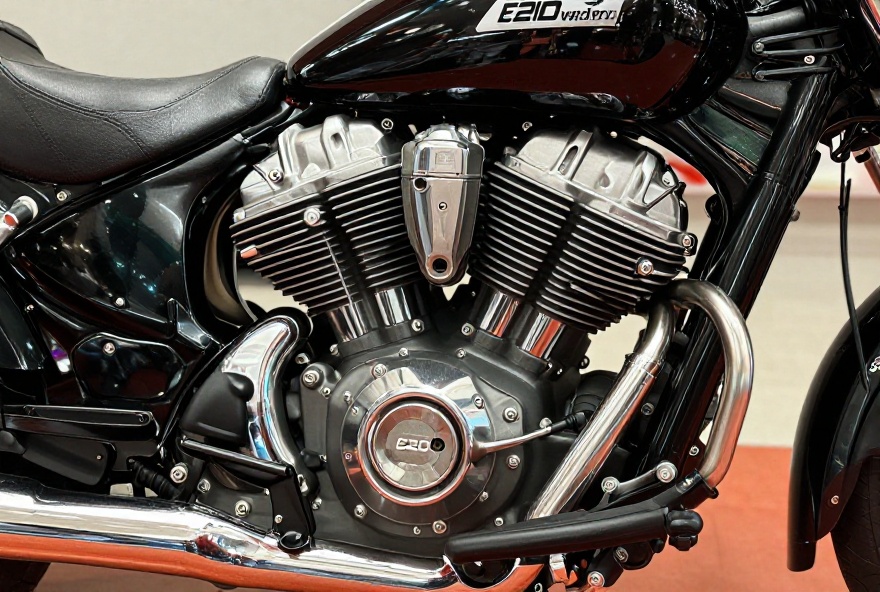
If you thought picking a bike was just about glitzy colors and horsepower, think again! With our checklist, you’ve unraveled the mystery of E20 fuel compatibility, ensuring that your Indian motorcycle is not only street-savvy but also future-proof. By highlighting which brands officially support E20 and spelling out the hidden risks and rewards, we’ve curated a roadmap to informed decisions. Real-world engine performance comparisons and warranty implications were put under the microscope, so you’re armed with all the essentials at your next dealership visit. Who knew being a bike aficionado came with compatibility tests?
Now that you’re tuned into the world of E20 and its ins and outs, why not take the next step? Dive into more juicy bike gossip and practical tips with us on Facebook, join thought-provoking discussions on Instagram, and subscribe to our newsletter for the latest and greatest. It’s a wild ride—let’s keep it running smoothly!





Leave a Reply