
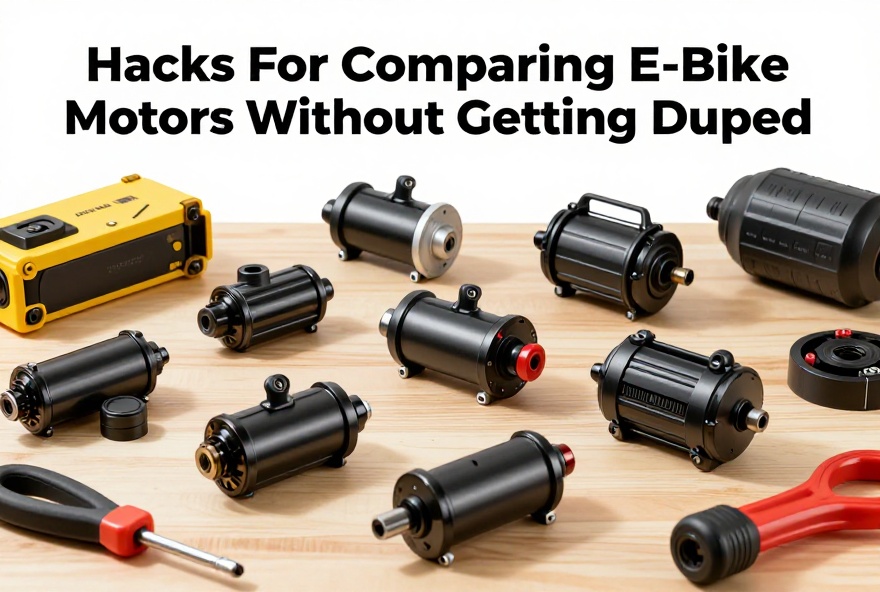
Ever wonder what to avoid when buying an e-bike and feel like you’re decoding an alien language? In our guide, ‘Hacks For Comparing E-Bike Motors Without Getting Duped,’ we untangle the mind-boggling motor specs, revealing why peak wattage doesn’t mean diddly-squat and what truly impacts your ride. Armed with insights and some chuckles, you’re set for a deeper dive into the nitty-gritty of e-bike motors.
Key Takeaways
- Don’t be dazzled by peak wattage numbers—real power’s what counts!
- Decode motor specs like a pro and avoid ebike buyer’s remorse.
- Want your ride to suit your style? Focus on the right performance metrics.
- Uncover the truth behind confusing specs and get the ebike you need.
- Avoid common ebike buying mistakes with these motor comparison hacks.
- Ever feel lost in ebike jargon? It’s time to clear that confusion!
Why Peak Wattage Is Just Smoke and Mirrors
You know that moment when you’re scrolling through e-bike specs and see “5000W motor” plastered everywhere? Yeah, that’s where most people get totally bamboozled. Peak wattage—the maximum power a motor can theoretically deliver for a split second—is basically the marketing equivalent of a gym bro’s Instagram photo. It looks impressive, but it’s not the real story. When comparing e-bike motors without getting duped, understanding this distinction is absolutely crucial because what matters is sustained power, not that brief spike.
- Peak vs. Continuous Power: Peak wattage is the motor’s maximum output for mere seconds, while continuous power is what you’ll actually use on your daily rides—and it’s typically 30-50% lower.
- The Legal Reality: Many regions cap e-bike motors at 750W or 250W (depending on location), so that “5000W” claim? Probably not street-legal, my friend.
- What Sustained Power Actually Means: This is the power your motor can deliver consistently without overheating—think of it as the motor’s honest day job.
- Marketing Manipulation: Manufacturers highlight peak wattage because it sounds sexier than “750W continuous”—but one gets you excited, the other gets you home safely.
Decoding Torque: The Real Power Player
Here’s where things get interesting. While wattage is getting all the attention, torque is quietly doing the heavy lifting—literally. Torque measures the twisting force your motor produces, and it’s what actually matters when you’re climbing hills, accelerating from a standstill, or hauling cargo. When comparing e-bike motors, torque is the metric that tells you whether you’re getting a genuine powerhouse or just a loud talker. A motor with solid torque figures will feel responsive and capable in real-world conditions.
- Measured in Newton-Meters (Nm): Higher torque means faster acceleration and better hill-climbing ability—aim for at least 40 Nm if you’re tackling serious terrain.
- Mid-Drive vs. Hub Motors: Mid-drive motors typically offer better torque feel because they work with your bike’s gears, multiplying their effective power.
- The Hill Test: If a motor can’t smoothly climb a steep hill without bogging down, its torque rating is probably exaggerated or the motor type doesn’t match your needs.
- Real-World Responsiveness: Torque directly affects how snappy your e-bike feels from a standstill—more torque means less pedal lag.
Motor Type Matters More Than You Think
Not all e-bike motors are created equal, and choosing between hub motors and mid-drive systems is honestly one of the biggest decisions you’ll make. Each has its own personality, strengths, and quirks. When decoding confusing motor specs, understanding the fundamental differences between these types will save you from making a costly mistake. Your riding style and terrain should guide this choice, not just raw power numbers.
- Hub Motors (Direct Drive): Mounted in the wheel hub, they’re simple and low-maintenance, but they can’t leverage your bike’s gears, making them less efficient on hills.
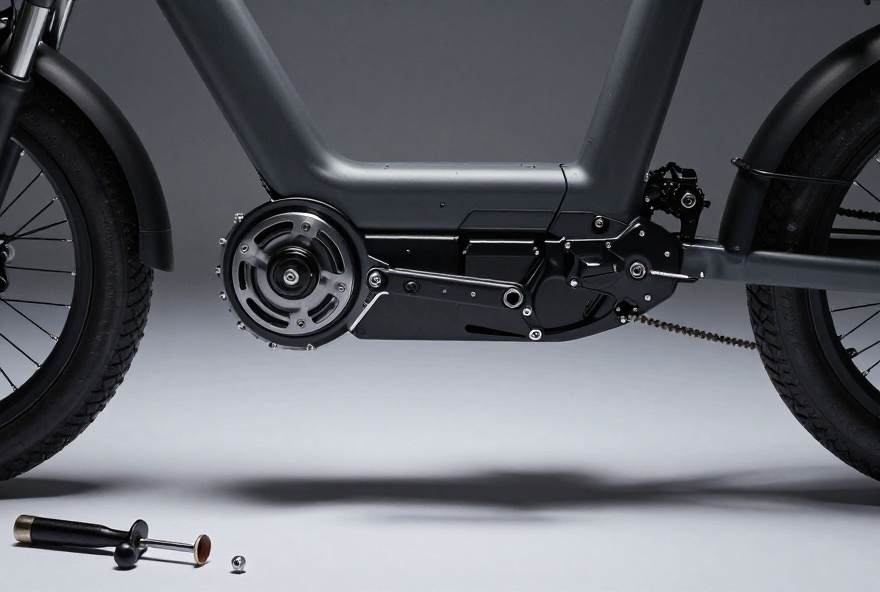
- Mid-Drive Motors: Positioned at the pedals, these bad boys work with your gearing system, offering better torque multiplication and a more natural riding feel—especially uphill.
- Geared Hub Motors: A middle ground offering some efficiency boost while maintaining hub motor simplicity, though they’re less durable long-term.
- Why Terrain Matters: Flat, urban riding? Hub motors shine. Hilly terrain? Mid-drive is your champion—no contest.
- Weight Distribution: Hub motors add weight to your wheels (affecting handling), while mid-drive motors keep weight centered, improving balance.
The Hidden Performance Metrics Nobody Talks About
Beyond wattage and torque, there are sneaky little specs that reveal how an e-bike motor will actually perform on your commute or weekend adventure. These are the metrics that separate genuinely good motors from the pretenders, and they’re often buried in the fine print or completely ignored by casual shoppers. When comparing e-bike motors without getting duped, paying attention to these details is what separates informed buyers from folks stuck with buyer’s remorse.
- Cadence Assist Range: This tells you at what pedaling speed the motor kicks in and cuts off—typically 60-100 RPM is ideal for natural pedaling.
- Motor Efficiency Rating: Look for motors with 85%+ efficiency; anything lower wastes energy as heat and drains your battery faster.
- Temperature Management: Quality motors have thermal sensors that prevent overheating—a feature that separates reliable systems from ones that conk out on hot days.
- Sensor Type (Cadence vs. Torque): Torque sensors feel more natural and adjust power based on your pedal pressure, while cadence sensors just react to whether you’re pedaling—torque wins here.
- Motor Responsiveness: Measured in milliseconds, this determines how quickly the motor engages when you start pedaling—lower is snappier.
Battery and Motor Compatibility: The Overlooked Connection
Here’s something that catches people off guard: a powerful motor means absolutely nothing if your battery can’t feed it properly. The relationship between your motor and battery is like a marriage—they need to be compatible, or everything falls apart. When comparing e-bike motors, you’ve got to check whether the battery voltage and amp-hour rating actually match what the motor needs. A 48V motor paired with a 36V battery? That’s a recipe for disappointing performance and potentially dangerous situations.
- Voltage Matching: Motors and batteries must have matching voltage systems (36V, 48V, 52V, etc.)—mismatches either underpower your motor or damage components.
- Amperage Draw: Check how many amps your motor pulls at peak performance; your battery charger and wiring need to handle this safely.
- Battery Range Calculation: Motor power directly impacts how far you’ll go on a charge—higher wattage means faster battery depletion.
- Charging Time Considerations: A 48V 20Ah battery paired with a 750W motor will have different range characteristics than a 1000W motor—plan accordingly.
Sensor Types and Riding Feel: Why This Changes Everything
Two e-bikes can have identical wattage and torque specs but feel completely different to ride, and that’s largely because of their sensor systems. The sensor is what tells the motor when, how much, and how aggressively to engage. It’s the nervous system of your e-bike, and getting it right transforms your entire riding experience. When decoding confusing motor specs, understanding sensors is the difference between a bike that feels like an extension of you and one that feels like you’re fighting a computer.
- Cadence Sensors: Simple and affordable, they detect if you’re pedaling and engage full power immediately—feels a bit “on-off” and less natural.
- Torque Sensors: These measure how hard you’re pedaling and adjust motor power accordingly—way more intuitive and feels like the motor is reading your mind.
- Dual-Sensor Systems: Some premium bikes use both, offering the best of both worlds with responsive, natural power delivery.
- The Responsiveness Question: Do you want your motor to kick in instantly, or gradually ramp up as you pedal harder? Your answer determines which sensor type suits your style.
Real-World Testing Beats Specs Every Single Time
Look, I’ll be honest—the best way to avoid getting duped when comparing e-bike motors is to actually test them. Specs are helpful for narrowing down options, but nothing beats feeling how a motor performs on real terrain. Take that potential purchase up a hill, accelerate from a stop, and see how it handles. Trust your gut. Your body knows what good performance feels like, even if your brain’s still decoding the jargon. For comprehensive guidance on avoiding common mistakes, check out this resource on hacks to avoid common e-bike buying mistakes.
- Test on Varied Terrain: Hills, flat roads, and rough pavement all reveal different aspects of motor performance—one test ride isn’t enough.
- Pay Attention to Noise Levels: A quality motor runs relatively quietly; excessive noise suggests poor engineering or internal friction.
- Check Power Delivery Smoothness: Jerky, stuttering power delivery indicates inferior sensors or controller issues—smooth acceleration is your target.
- Ask About Real-World Range: Forget manufacturer estimates; ask current owners what range they actually get in their riding conditions.
- Feel the Weight Balance: Hop on and feel how the motor’s placement affects overall bike balance and handling—this matters more than you’d think.
Common Red Flags When Comparing E-Bike Motors
Finally, let’s talk about the warning signs that should make you walk away. Some specs and claims are basically automatic dealbreakers, and spotting them early saves you from wasting time on inferior options. When comparing e-bike motors without getting duped, recognizing these red flags is like having a personal bodyguard protecting your wallet.
- Vague Power Specifications: If a seller can’t clearly explain whether they’re quoting peak or continuous power, that’s suspicious and suggests they’re being deliberately misleading.
- No Mention of Motor Type or Sensor Details: Transparent manufacturers always specify these crucial details—evasiveness is a major warning signal.
- Unrealistic Range Claims: If they promise 200+ miles on a single charge, they’re either lying or their testing conditions are wildly unrealistic.
- Cheap, Unknown Motor Brands: Stick with established manufacturers with solid reviews; no-name motors often underperform or fail prematurely.
- Missing Thermal Management Info: Quality motors discuss heat management; silence on this topic suggests overheating could be an issue.
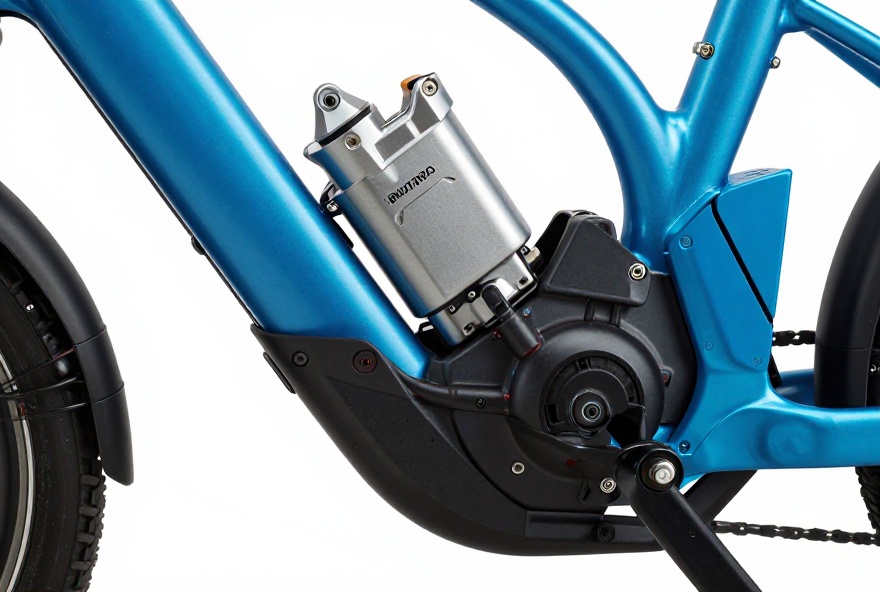
When diving into the labyrinth of e-bike motor specs, it’s easy to get sidetracked by flashy numbers and buzzwords. But let’s be honest—peak wattage is often more show than substance, leaving your actual power needs in the mystery bin. Our journey through decoding these specs has been about cutting through the noise and focusing on what really matters: performance metrics that match your unique riding style. It’s about figuring out torque, efficiency, and continuous power, rather than getting fooled by temporary spikes. Remember, it’s your wheels and your adventure, so make sure your motor’s up to the task.
As you wrap your head around this smorgasbord of e-bike facts, keep in mind that the open road is calling! Chuck Norris himself couldn’t find a sneakier way to avoid getting duped than by reading this blog. For more tips and engaging e-bike insights, follow us on Facebook, light up our Instagram stories at Instagram, or dive into our latest musings on LinkedIn. Happy cycling!





Leave a Reply