
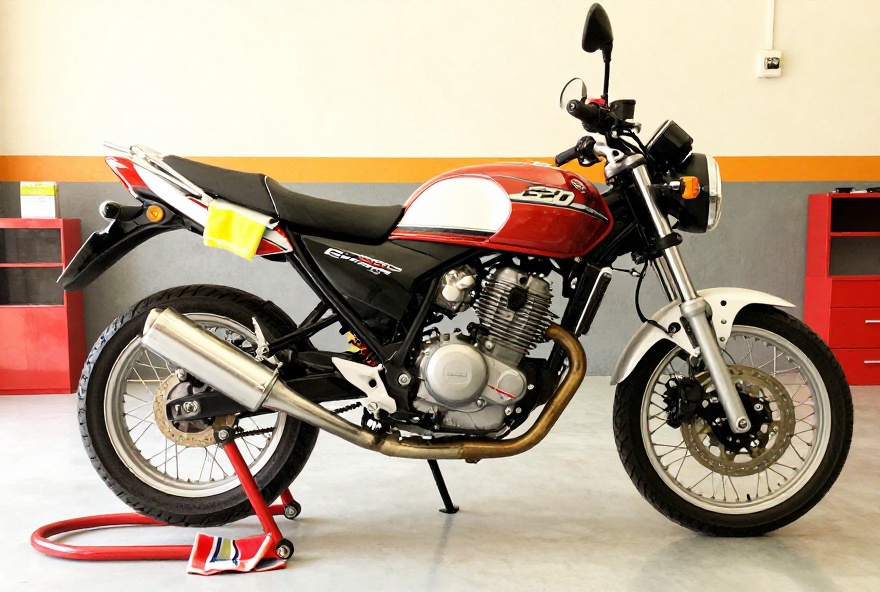
Thinking “Hacks to Protect Your Bike Engine from E20 Petrol Damage” sound like a tongue twister? Well, it’s not as tough as it sounds! Picture this: your motorcycle purring like a kitten while others cough at gas stations. Dive into the nitty-gritty of maintenance hacks and E20-blend woes. Don’t we all want to avoid surprise costs and breakdowns? We’ll cover fuel system cleaning schedules, carburetor care, and glaring warning signs that scream, “Get a pro today!” Gear up to become a savvy biker, armed with insights and maybe some laughs. Ready to rev up?
Key Takeaways
- Feeling the E20 pressure? Relax, we’ve got easy hacks to keep your engine happy.
- Don’t let E20 fuel sneak up on your beloved bike—know the cleaning schedules!
- Keep your carburetor in top shape with our easy-to-follow tips.
- Spotted a sputter or two? Recognize the warning signs your bike’s shouting out for help.
- Craving some DIY? Tackle that fuel system cleaning like a pro.
- Still not sure when to call in the cavalry? We’ll help you decide when professional attention is a must.
Understanding E20 Petrol and Why Your Bike Should Care
So, you’ve probably heard the buzz about E20 petrol at your local fuel pump, right? It’s this new ethanol blend that’s becoming increasingly common, and honestly, if you ride a motorcycle, you need to pay attention. E20 petrol contains up to 20% ethanol mixed with regular gasoline, and while it sounds like just another fuel option, the reality is that not all bike engines are built to handle it. The E20 petrol effects on bikes can range from minor performance hiccups to serious engine damage if you’re not careful. Think of it like feeding your bike a diet it wasn’t designed for—sure, it might work for a bit, but eventually, things get messy. Understanding what E20 does to your motorcycle engine is the first step toward protecting your ride.
- E20 contains 20% ethanol, which is significantly higher than traditional E5 fuel (5% ethanol)
- Ethanol is hygroscopic—it absorbs moisture from the air, which can corrode fuel system components over time
- Not all motorcycle engines are compatible with E20; older models and some mid-range bikes struggle with this blend
- Ethanol can break down rubber seals and gaskets in your fuel system, leading to leaks and contamination
- E20 petrol effects bikes differently depending on engine age, design, and current fuel system condition
Signs Your Motorcycle Is Struggling With E20 Petrol
Here’s the thing—your bike will tell you when something’s wrong, but you’ve got to listen. If you’ve recently switched to E20 fuel and noticed your motorcycle acting a bit off, it’s worth investigating before things get worse. The symptoms might seem minor at first, like a slight hesitation during acceleration or your bike taking longer to start on cold mornings. But these are actually warning signs that your engine isn’t thriving on this fuel blend. You know that moment when your bike just feels… sluggish? That could be E20 petrol damage creeping in.
- Rough idling and stalling: Your engine struggles to maintain a steady idle or cuts out unexpectedly when stopped
- Reduced fuel efficiency: You’re hitting the pump more often than usual, which is never a good sign
- Difficulty starting—especially in cold weather: E20 can affect combustion, making cold starts feel like you’re wrestling with your bike
- Black or sooty spark plugs: When you inspect them, they look darker than normal, indicating incomplete combustion
- Fuel smell in the exhaust or oil: This suggests fuel isn’t burning properly and might be leaking into your crankcase
- Check engine light flickering: Your bike’s onboard diagnostics are picking up something amiss
The Science Behind Fuel System Corrosion and E20
Let’s dive into the nitty-gritty for a moment. E20 petrol damage to your bike isn’t just about performance—it’s about chemistry, and understanding it helps you take preventive action. Ethanol is a solvent, which means it’s aggressive toward certain materials that were never meant to encounter high ethanol concentrations. Your fuel tank, fuel lines, carburetor, and injectors are all at risk. The moisture-absorbing nature of ethanol creates an environment where rust and corrosion can flourish, especially in fuel tanks and carburetors. Plus, ethanol can strip away the protective varnish that builds up inside older fuel systems, exposing bare metal to oxidation. It’s like removing the protective coating on your bike’s internal organs—once it’s gone, deterioration accelerates rapidly.
- Ethanol acts as a solvent that degrades rubber components, seals, and gaskets in your fuel delivery system
- Water absorption by ethanol creates an acidic environment that promotes rust in fuel tanks and carburetors
- Varnish deposits in older fuel systems can be stripped away, exposing metal surfaces to direct corrosion
- Fuel injectors and carburetors become clogged with deposits that form when ethanol oxidizes—think of it as your engine’s arteries getting blocked
- Microbial growth thrives in the moisture-rich environment created by ethanol, leading to fuel degradation and filter clogging
Fuel System Cleaning Schedules—Your First Line of Defense
Alright, here’s where you take action. If you’re riding on E20 petrol, a proper fuel system cleaning schedule isn’t optional—it’s essential maintenance. We think of it as preventive medicine for your bike’s engine. Regular cleaning keeps deposits at bay, removes water contamination, and ensures your fuel system stays in fighting shape. The frequency depends on your bike’s age, fuel quality, and riding habits, but there’s a general guideline you should follow. You know that feeling when your bike runs like a dream after a service? That’s what consistent fuel system maintenance can do.
- Clean fuel filters every 3-6 months if you’re regularly using E20, or more frequently if you notice fuel smell or sluggish performance
- Run a quality fuel system cleaner additive every 1,000-1,500 kilometers to dissolve deposits and remove moisture
- Deep-clean your carburetor annually—or twice yearly if you use E20 heavily, as ethanol buildup is relentless
- Drain and inspect your fuel tank every 12-18 months for rust, sediment, or water accumulation
- Replace fuel lines if they show signs of swelling, cracking, or brittleness—ethanol degrades rubber faster than you’d expect
Carburetor Care: The Heart of E20 Petrol Protection
Your carburetor is like the gatekeeper of your fuel system, and E20 petrol doesn’t play nice with it. Carburetors are notorious for collecting deposits, and ethanol accelerates this process significantly. If you’ve got an older bike with a carburetor (instead of fuel injection), you’re going to need to be extra vigilant. The good news? With proper care, your carburetor can handle E20 without falling apart. The bad news? Neglecting it will result in expensive repairs or even complete replacement. Let’s talk about keeping this critical component clean and functional.
- Disassemble and clean your carburetor completely—don’t just use external cleaners, get inside where ethanol deposits love to hide
- Check all rubber gaskets and seals inside the carburetor for swelling or deterioration—these are prime candidates for E20 damage
- Use a quality carb cleaning solution specifically designed to handle ethanol-based fuel residues; standard cleaners might not cut it
- Inspect the fuel needle valve and seat—ethanol can cause these to wear prematurely, leading to fuel leaks and poor engine response
- Run your carburetor through a complete overhaul kit if you’re planning to switch to E20 regularly—it’s cheaper than emergency repairs later
Fuel Tank Maintenance: Preventing Rust Before It Starts
Your fuel tank is ground zero for E20 petrol damage if it’s not properly maintained. Think of it as the foundation of your fuel system—if this cracks or corrodes, everything downstream suffers. Ethanol’s moisture-absorbing properties mean your fuel tank is constantly exposed to water, even if you can’t see it. This creates the perfect storm for rust formation, especially in older tanks or those with existing micro-scratches. The trick is staying ahead of the problem with regular inspections and preventive treatments. We’ve seen riders ignore fuel tank issues, only to end up with contaminated fuel clogging their entire system. Don’t be that person.
- Inspect your fuel tank interior annually for rust, sediment, or discoloration—a bright flashlight and a quick look can save you hundreds
- Drain your fuel tank completely every 6-12 months if using E20, as moisture accumulates faster than with traditional fuel
- Apply a fuel tank sealer or protective coating inside the tank to create a barrier against rust and corrosion
- Use fuel stabilizers designed for ethanol blends to reduce water absorption and slow varnish formation
- Store your bike with a full fuel tank if it’ll sit unused for extended periods—this minimizes air space where moisture can collect
Fuel Quality and Storage Tips for E20 Users
Here’s something most riders overlook: the quality of the fuel you’re putting into your tank matters just as much as the type. Not all fuel pumps are created equal, and some deliver E20 petrol with higher water content or impurities than others. Storage conditions also play a massive role in how well E20 ages in your bike. If you’re serious about protecting your motorcycle engine from E20 damage, you need to be intentional about where you buy fuel and how you store your bike. It’s the difference between your engine running smoothly for years and dealing with constant headaches.
- Buy fuel from reputable stations with high turnover—fresh fuel means fewer contaminants and less time for ethanol to absorb moisture
- Avoid filling up during early morning or late evening when temperature fluctuations cause condensation inside the pump tank
- Use fuel additives that combat ethanol’s corrosive properties—think of them as a protective shield for your fuel system
- Store your bike in a dry, temperature-controlled environment to prevent condensation inside your fuel tank
- If your bike will sit unused for more than a month, run a quality ethanol fuel stabilizer through the tank to preserve fuel quality
Engine Gaskets, Seals, and Rubber Components: Replacement Guide
E20 petrol damage doesn’t stop at your fuel system—it can work its way into your engine through degraded gaskets and seals. Ethanol is a powerful solvent, and rubber components throughout your engine can become brittle, swollen, or cracked with prolonged exposure. This is especially problematic because once a gasket fails, you’re looking at oil leaks, compression loss, and potential engine damage. The good news? Many of these components are replaceable, and doing so proactively can save your engine from serious harm. Think of it as replacing the weatherstripping on your house before water damage becomes catastrophic.
- Inspect all visible gaskets and seals around your engine quarterly—look for cracks, swelling, or obvious deterioration
- Replace fuel line gaskets and o-rings if they show any sign of hardening or brittleness—don’t wait for a leak to develop
- Consider replacing rubber fuel lines with ethanol-compatible alternatives if your bike is older or frequently exposed to E20
- Check valve cover gaskets and intake manifold seals during routine maintenance—these are common failure points with ethanol-blend fuels
- Keep a supply of OEM gaskets and seals on hand so you can address issues immediately rather than riding with degraded components
When to Seek Professional Help: Red Flags Your Bike Needs Immediate Attention
Sometimes, DIY maintenance isn’t enough, and knowing when to call in the professionals is crucial. There are certain signs that indicate your bike needs immediate professional attention before E20 petrol damage escalates into something catastrophic. You know your bike better than anyone, so trust your instincts. If something feels seriously wrong—beyond the usual warning signs—it’s time to book an appointment with a qualified mechanic. Ignoring these red flags can turn a manageable problem into an engine replacement situation, and nobody wants that bill.
- Persistent white or blue smoke from the exhaust—this suggests fuel is entering your oil and combustion chamber
- Metal shavings in your engine oil, visible through the dipstick or oil sight glass—this indicates internal engine wear
- Loss of compression in one or more cylinders—your mechanic can test this with a compression gauge
- Fuel leaking from your carburetor, fuel lines, or injectors despite cleaning attempts—this means seals are compromised
- Inability to start your bike even after fuel system cleaning and carburetor overhaul—this suggests deeper engine issues
- Overheating during normal riding conditions—ethanol damage can affect engine timing and combustion efficiency
Long-Term Protection Strategy: Building E20 Resilience Into Your Routine
Protecting your bike from E20 petrol damage isn’t a one-time fix—it’s an ongoing commitment to maintenance and smart riding habits. Think of it as building resilience into your routine, much like how you’d maintain your physical health. The riders who suffer the least from ethanol-blend fuel are the ones who’ve integrated regular fuel system care into their maintenance schedule. We think the best approach is to be proactive rather than reactive, staying ahead of problems before they develop into expensive repairs. Your motorcycle will reward you with years of reliable performance if you treat E20 with the respect it deserves.
- Create a fuel system maintenance checklist and follow it religiously—mark your calendar for filter changes, carburetor cleanings, and tank inspections
- Keep detailed maintenance records so you can spot patterns and address issues before they become serious
- Use quality fuel system additives designed for ethanol blends—they’re inexpensive insurance against E20 petrol damage
- Stay informed about your specific motorcycle’s E20 compatibility by checking manufacturer guidelines and owner forums
- Build relationships with a trusted mechanic who understands ethanol-blend fuel issues and can spot problems early
- Consider upgrading to fuel injection if your older bike still runs on a carburetor—it’s more forgiving with E20 and offers better overall performance
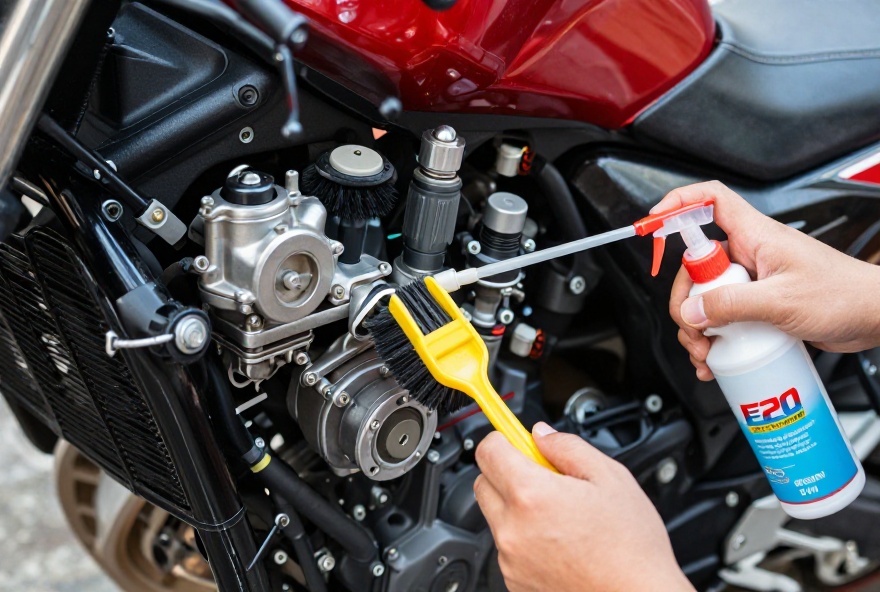
Well, folks, there you have it—your blueprint for keeping that two-wheeled baby purring like a kitten, even in a world full of temperamental E20 ethanol blends. First off, sticking to a fuel system cleaning schedule is like flossing your teeth—easy to skip but ultimately worth it for a smoother ride. Remember to pamper your carburetor, too, because nothing ruins a day like a gunked-up throttle. And hey, if your bike suddenly starts acting like it’s auditioning for a drama series, it’s a signal bigger than life to seek professional TLC before you find yourself stranded in the middle of nowhere. With these practical maintenance hacks in your toolkit, you’re more than ready to tackle any motor menace the road throws your way.
Now, before your hands get too greasy from all this preventive maintenance talk, why not take this relationship to the next level? Hit ‘follow’ with gusto on our Facebook, stay revved up with updates on Instagram, or tap into a community of like-minded gearheads sharing tips and camaraderie. Your bike—and your sense of adventure—will thank you. Let’s keep those engines roaring and the adventures never boring!





Leave a Reply