
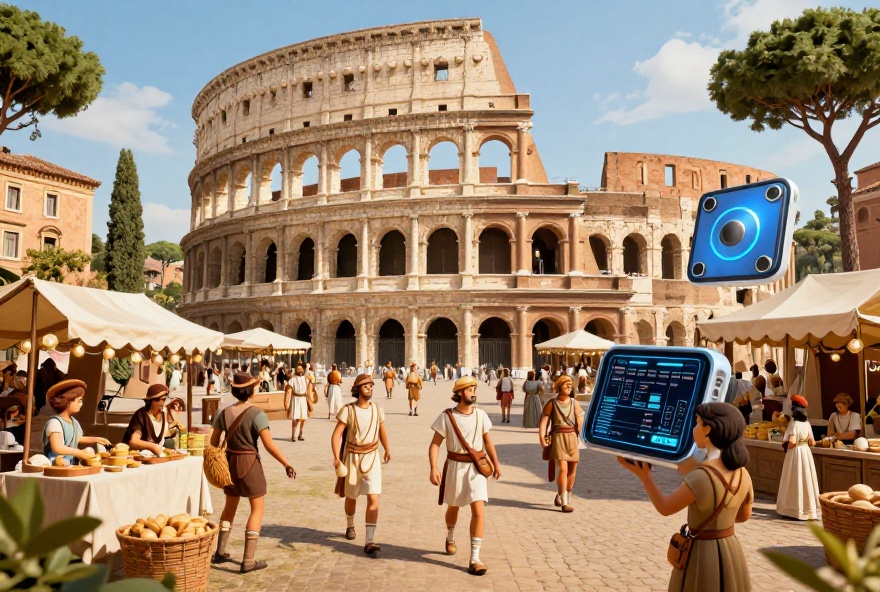
Ever wondered how something could survive five centuries without a single facelift? In ‘Here’s How Lorem Ipsum Survived Five Centuries Unchanged Somehow,’ we’ll journey back to ancient Rome and uncover the quirky saga of a scrambled Cicero passage. It’s astonishing how this jumbled Latin text became the darling of designers, thriving as the go-to placeholder amidst waves of tech chaos and digital revolutions. Stick around to decode the secrets that kept this gibberish relevant. And yes, we’ve got some juicy insights from the grapevines of history — no Lorem challenge will stump you again!
Key Takeaways
- Unravel the mystery of how Lorem Ipsum survived centuries of change.
- Learn why designers still love this ancient dummy text.
- Discover how a Cicero passage became iconic in the design world.
- Isn’t it amazing how some things just never change? Like Lorem Ipsum!
- Explore the quirky journey of dummy text from ancient Rome.
- Find out why Lorem Ipsum continues to be relevant in the digital age.
- Get the lowdown on why Lorem Ipsum remains unchanged through history’s chaos.
The Ancient Roman Origins of Lorem Ipsum
You know that moment when you’re designing a website and you just need some filler text? Yeah, we’ve all been there. What’s wild is that the text you’re probably using—lorem ipsum—actually traces back to ancient Rome. Specifically, it comes from a work by Cicero written around 45 BC. The history of lorem ipsum is honestly one of the internet’s best-kept secrets, and it’s way more interesting than it sounds. This dummy text has managed to stick around for literally centuries, surviving everything from the printing press to the digital revolution without changing a single word.
- Originated from Cicero’s “De Finibus Bonorum et Malorum” (On the Ends of Good and Evil), a philosophical text written in 45 BC.
- The passage was originally about pleasure and pain but became jumbled and scrambled over centuries of reproduction.
- Ancient Romans never imagined their serious philosophical work would become the design world’s most trusted dummy text.
- The text’s survival through five centuries speaks to its unique position in both literary and design history.
How Printing Press Era Changed Everything (And Nothing)
Fast forward to the 1500s—the printing press just arrived, and suddenly people needed placeholder text to showcase typefaces. Enter lorem ipsum. Printers grabbed this scrambled Cicero passage because it looked enough like real Latin to seem legit, but nobody had to worry about readers actually understanding it. Honestly, it’s kind of genius when you think about it. The history of lorem ipsum really took off during this period because printers realized they’d found the perfect solution to a real problem. No distractions, no meaning—just pure typographic focus.
- Printers in the 1500s adopted lorem ipsum to display typefaces without the distraction of meaningful content.
- Why this specific text? It had the right mix of letters and word lengths to test font layouts realistically.
- The dummy text became standardized across printing houses—a truly universal solution before the internet even existed.
- Nobody questioned it for centuries because, well, it just worked.
The Digital Age: Lorem Ipsum Goes Online
Then came the 1990s and early 2000s—the digital disruption era. You’d think this is where lorem ipsum would finally get replaced by something newer, right? Wrong. Web designers discovered this ancient placeholder text and realized it was still perfect for their needs. The scrambled Cicero passage continued its reign, now powering mockups, wireframes, and design prototypes across the entire internet. It’s genuinely remarkable how a five-century-old text adapted so seamlessly to digital design workflows. Nobody had to reinvent the wheel; the wheel just kept rolling.
- Web designers in the 1990s adopted lorem ipsum for website mockups and digital prototypes without hesitation.
- Content management systems and design tools baked lorem ipsum into their default templates—cementing its status.
- The design world’s most trusted dummy text became even more trusted as digital disruption accelerated.
- Modern frameworks still include lorem ipsum generators as standard features.
Why Lorem Ipsum Won’t Die (And Probably Shouldn’t)
Here’s the thing—we’ve had plenty of opportunities to replace lorem ipsum over the past few decades. There’s no law saying designers have to use it. Yet the history of lorem ipsum keeps marching forward because it actually solves real problems better than alternatives. It’s language-neutral, it doesn’t trigger emotional responses, and it’s instantly recognizable to anyone in design. The scrambled nature of the text means clients focus on layout and visual hierarchy instead of getting distracted by what the words actually say. Pretty clever for something that’s been around since ancient Rome, right?
- Language-neutral appeal—lorem ipsum works the same whether you’re designing for English, German, or Japanese audiences.
- Psychological advantage: The meaningless text prevents stakeholders from getting caught up in reading instead of evaluating design.
- Instant credibility—designers and developers immediately recognize it, making communication faster.
- Cost-effective solution—no copywriting required during the design phase, saving time and resources.
The Scrambled Cicero Passage: Lost in Translation (On Purpose)
Okay, so here’s where it gets really interesting. The original Cicero passage made perfect sense in Latin. But somewhere along the way, during all those centuries of printing and reprinting, words got jumbled, sentences got broken, and letters got rearranged. Was it intentional? Probably not at first. But then designers realized that this scrambled nature was actually an advantage. You couldn’t accidentally read it like normal text. The design world’s most trusted dummy text became trusted precisely because it was nonsensical. It’s like the universe accidentally created the perfect solution five centuries before the internet needed it.
- The original Cicero text made logical sense—but that’s not what made it into modern design templates.
- Scrambling happened gradually through repeated printing cycles and manual typesetting errors over generations.
- Modern versions of lorem ipsum vary slightly depending on the source, but maintain the core structure.
- Designers actually prefer the scrambled version because it eliminates reading distraction during the design review process.
Five Centuries of Technological Upheaval: What Changed and What Didn’t
Think about all the technological shifts since 1500: printing presses became steam-powered presses, then digital presses, then web-based design tools. We went from hot type to cold type to pixels. Photography replaced woodcuts. The internet replaced physical printing entirely. And through all of it—literally every single massive technological disruption—lorem ipsum just… stayed. There’s something almost poetic about that, honestly. While everything else evolved, this ancient Roman scramble kept doing its job. The history of lorem ipsum is basically a masterclass in creating something so useful that it transcends technology itself.
- Survived the printing press era (1500s–1800s) without modification despite massive changes in printing technology.
- Adapted to phototypesetting (1950s–1980s) without needing updates or revisions to the core text.
- Transitioned seamlessly to digital design (1990s–2000s) as if it was always meant for screens.
- Today’s AI-powered design tools still default to lorem ipsum—proving it’s not outdated, it’s timeless.
The Design World’s Relationship With This Ancient Dummy Text
You know what’s funny? Designers get weirdly attached to lorem ipsum. There’s something comforting about knowing that every designer, everywhere, understands exactly what you mean when you say “just throw in some placeholder text.” It’s a universal language in the design community. The design world’s most trusted dummy text has become more than just filler—it’s become part of design culture. Newer alternatives pop up occasionally (like “Hipster Ipsum” or “Bacon Ipsum”), but they’re treated more as novelties. Lorem ipsum remains the standard because it works, it’s recognized, and frankly, it’s got history on its side.
- Designers use lorem ipsum as shorthand—it’s instantly understood across all design disciplines and companies.
- The text appears in design education worldwide, passed down like a trade secret to new generations.
- Alternative placeholder texts exist but are rarely used professionally—lorem ipsum holds its throne.
- Professional design tools automatically include lorem ipsum generators because the industry demands it.
Looking Forward: Will Lorem Ipsum Make It to Century Six?
Here’s the real question: will lorem ipsum survive the next hundred years? With AI content generation, dynamic placeholder systems, and increasingly sophisticated design tools, you’d think something new might finally dethrone it. But we’re betting it won’t. The history of lorem ipsum shows us that when something solves a problem elegantly, when it’s universal and recognized, it tends to stick around. The scrambled Cicero passage has already outlasted five centuries of change. It’s weathered printing press disruptions, industrial revolutions, and digital transformations. At this point, we’re pretty confident that designers a hundred years from now will still be dropping lorem ipsum into their wireframes.
- AI-generated placeholder text could theoretically replace lorem ipsum but lacks the universal recognition factor.
- The psychological advantage of meaningless text means lorem ipsum serves a purpose no algorithm can easily replicate.
- Cultural inertia is real—five centuries of familiarity creates powerful momentum that’s hard to overcome.
- Future design tools might integrate lorem ipsum even more deeply, ensuring its survival into century six and beyond.
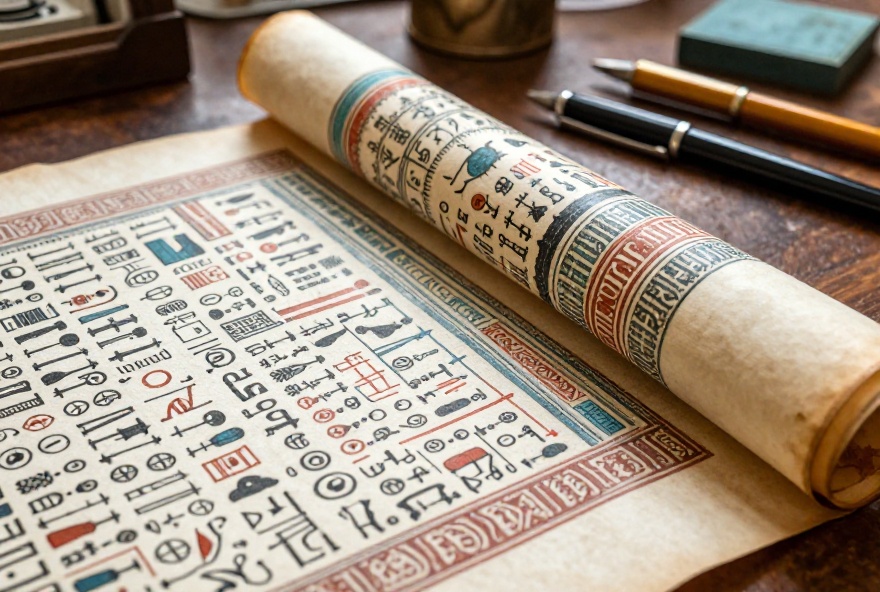
In the whimsical journey from ancient Rome to our computer screens, Lorem Ipsum has proven that not all things old become obsolete. Combining Latin elegance and modern utility, this scrambled passage from Cicero has survived, unchanged, through five centuries. You might marvel at how a ‘dummy text’ has remained a cornerstone for designers facing the challenges of technological upheaval and digital disruption. Despite the evolution of design aesthetics, one thing’s certain—Lorem Ipsum remains a steadfast companion. It preserves the formality and intent of a document while preventing distractions. This steadfast text not only survived but thrived, becoming the go-to placeholder for creatives reconstructing the Roman art of rhetoric into modern designs.
So, there you have it: a historical relic faithfully serving the modern world’s demands. Feeling ready to dabble in some design? Before you embark on your Lorem Ipsum journey, why not share your thoughts with us on Facebook, Instagram, or join the conversation on our Twitter? We’d love to hear how you’re weaving history into your creative pursuits!





Leave a Reply