
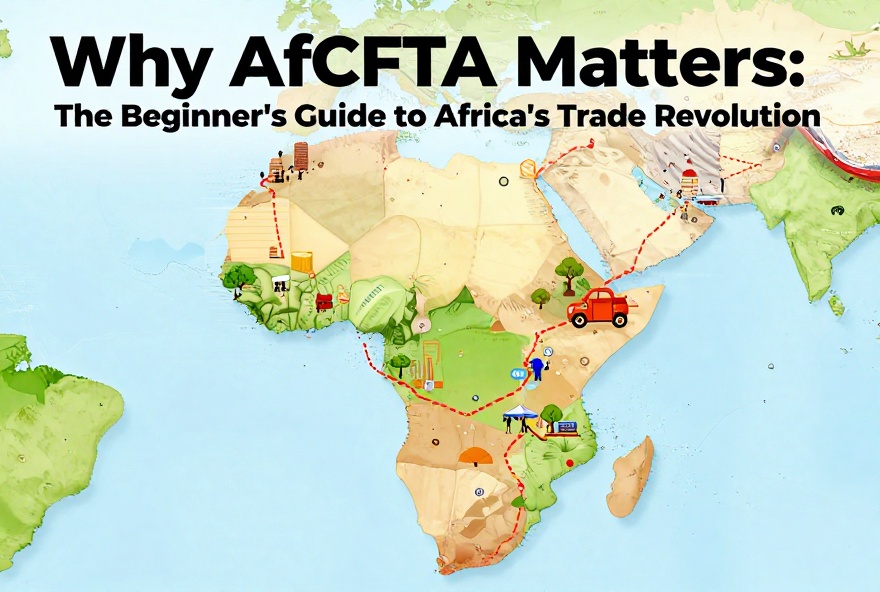
Ever heard of the AfCFTA, or the African Continental Free Trade Area if you’re feeling formal? It’s not just a snappy acronym; it’s a silent revolution, quietly reshaping Africa’s economies. In ‘Why AfCFTA Matters: The Beginner’s Guide to Africa’s Trade Revolution,’ we explore its bustling business bazaar of opportunities for savvy entrepreneurs and investors. It’s time to dive in and see how this trade revolution is crafting new success stories!

Key Takeaways
- Discover how AfCFTA is silently powering Africa’s trade transformation—it’s like a quiet revolution!
- Think small businesses aren’t affected by global trade agreements? Think again! AfCFTA is a game changer for SMEs.
- Investors, rejoice! AfCFTA opens up new markets and opportunities, because who doesn’t love a good investment tip?
- Entrepreneurs, get ready—AfCFTA is your ticket to unlocking African markets. Are you onboard?
- Learn how AfCFTA could make cross-border trade as easy as pie, no more bureaucratic headaches!
- Are unexpected business opportunities hiding in Africa? With AfCFTA, they’re stepping into the spotlight.
- Understand the ripple effect of AfCFTA on African economies and why it matters to you.
What Exactly Is the AfCFTA and Why Should You Care?
So, you’ve probably heard the buzz about the African Continental Free Trade Area floating around business circles and news feeds, right? Well, here’s the thing—this isn’t just another trade agreement gathering dust in some filing cabinet. The AfCFTA is quietly reshaping African economies in ways that could fundamentally change how business gets done across the continent. Whether you’re an entrepreneur looking to expand, an SME trying to reach new markets, or an investor hunting for the next big opportunity, understanding what the AfCFTA is and why it matters could be your competitive edge. Think of it as the African version of the European Union’s single market, but with its own unique flavor and massive untapped potential.
- A Game-Changing Trade Agreement: The AfCFTA connects 54 African nations, creating a single market of over 1.3 billion people—that’s a potential customer base most entrepreneurs dream about.
- Launched in 2021: While it’s still finding its footing, the momentum is building fast, and early movers in understanding it are positioning themselves ahead of the curve.
- Removes Trade Barriers: Tariffs, customs delays, and complicated paperwork that once made cross-border trade a nightmare are being systematically dismantled.
- Why This Matters for You: If you’re operating in Africa or eyeing the continent, the AfCFTA represents pathways to growth that didn’t exist just five years ago.
The Economic Potential Hidden Behind the AfCFTA
Let’s talk numbers for a second—and I promise they’re pretty eye-opening. The economic transformation potential of the African Continental Free Trade Area is staggering, and it’s not just hype. We’re talking about regional integration that could unlock billions in trade value and create entirely new industries. For entrepreneurs and SMEs, this means access to markets that were previously fragmented and difficult to penetrate. Investors are already starting to notice, and the smart money is beginning to flow into sectors positioned to benefit most.
- Projected Trade Growth: Intra-African trade could increase by 52% by 2030 as the AfCFTA framework matures and removes friction from transactions.
- GDP Boost Potential: Economists estimate the agreement could add $450 billion to Africa’s GDP through increased trade and investment opportunities across sectors.
- Manufacturing Renaissance: Regional supply chains are becoming viable as tariffs drop, allowing manufacturers to source materials regionally rather than globally—cutting costs and delivery times.
- Service Sector Explosion: Digital services, financial technology, and consulting are poised to thrive as businesses expand across borders within the AfCFTA framework.
Breaking Down the Real Business Opportunities for Entrepreneurs
You know that moment when you realize there’s a whole market segment you’ve been overlooking? That’s where many entrepreneurs find themselves with the AfCFTA. The agreement is creating genuine, actionable opportunities—not just theoretical ones. From supply chain optimization to entering completely new geographic markets, the business opportunities for entrepreneurs are concrete and worth exploring seriously. Whether you’re in agriculture, manufacturing, tech, or services, there’s likely an angle that applies to your situation.
- Cross-Border E-Commerce: Digital entrepreneurs can now sell products across multiple African nations with simplified customs procedures and reduced tariffs—scaling regionally has never been easier.
- Niche Manufacturing Plays: Small and medium enterprises can specialize in producing components for regional supply chains, reducing the need to compete globally while serving growing African markets.
- Logistics and Distribution: The removal of trade barriers creates demand for efficient logistics networks, presenting opportunities for entrepreneurs to build regional distribution hubs and services.
- Market Entry Strategies: Rather than entering one country at a time, businesses can now leverage the AfCFTA to plan phased expansion across multiple nations simultaneously—a strategic shift that changes growth trajectories.
How SMEs Are Positioning Themselves to Win
Small and medium enterprises are in a unique position here. You know why? They’re agile. While large corporations are still figuring out their regional strategies, SMEs that grasp the AfCFTA framework early can carve out niches and establish themselves as go-to providers before the big players fully engage. The AfCFTA creates a level playing field where size matters less than understanding the opportunity. SMEs operating in sectors like agro-processing, light manufacturing, and digital services are already seeing the benefits of expanded market access.
- Cost Advantages Through Regional Supply Chains: SMEs can now source raw materials and components from neighboring countries at competitive prices, dramatically improving margins and product affordability.
- Standardization and Compliance: As the AfCFTA develops harmonized standards across member states, SMEs no longer need to comply with 54 different regulatory frameworks—one set of standards simplifies operations significantly.
- Access to Financing: Regional development banks and impact investors are increasingly funding SMEs positioned to capitalize on AfCFTA opportunities, making growth capital more accessible than before.
- Networking and Partnerships: Regional trade associations and business forums are connecting SMEs with potential partners, distributors, and suppliers across the continent in unprecedented ways.
Investment Opportunities Within the AfCFTA Framework
Investors with an eye on emerging markets are already paying serious attention to the AfCFTA. The infrastructure needs, the consumer growth, and the business formation opportunities are all converging to create a compelling investment thesis. Whether you’re a venture capitalist looking at tech startups, a private equity investor eyeing manufacturing, or someone exploring impact investing, the AfCFTA is reshaping where and how African investments generate returns. The key is understanding which sectors and regions are primed for growth right now.
- Infrastructure Development: Roads, ports, and digital infrastructure improvements are accelerating to support increased intra-African trade, creating investment opportunities in logistics and connectivity.
- Agricultural Value Chains: Processing and exporting agricultural products becomes more viable as regional trade costs drop—attracting investment in agro-tech and food processing ventures.
- Financial Services Expansion: Regional payment systems, trade financing, and fintech solutions are in high demand as businesses navigate the new AfCFTA landscape.
- Technology and Digital Solutions: Platforms connecting buyers and sellers across borders, customs management software, and supply chain visibility tools are becoming critical infrastructure investments.
The Challenges You Need to Understand (They’re Real)
Look, I’d be doing you a disservice if I pretended the AfCFTA is all sunshine and rainbows. There are genuine challenges that entrepreneurs, SMEs, and investors need to navigate. Understanding these obstacles isn’t pessimistic—it’s realistic. The African Continental Free Trade Area is revolutionary, but like any major economic shift, it comes with friction points. Being aware of them helps you plan better and avoid costly mistakes.
- Implementation Inconsistencies: While the framework is in place, different member states are implementing rules at different speeds—some countries are ahead, others are lagging, creating temporary uncertainty for businesses planning regional expansion.
- Infrastructure Gaps: Road networks, port facilities, and digital connectivity vary wildly across regions, meaning your supply chain efficiency depends heavily on geographic corridor selection.
- Regulatory Navigation: Each country still maintains its own regulations outside the AfCFTA framework, requiring businesses to understand both regional rules and local requirements—it’s not one-size-fits-all yet.
- Currency and Payment Risks: Operating across multiple currencies and payment systems adds complexity; investors and businesses need robust strategies for managing foreign exchange exposure and transaction costs.
Practical Steps to Start Leveraging the AfCFTA Today
Alright, so you’re interested—but how do you actually get started? The good news is you don’t need to overhaul your entire operation overnight. Taking strategic, measured steps to understand and leverage the AfCFTA is absolutely doable. Whether you’re testing market entry in a neighboring country or building a regional supply chain, there are concrete actions you can take right now. The entrepreneurs and businesses winning with the AfCFTA aren’t necessarily the biggest—they’re the ones who started early and learned as they scaled.
- Research Your Target Markets: Use AfCFTA resources and government trade portals to understand tariff schedules, rules of origin, and regulatory requirements for the specific countries and sectors you’re targeting.
- Connect with Regional Trade Associations: Join business networks focused on your industry within the AfCFTA framework—these groups provide market intelligence, partnership opportunities, and regulatory updates that are invaluable.
- Pilot a Regional Expansion: Start small by exporting to one neighboring country or sourcing from a regional supplier; use this pilot to understand logistics, customs, and market dynamics before scaling.
- Invest in Compliance and Documentation: Rules of origin and documentation requirements are crucial—getting these right from day one saves headaches and delays down the road; consider working with customs brokers familiar with AfCFTA procedures.
- Stay Updated on Policy Changes: The AfCFTA framework is still evolving, so subscribe to updates from regional trade bodies and government sources; being informed about changes gives you a strategic advantage.
The Future of African Trade Is Being Written Right Now
Here’s the real talk: the AfCFTA is reshaping African economies in real-time, and the opportunities for entrepreneurs, SMEs, and investors are substantial. We’re witnessing a shift in how commerce happens across the continent—one that’s moving toward integration, efficiency, and growth. If you’ve been waiting for the right moment to expand into African markets or deepen your engagement with the continent, that moment is essentially now. The early adopters are already positioning themselves, and the momentum is only going to accelerate as more businesses and investors understand what’s at stake and what’s possible. For a deeper dive into the fundamentals and mechanics of how this works, check out our comprehensive guide to understanding African Continental Free Trade Area basics—it’ll give you the foundational knowledge to take informed action.
- Market Integration is Accelerating: Each quarter brings new countries implementing AfCFTA protocols more fully, reducing friction and making regional business increasingly viable.
- Competitive Advantage Goes to Early Movers: Businesses that understand and position themselves within the AfCFTA framework now will have first-mover advantages in established regional networks and supply chains.
- Innovation and Adaptation Are Constant: As challenges emerge, solutions are being developed—new fintech platforms, logistics networks, and trade information systems are continuously improving the environment.
- The Next Decade Is Critical: 2025-2035 will likely define whether the AfCFTA realizes its full potential or faces setbacks; being part of this journey puts you at the center of Africa’s economic transformation.
Conclusion
The AfCFTA isn’t just quietly reshaping African economies; it’s more like a personalized business revolution happening on the continent. This trade agreement is making it easier for entrepreneurs, SMEs, and investors who are in the know to tap into a market teeming with opportunity. Whether it’s removing tariffs or creating a mega-market of over 1.2 billion people, the AfCFTA promises to unlock unimaginable potentials for African businesses. Those who grasp its potential now will likely be the ones leading this commercial transformation, contributing to sustainable growth across the African landscape.
Feeling inspired to jump into the action? The economic horizon is changing, and it’d be a shame to just watch it unfold from the sidelines. Stay updated and join the conversation—follow us on Facebook, Instagram, and get those trade juices flowing. Who knows, you could be the next big player in Africa’s trade revolution!





Leave a Reply